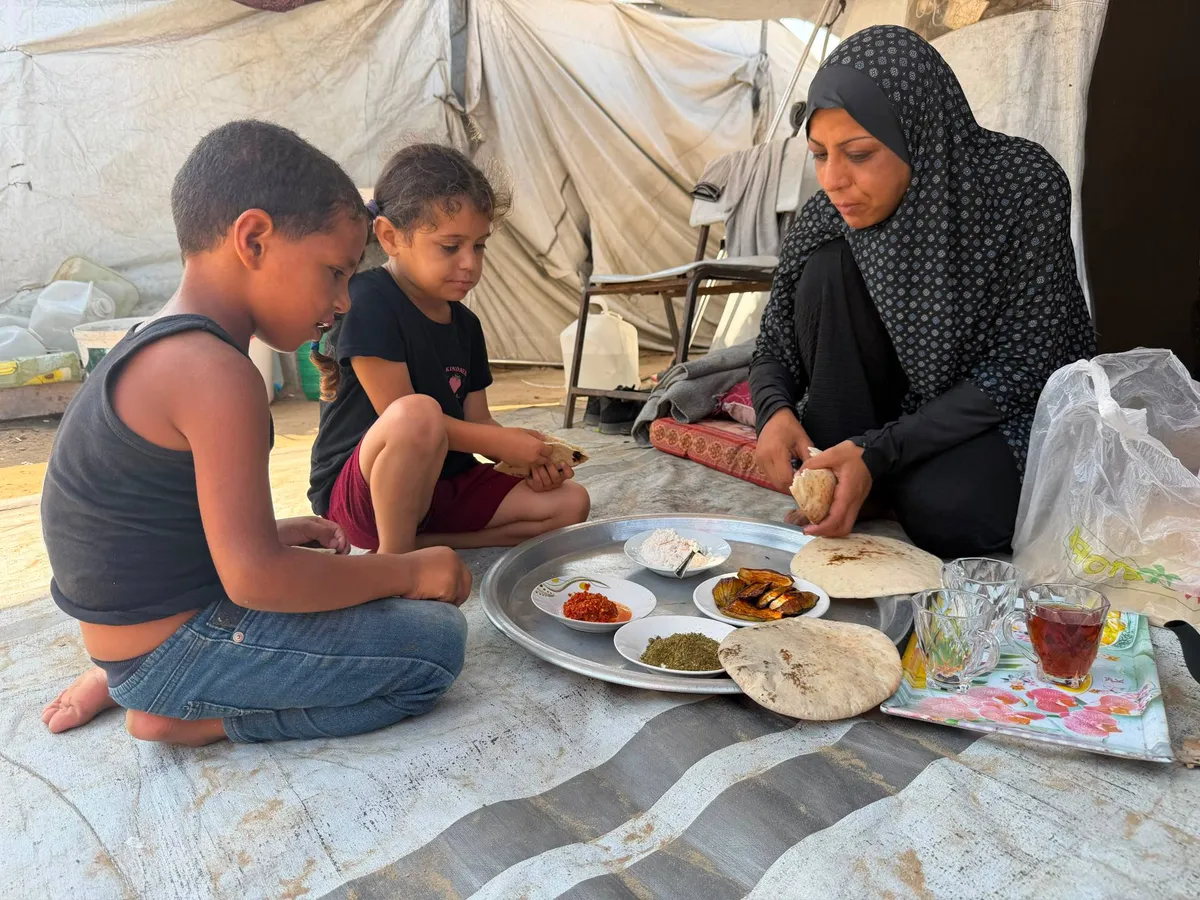
Amid legal struggles, Gaza women opt for quicker divorces, sacrificing rights to escape prolonged court battles.Sohair al-Bardoni with two of her children [Eman Abu Zayed/Al Jazeera]Published On 13 Aug 2026Gaza City, Gaza Strip – Sohair al-Bordani was displaced and living in central Gaza’s Nuseirat camp, trying to take care of her four children, as war raged all around her.And while she survived, her 10-year marriage has not. Al-Bordani, 30, explained that the arguments between her and her ex-husband had intensified since the war began in 2023, as the stress of merely existing in Gaza weighed down on them.Recommended Stories list of 3 itemslist 1 of 3Trump remarks on diminishing impact of pro-Israel groups in Congresslist 2 of 3Iran remains defiant as it vows to fight US until demands metlist 3 of 3‘Burn in hell’: Israeli settlers spread hate through graffiti, attacksend of listBut al-Bordani encountered a problem. Israel’s genocidal war on Gaza – in which Israel has killed more than 73,000 Palestinians – has devastated many aspects of the Palestinian enclave’s administration, including its legal system.To get a court-ordered divorce, with the accompanying financial claims she would be eligible for, al-Bordani would have to go before a religious court and establish her case. She said that she initiated legal proceedings in February 2025. But, because of delays to the judicial process brought on by the war, the case dragged on.And so, al-Bordani chose the speedier option available to her – khulu, a form of divorce initiated by the wife that can involve relinquishing financial rights. In her case, this meant that she returned her dowry to her ex-husband and gave up the financial support she would have been entitled to.“I gave up everything because obtaining my rights under these circumstances had become extremely difficult,” al-Bordani said. “I only wanted to find peace and start a new life away from everything I experienced during that period.”Legal delaysAl-Bordani’s story reflects the experience of many women in Gaza who have found themselves trapped between delayed legal cases and a war that has disrupted access to the justice system, leaving decisions that are supposed to determine their futures suspended until conditions allow courts to resume their work fully.Some personal status cases – including divorces – have reached Gaza’s religious courts, which oversee the matters.According to Sheikh Hassan al-Jojo, the head of the Supreme Council of Sharia Judiciary in Gaza, courts have handled more than 8,700 divorce cases from the beginning of the war in October 2023 until the end of May.That is despite the many challenges they face, including – but not limited to – damage to court buildings and shortages of judges and other staff.Al-Jojo also said that courts had returned to near-full judicial work, while services continued even during periods when court buildings were closed.But he also pointed out that the courts were operating with severely limited resources. Each court – according to al-Jojo – has only one computer, while repeated power cuts, shortages of printed materials and a lack of basic office supplies continue to affect their work.“Essential services, including marriages and divorces, and other procedures needed by citizens, did not stop,” al-Jojo said. “But the priority at this stage is to keep providing the service, rather than improving it.”Troubling consequencesYet divorce figures alone do not reflect the full impact of the war on families. The delays in accessing the legal system have meant that women like al-Bordani have been unable to pursue their legal rights after separation, particularly in cases involving child custody, spousal and child maintenance, and other financial payments that are typically due to the wife.Mohammad al-Talaa, a lawyer in Gaza, says that the war has significantly affected the functioning of judicial institutions, leading to the postponement of thousands of hearings and the suspension of many cases.He added that thousands of files and documents have been lost due to Israeli bombing and the destruction of offices, making it difficult to prove rights, particularly in civil and property-related cases.And with regard to personal status cases, al-Talaa pointed out that the suspension of enforcement departments in courts has left women entitled to payments without that financial support, and has also affected child visitation and custody cases, leaving some parents unable to implement decisions related to maintaining contact with their children.The problems are not just legal. Al-Talaa explained that the continued delay in divorce and separation cases has left some women trapped in marriages they want to get out of. It has also prevented them from moving on with their lives, while delays in access to financial payments they are owed have increased the burden on families, and a lack of resolution on cases involving children has led to increased psychological stress for all involved, alongside the trauma caused by the war itself.Suad al-Naami was not willing to deal with being stuck in limbo, and decided to get a khulu divorce even if it meant giving up on the rights a court-mandated divorce would have granted her.The 22-year-old had only been married for five months, but with disputes with her ex-husband increasing, she left.“I never imagined my married life would begin this way,” al-Naami said. “I hoped we would have a home and a stable life, but displacement and living in a tent made everything more difficult.”For the young woman, the promise of a new start, amid all the destruction around her in Gaza, was better than a drawn-out case.“Giving up on my rights was not an easy matter, but I felt that entering a long legal process and waiting for years would only increase my suffering,” al-Naami said. “I only wanted to end the disputes and start over, because staying in a relationship full of problems under these circumstances would have been harder than the decision to separate itself.”
SRCAl Jazeera
LANGEN
LEANCenter
WORDS959
ENT10
THU · 2026-08-13 · 07:01 GMTBRIEF NSR-2026-0813-101828
NSR-2026-0813-101828News Report·EN·Legal & Judicial
Palestinian women in Gaza face legal hurdles in divorce struggles
Palestinian women in Gaza are opting for quicker divorce processes, such as khulu, which often requires them to relinquish financial rights, to escape lengthy legal battles. The ongoing war has severely disrupted Gaza's legal system, causing significant delays in court proceedings for personal status cases, including divorces.
Eman Abu ZayedAl JazeeraFiled 2026-08-13 · 07:01 GMTLean · CenterRead · 4 min
Al JazeeraFIG 01
Reading time
4min
Word count
959words
Sources cited
2cited
Entities identified
10entities
Quality score
100%
§ 01
Briefing Summary
AI-generatedNEWSAR · AI
Palestinian women in Gaza are opting for quicker divorce processes, such as khulu, which often requires them to relinquish financial rights, to escape lengthy legal battles. The ongoing war has severely disrupted Gaza's legal system, causing significant delays in court proceedings for personal status cases, including divorces. Women like Sohair al-Bordani are returning dowries and forfeiting financial support to achieve a swift separation and begin new lives. While Gaza's religious courts continue to handle divorce cases, they operate with severely limited resources, including damaged buildings, staff shortages, and a lack of basic supplies. These legal delays prevent women from pursuing their entitlements, such as child custody and financial support, increasing psychological stress and trapping them in unwanted marriages.
Confidence 0.90Sources 2Claims 5Entities 10
§ 02
Article analysis
Model · rule-basedFraming
Legal & Judicial
Human Interest
Tone
Measured
AI-assessed
CalmNeutralAlarmist
Factuality
0.70 / 1.00
Factual
LowHigh
Sources cited
2
Limited
FewMany
§ 03
Key claims
5 extracted01
Sohair al-Bordani, a 30-year-old woman in Gaza, returned her dowry and gave up financial support to expedite her divorce process.
quoteSohair al-Bordani
Confidence
1.00
02
Gaza's religious courts have handled over 8,700 divorce cases from October 2023 to May 2024, despite facing challenges like damaged buildings and staff shortages.
statisticSheikh Hassan al-Jojo
Confidence
0.95
03
The war in Gaza has devastated many aspects of the Palestinian enclave's administration, including its legal system.
factual
Confidence
0.90
04
Palestinian women in Gaza are opting for quicker divorce methods like khulu, often relinquishing financial rights, due to legal system delays caused by the ongoing war.
factual
Confidence
0.90
05
Courts in Gaza have returned to near-full judicial work, with services continuing even when buildings were closed.
factualSheikh Hassan al-Jojo
Confidence
0.85
§ 04
Full report
4 min read · 959 words§ 05
Entities
10 identifiedKey playerOppositionContextPositiveNeutralNegative
Organizations1
Locations4
Topics1
§ 06
Keywords & salience
8 termsdivorce struggles
1.00
gaza women
1.00
legal hurdles
0.90
khulu
0.80
war in gaza
0.70
judicial process
0.60
sacrificing rights
0.50
religious court
0.40
§ 07
Topic connections
Interactive graph Network visualization showing 51 related topics
View Full Graph Person Organization Location Event|Click node to navigate|Edge numbers = shared articles