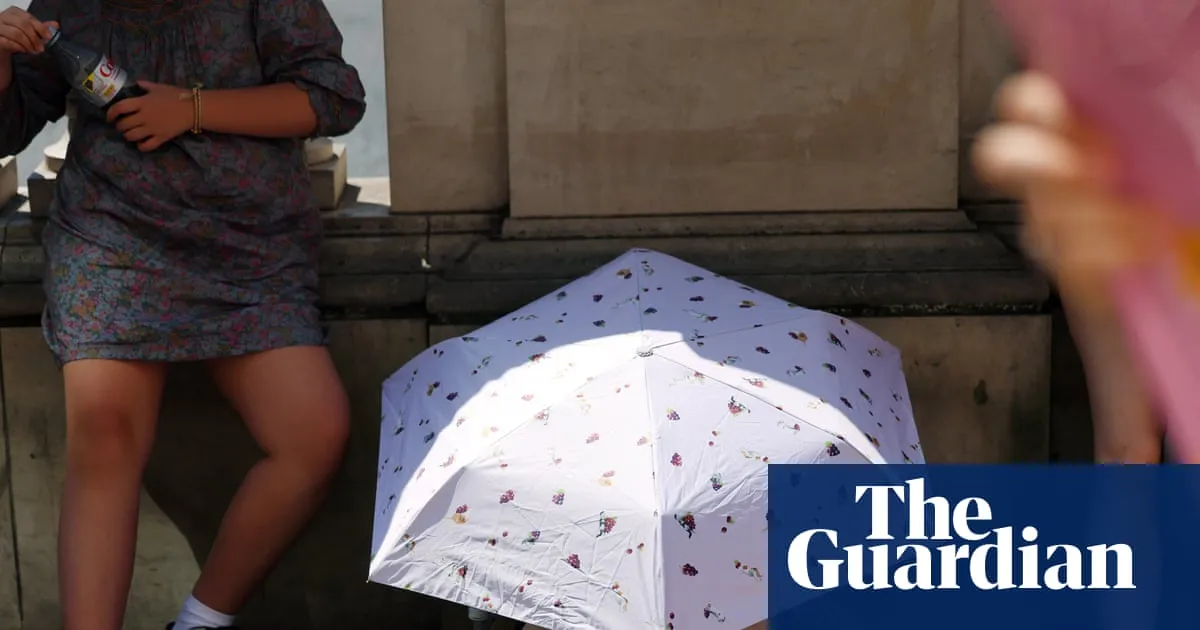
In heatwaves, it’s important to ensure children stay hydrated and rest in cool, shaded areas. Photograph: Andy Rain/EPAIn heatwaves, it’s important to ensure children stay hydrated and rest in cool, shaded areas. Photograph: Andy Rain/EPABiological factors mean a child’s core temperature rises faster than an adult’s – and that can result in a medical emergencyChildren and babies are more vulnerable in heatwaves than healthy adults. As temperatures rise again, how do we keep children safe?Why are children more vulnerable to hot weather?The biological systems that regulate heat in the human body are controlled by a region of the brain called the hypothalamus. It is the body’s master thermostat, acting to keep our internal temperature around 37C. It also detects when we need more fluids.When the hypothalamus detects a rise in temperature, it initiates responses such as sweating, which cools the body through evaporation, or vasodilation, which directs warm blood to vessels near the surface of the skin, where heat can radiate away.But in children, particularly those under the age of five, the hypothalamus is not fully developed. They sweat less and do not realise when they are thirsty.Also, children’s smaller physical size gives them a substantially greater body surface area-to-mass ratio than adults, meaning they absorb heat faster. They are also more likely to be physically active, and less likely to pace themselves, giving them much higher rates of metabolic heat production compared with adults.All these factors mean children’s core temperatures rise faster, and stay high, compared with an adult.What can happen if a child gets too hot?If a child has been out too long in the sun, they may begin to develop heat exhaustion. They may sweat excessively, their skin may appear pale and clammy, and they may become dizzy, irritable or intensely thirsty. In more serious cases, they may begin to suffer muscle cramps and nausea, or even start vomiting.At this point it is important to act, encouraging your child to come to a cooler, shaded spot, to have cold drinks, and to cool them down with wet towels or water, because the next stage – heatstroke – is even more severe.According to the British Red Cross, heatstroke occurs when someone becomes so hot their brain’s thermostat fails. A child with heatstroke may have hot, flushed and dry skin, a headache, worsening confusion and restlessness, and a body temperature of more than 40C. He or she may lose consciousness. It is a medical emergency.Overheating carries particularly serious health risks for children under five, and it is especially dangerous for babies, increasing the risk of sudden infant death syndrome (Sids).What should I do to keep my child safe?During the June heatwave in the UK, one in six babies were living in overheated homes, according to research by housing activists. Some parents were going as far as booking air-conditioned hotel rooms to keep their children cool.“Things to think about when it comes to children in heatwaves include: ensuring children stay well-hydrated; encouraging rest in cool, shaded areas; dressing children in light, loose-fitting clothing; and monitoring for signs of heat distress, such as fatigue, dizziness, or nausea,” said Dr Jessica Mee, an expert in heat physiology at the University of Worcester.babies, in particular, need special treatment, since they are so reliant on adults to make adaptations for them. In very hot weather, they may need extra breast or bottle feeds. They should not be left to sleep in their pram, which can become hot and airless, and when they are put down to sleep, parents should ensure there is good air circulation around them.If you have a newborn, the National Health Service recommends keeping their room at a temperature of between about 16C and 20C.If you are using a fan, do not point it directly at your baby, but use it to keep the air circulating around them. If you do not have a fan, and it is really hot, you can put cool, damp cloths on your baby’s body – but check on them regularly to ensure they are not getting too cold.More on this storyMore on this storyNurses fainting in ‘inhumane’ conditions due to extreme heat, union warnsEurope is the world’s fastest warming continent. What is to blame?Weatherwatch: Why Britain’s heatwaves don’t always end with thunderstormsEurope’s dry riverbeds and scorched earth – in picturesAndy Burnham to chair emergency Cobra meeting amid extreme heatItaly to place all 27 of its major cities on highest heat alertRace to extinguish blazes across Europe as fire weather breaks recordsUK heatwaves may have cost economy £4.4bn in lost output so far this year, analysis findsClimate crisis-driven heat ‘sucking soils dry’ as extreme drought hits Europe‘Real struggle’ to tame New Forest blaze as UK set for hottest summer on recordMost viewedMost viewed
SRCThe Guardian - World News
LANGEN
LEANCenter-Left
WORDS787
ENT10
THU · 2026-08-13 · 08:13 GMTBRIEF NSR-2026-0813-101867
NSR-2026-0813-101867News Report·EN·Public Health
How to keep babies and children safe in heatwaves
Children and babies are more vulnerable to heatwaves than adults due to biological factors, including an underdeveloped hypothalamus and a higher body surface area-to-mass ratio, causing their core temperatures to rise faster. This can lead to heat exhaustion, characterized by excessive sweating, paleness, dizziness, and irritability, or the more severe heatstroke, a medical emergency where the body's thermostat fails, potentially causing confusion, a high fever, and loss of consciousness.
Damien Gayle Environment correspondentThe Guardian - World NewsFiled 2026-08-13 · 08:13 GMTLean · Center-LeftRead · 4 min
The Guardian - World NewsFIG 01
Reading time
4min
Word count
787words
Sources cited
1cited
Entities identified
10entities
Quality score
100%
§ 01
Briefing Summary
AI-generatedNEWSAR · AI
Children and babies are more vulnerable to heatwaves than adults due to biological factors, including an underdeveloped hypothalamus and a higher body surface area-to-mass ratio, causing their core temperatures to rise faster. This can lead to heat exhaustion, characterized by excessive sweating, paleness, dizziness, and irritability, or the more severe heatstroke, a medical emergency where the body's thermostat fails, potentially causing confusion, a high fever, and loss of consciousness. To protect children, parents should ensure they stay hydrated, rest in cool, shaded areas, and wear light clothing. For babies, maintaining a cool room temperature, providing extra feeds, and ensuring good air circulation are crucial. Fans should circulate air rather than blow directly on infants, and cool, damp cloths can be used cautiously.
Confidence 0.90Sources 1Claims 5Entities 10
§ 02
Article analysis
Model · rule-basedFraming
Public Health
Human Interest
Tone
Measured
AI-assessed
CalmNeutralAlarmist
Factuality
0.80 / 1.00
Factual
LowHigh
Sources cited
1
Limited
FewMany
§ 03
Key claims
5 extracted01
Heatstroke in children is a medical emergency characterized by hot/dry skin, headache, confusion, and a body temperature over 40C.
factualBritish Red Cross
Confidence
1.00
02
Heat exhaustion in children can manifest as excessive sweating, pale/clammy skin, dizziness, irritability, or thirst.
factual
Confidence
1.00
03
Children have a greater body surface area-to-mass ratio, absorb heat faster, and are more active, increasing metabolic heat production.
factual
Confidence
1.00
04
Children's hypothalamus, which regulates body temperature, is not fully developed, leading to less sweating and delayed thirst.
factual
Confidence
1.00
05
Children and babies are more vulnerable in heatwaves than healthy adults due to biological factors.
factual
Confidence
1.00
§ 04
Full report
4 min read · 787 words§ 05
Entities
10 identifiedKey playerOppositionContextPositiveNeutralNegative
Organizations2
§ 06
Keywords & salience
10 termsheatwaves
1.00
child safety
1.00
vulnerability
0.90
heat exhaustion
0.80
heatstroke
0.80
hydration
0.70
thermoregulation
0.60
hypothalamus
0.50
body temperature
0.50
babies
0.40
§ 07
Topic connections
Interactive graph Network visualization showing 9 related topics
View Full Graph Person Organization Location Event|Click node to navigate|Edge numbers = shared articles