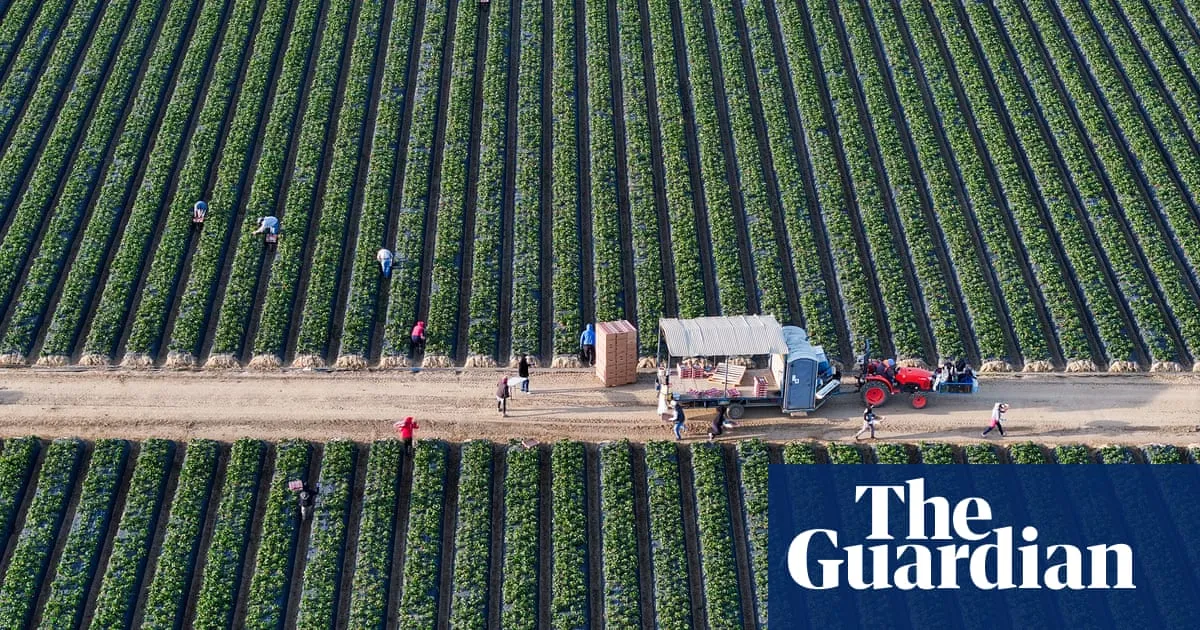
California is banning paraquat, a highly toxic, controversial herbicide used across millions of acres of American cropland.Public health advocates characterize it as a deadly substance that is virtually proven to cause Parkinson’s disease. It is already outlawed in more than 70 countries, including China, the UK and the EU. Yet in the US, the Environmental Protection Agency (EPA) reapproved it for use in 2021 and 2024.California is the US’s largest user of the pesticide, and largest agricultural producer, so advocates have hailed the decision as a major public health win. It is the second US state to prohibit paraquat, following Vermont, and its decision comes after the state legislature passed a 2024 law requiring the pesticide division to re-evaluate the substance’s health risks.“paraquat is the most acutely lethal pesticide ever made,” said Nathan Donley, environmental health science director with the Center for Biological Diversity, which has for years helped lead a coalition of public health and farm worker groups that have pressured state and federal governments to prohibit the substance.“I don’t think anyone thought this was going to happen this quickly, but it’s very welcome news.”paraquat has been used for decades as a powerful herbicide that can rapidly kill weeds. About 14m pounds annually are sprayed on US wine grapes, pistachios, almonds, walnuts, pears, citrus, soya beans, cotton and other crops, most commonly in California’s Central valley and the Mississippi River valley. The substance’s use tripled in the US between 2008 and 2018, and has since continued to shoot up.Exposure to paraquat via skin or inhalation is linked to death, cancer, heart failure, kidney failure, liver failure and scarring of the lungs. There is no antidote for paraquat poisoning and the pesticide’s severe toxicity is highlighted on an Environmental Protection Act website titled paraquat Dichloride: One Sip Can Kill.Research shows paraquat interferes with dopamine production and regulation, and people with Parkinson’s have reduced dopamine levels. Agricultural workers and communities are most at risk – an epidemiological study of central California farming communities exposed to paraquat and another herbicide clearly showed an increased level of Parkinson’s.It is also among the most harmful pesticides to wildlife, and in California threatened at-risk species such as the San Joaquin kit fox and the Swainson’s hawk.“We’re really the last major agricultural power that still uses paraquat, and we use a ton of it,” Donley said.The California department of pesticide regulation (DPR) announced on Tuesday that it had canceled the state’s last remaining paraquat pesticide registration, and it would be phased out over two years.In a statement, the department said the “voluntary” decision by industry to stop using the substance in California came after the legislature passed a law in 2024 requiring regulators to begin re-reviewing paraquat’s risks. It was opposed by agricultural industry groups, such as the California Farm Bureau, which claimed that the law “bypasses the scientific review process” and would lead to a ban of paraquat. It suggested at the time that it would sue, though no legal case has been filed.A DPR preliminary review confirmed the human health concerns, including associations between paraquat exposure and thyroid disease, reproductive harms and birth defects.The DPR also found potential risks to birds and mammals, and wrote that restrictions designed to reduce environmental exposure might not be effective because paraquat remains in the soil potentially for decades.skip past newsletter promotionafter newsletter promotionThe department began requesting updated data from pesticide makers on health and environmental risks. Instead of sharing that information, the pesticide makers decided to stop using paraquat in the state. Syngenta, the Chinese-owned firm that made the largest amount of the pesticide, withdrew its use permit in April, and announced it would stop producing the substance altogether.Advocates say industry almost certainly made the decision to withdraw instead of sharing the health science because the data is so alarming.“We need the right data to identify where there are risks to people and the environment,” said the DPR’s director, Karen Morrison.The California decision comes amid a battle at the federal level, and could put more pressure on the EPA to act. Public health groups, led by the Earthjustice non-profit, have sued, charging that the EPA has ignored broad scientific consensus linking the substance to Parkinson’s. That legal challenge remains ongoing.Donley said several issues are behind the EPA’s steadfast refusal to ban paraquat – industry influence at the agency and weak federal pesticide laws. Whistleblowers have said the EPA’s pesticide division is captured by industry. The Guardian in 2023 revealed how internal corporate documents showed Syngenta had sought to influence regulators’ decision-making around the chemical, withheld risks from the public and attempted to edit unfavorable studies.Meanwhile, it maintained a “Swat team” that responded to independent reports that could interfere with its “freedom to sell” paraquat. A significant portion of the agency’s funding also comes from approving new pesticides.“There’s just a regulatory capture there that is entrenched in the culture at the EPA, and has been for decades, and there is no desire within the agency to go against what industry wants,” Donley said.He added: “Even if the EPA wanted to do the right thing, it’s very hard for them to do that because of the weak laws. They have to jump over a million hoops.”
SRCThe Guardian - World News
LANGEN
LEANCenter-Left
WORDS867
ENT12
THU · 2026-08-13 · 12:00 GMTBRIEF NSR-2026-0813-101942
NSR-2026-0813-101942News Report·EN·Public Health
California bans paraquat, highly toxic herbicide outlawed in more than 70 countries
California is banning paraquat, a highly toxic herbicide linked to Parkinson's disease, making it the second U.S. state to do so after Vermont.
Tom PerkinsThe Guardian - World NewsFiled 2026-08-13 · 12:00 GMTLean · Center-LeftRead · 4 min
The Guardian - World NewsFIG 01
Reading time
4min
Word count
867words
Sources cited
2cited
Entities identified
12entities
Quality score
100%
§ 01
Briefing Summary
AI-generatedNEWSAR · AI
California is banning paraquat, a highly toxic herbicide linked to Parkinson's disease, making it the second U.S. state to do so after Vermont. The state, which is the largest user of the pesticide in the U.S., will phase out its use over two years. This decision follows a 2024 state law requiring a re-evaluation of the substance's health risks. Advocates hail the ban as a public health victory, noting paraquat is already outlawed in over 70 countries, including China, the UK, and the EU, despite the U.S. EPA reapproving it. The ban was prompted by a preliminary review confirming human health concerns and risks to wildlife, leading pesticide makers to voluntarily withdraw its use rather than share updated data.
Confidence 0.90Sources 2Claims 5Entities 12
§ 02
Article analysis
Model · rule-basedFraming
Public Health
Environmental
Tone
Mixed Tone
AI-assessed
CalmNeutralAlarmist
Factuality
0.80 / 1.00
Factual
LowHigh
Sources cited
2
Limited
FewMany
§ 03
Key claims
5 extracted01
The California Department of Pesticide Regulation canceled the state’s last remaining paraquat pesticide registration, to be phased out over two years.
factualCalifornia Department of Pesticide Regulation
Confidence
1.00
02
California is banning paraquat, a highly toxic herbicide.
factual
Confidence
1.00
03
Paraquat is outlawed in more than 70 countries, including China, the UK, and the EU.
factual
Confidence
1.00
04
Exposure to paraquat is linked to death, cancer, heart failure, kidney failure, liver failure, and scarring of the lungs.
factual
Confidence
0.90
05
Public health advocates characterize paraquat as a deadly substance virtually proven to cause Parkinson’s disease.
quotepublic health advocates
Confidence
0.90
§ 04
Full report
4 min read · 867 words§ 05
Entities
12 identifiedKey playerOppositionContextPositiveNeutralNegative
Organizations3
Locations6
§ 06
Keywords & salience
9 termsherbicide
1.00
paraquat ban
1.00
parkinson's disease
0.90
public health
0.80
pesticide toxicity
0.80
california agriculture
0.70
environmental protection agency
0.60
farm workers
0.50
wildlife impact
0.40
§ 07
Topic connections
Interactive graph Network visualization showing 51 related topics
View Full Graph Person Organization Location Event|Click node to navigate|Edge numbers = shared articles