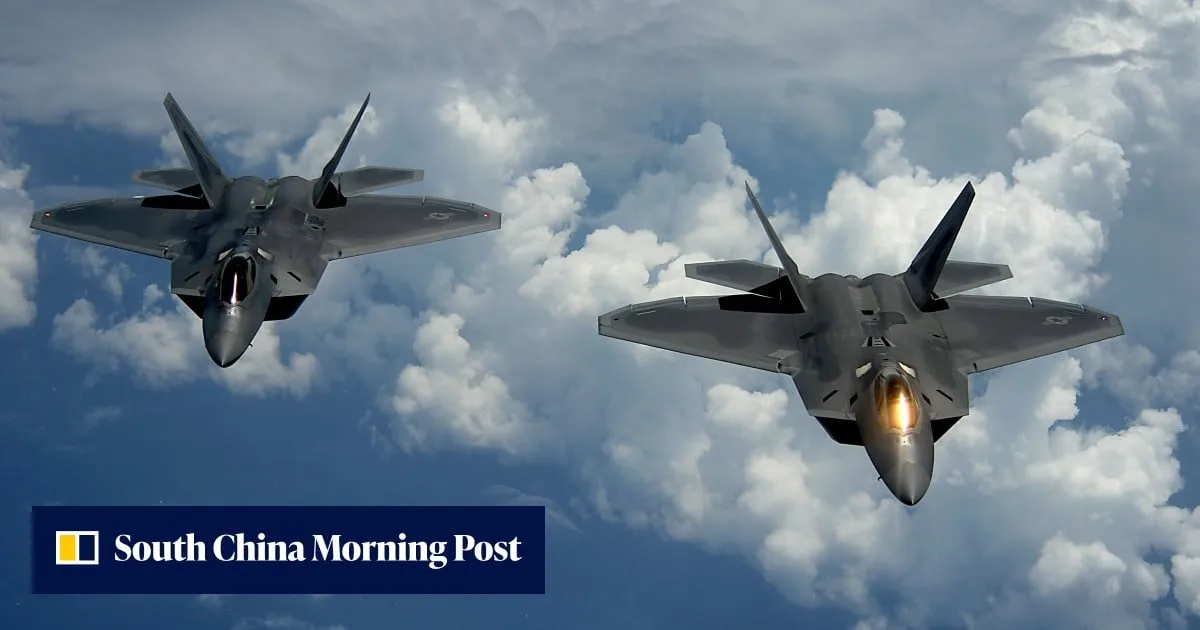
The F-35 and F-22 may be among the world’s most advanced stealth fighters, but they cannot hide one thing: heat.When heat-seeking missiles lock onto aircraft, fighters release flares to confuse infrared sensors and break missile tracking.But the infrared signals produced by fighters, including heat from engine exhaust and air friction over the fuselage, are different from those generated by flares.These heat signatures could provide valuable infrared information for target detection and recognition in future air combat, while making flares useless.Chinese researchers have created a lightweight Artificial Intelligence (AI) system that could help heat-seeking air-to-air missiles identify advanced fighter jets, and they demonstrated its high accuracy in laboratory tests against mock-up F-22 and F-35 targets.“Lightweight recognition models could become widely used in future air-to-air missiles because they can provide high-speed recognition while maintaining strong identification capabilities,” An Jiangshan, first author of the study, said on August 10.
SRCSouth China Morning Post
LANGEN
LEANCenter-Right
WORDS146
ENT5
THU · 2026-08-13 · 14:00 GMTBRIEF NSR-2026-0813-101983
NSR-2026-0813-101983News Report·EN·National Security
Chinese missile AI tracks F-22, F-35-like heat signatures with over 90% accuracy
Chinese researchers have developed a lightweight artificial intelligence (AI) system capable of identifying advanced fighter jets like the F-22 and F-35 by their heat signatures with over 90% accuracy in laboratory tests. This AI system aims to improve heat-seeking missiles' target detection and recognition capabilities in air combat.
Chao KongSouth China Morning PostFiled 2026-08-13 · 14:00 GMTLean · Center-RightRead · 1 min
South China Morning PostFIG 01
Reading time
1min
Word count
146words
Sources cited
1cited
Entities identified
5entities
Quality score
100%
§ 01
Briefing Summary
AI-generatedNEWSAR · AI
Chinese researchers have developed a lightweight artificial intelligence (AI) system capable of identifying advanced fighter jets like the F-22 and F-35 by their heat signatures with over 90% accuracy in laboratory tests. This AI system aims to improve heat-seeking missiles' target detection and recognition capabilities in air combat. The researchers highlight that the infrared signals from aircraft engines and fuselage friction differ from those produced by flares, rendering flares less effective against such advanced missiles. This development, detailed in a study, suggests that lightweight recognition models could become prevalent in future air-to-air missiles due to their speed and identification strength.
Confidence 0.90Sources 1Claims 4Entities 5
§ 02
Article analysis
Model · rule-basedFraming
National Security
Technology
Tone
Mixed Tone
AI-assessed
CalmNeutralAlarmist
Factuality
0.70 / 1.00
Factual
LowHigh
Sources cited
1
Limited
FewMany
§ 03
Key claims
4 extracted01
Lightweight recognition models could be widely used in future air-to-air missiles for high-speed recognition and strong identification.
quoteAn Jiangshan
Confidence
1.00
02
Heat signatures from aircraft are different from flares, potentially making flares useless for missile evasion.
factualarticle
Confidence
0.90
03
Chinese researchers developed an AI system for heat-seeking missiles to identify advanced fighter jets.
factualarticle
Confidence
0.90
04
The AI system demonstrated over 90% accuracy in laboratory tests against mock-up F-22 and F-35 targets.
statisticarticle
Confidence
0.80
§ 04
Full report
1 min read · 146 words§ 05
Entities
5 identifiedKey playerOppositionContextPositiveNeutralNegative
Organizations2
Locations1
§ 06
Keywords & salience
9 termsartificial intelligence
1.00
heat-seeking missiles
1.00
heat signatures
0.90
f-22
0.80
f-35
0.80
stealth fighters
0.70
infrared sensors
0.60
target recognition
0.50
air combat
0.40
§ 07
Topic connections
Interactive graph Network visualization showing 51 related topics
View Full Graph Person Organization Location Event|Click node to navigate|Edge numbers = shared articles