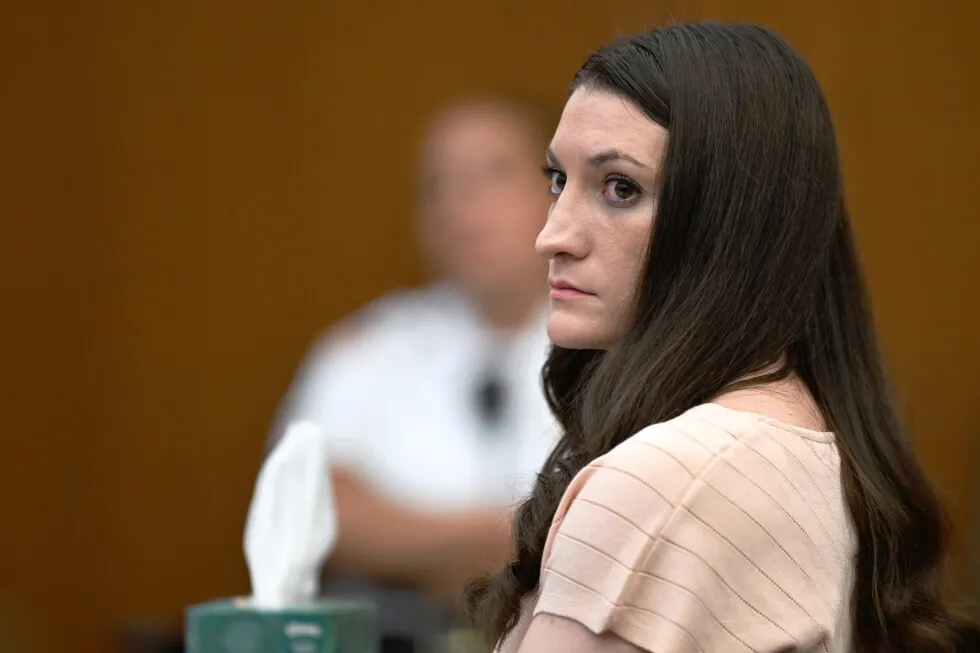
Before killing her kids, Lindsay Clancy searched about hallucinations, psychosis and ways to die 1 of 5 | Lindsay Clancy, during during her murder trial, Thursday, Aug. 13, 2026., in Plymouth, Mass. Josh Reynolds/Pool (AP Photo/Josh Reynolds, Pool) 2 of 5 | REMOVES REFERENCE TO PAVAO- Lindsay Clancy, left, reacts to the reading of her diary entries during testimony as her lawyer Kevin Reddington looks on, during her murder trial, Thursday, Aug. 13, 2026., in Plymouth, Mass. (AP Photo/Josh Reynolds, Pool) 3 of 5 | Paula Musgrove, center and Mike Musgrove, right, parents of Lindsay Clancy react to testimony during Clancy’s murder trial, Thursday, Aug. 13, 2026., in Plymouth, Mass. (AP Photo/Josh Reynolds, Pool) 4 of 5 | Massachusetts-state-police" class="entity-link entity-organization" data-entity-id="184942" data-entity-type="organization">Massachusetts State Police Trooper Joshua McKelligan points to the Clancy family on a video of a family outing to a museum during the murder trial of Lindsay Clancy, Thursday, Aug. 13, 2026., in Plymouth, Mass. (AP Photo/Josh Reynolds, Pool) 5 of 5 | Lindsay Clancy, center, and her lawyer Kevin Reddington, right, listen during testimony during Clancy’s murder trial, Thursday, Aug. 13, 2026., in Plymouth, Mass. (AP Photo/Josh Reynolds, Pool) By MICHAEL CASEY Updated 11:41 PM MESZ, August 13, 2026 Add AP News on Google Add AP News as your preferred source to see more of our stories on Google. Share Share Facebook Copy Link copied Print Email X LinkedIn Bluesky Flipboard Pinterest Reddit PLYMOUTH, Mass. (AP) — Lindsay Clancy searched online about hallucinations, psychosis and the side effects of several drugs she was prescribed in the weeks before she strangled her three young children in January 2023, according to an analysis of her phone data presented at Thursday’s murder trial in Massachusetts. Clancy looked up suicide methods, bipolar disorder and insomnia at the end of December 2022 and, in January, went in search of information on postpartum depression. She also wrote a detailed note in October 2022 expressing doubts about her parenting choices, second-guessing her decision to stop breastfeeding her 8-month-old, and reconsidering plans for a fourth child. The defense says she was in the grip of bipolar disorder and psychosis" class="entity-link entity-topic" data-entity-id="172190" data-entity-type="topic">postpartum psychosis, a rare condition that can alter a woman’s sense of reality after childbirth. A forensic psychiatrist diagnosed Clancy with those conditions following the killings. In her note, the 36-year-old former labor and delivery nurse seemed most concerned with not being able to give her youngest child the same attention as her first two, ages 3 and 5. “I’m terrified of something happening to my kids or doing something wrong to mess up their development,” Clancy’s note read. “Our generation is inundated with information about every aspect of parenting. ... It’s insane. For the last five years, I’ve just filled my mind with all things parenting and it’s just unhealthy.” Lindsay Clancy’s diary chronicled desperation and ‘brain fog’ before she killed her 3 kids 5 MIN READ Lindsay Clancy trial spotlights psychiatric hospital stay before she killed her 3 children 5 MIN READ Defense lawyer takes aim at psychiatrist’s care before Lindsay Clancy killed her 3 kids 5 MIN READ EDITOR’S NOTE: This story includes discussion of suicide. If you or someone you know needs help, the national suicide and crisis lifeline in the U.S. is available by calling or texting 988. Clancy has pleaded not guilty to murder charges in the deaths of Callan, Dawson and Cora Clancy. Their father found the children in the basement of the family’s home in coastal Duxbury, south of Boston. Their mother was lying in the yard after jumping out a second-story window, and remains paralyzed from the waist down. Text messages with her then-husband, Patrick Clancy, show them juggling the routines of parenthood. Massachusetts-state-police" class="entity-link entity-organization" data-entity-id="184942" data-entity-type="organization">Massachusetts State Police cellphone forensics expert Tim Chiappini read aloud texts between them from the day of the killings. They checked in on each other and Lindsay Clancy expressed relief that one of their children’s kidneys were OK. There were also photos of the children. “You’re a good mamma,” Patrick Clancy texted, prompting Lindsay Clancy to respond with a heart and smile emoji. Clancy’s livestreamed trial has generated intense public interest, with journalists and spectators packing the courtroom as online audiences pore over the details of the tragedy. Clancy’s attorneys do not dispute that she killed the children. But they say the jury should not hold her criminally responsible because she was mentally ill, believing she heard voices ordering her to take their lives and her own. Prosecutors argue she was an intentional killer who contrived to get her husband out of the house by sending him to get takeout and to the pharmacy on Jan. 24, 2023, then strangled the children with exercise bands. Prosecutor Shanan Buckingham has urged jurors not to view the trial as “a public debate about women’s mental health and how the medical system treats women.” If convicted of murder, Clancy faces life in prison without parole. If found not guilty due to a lack of criminal responsibility, she would be committed to a state mental health facility. Her attorneys say Clancy did everything she could to seek help: She turned to multiple outpatient providers, tried various drugs they prescribed, called a suicide hotline, went to an emergency room, and approached but wasn’t accepted into a hospital-based, full-day treatment program for women with postpregnancy mental health problems. Clancy even checked herself into a psychiatric hospital for several days. Rather than improving, her condition worsened on the ever-remixed cocktail of psychiatric medications, some of them problematic for bipolar patients, her attorneys and family say. Prosecutors aim to show that Clancy had access to a range of mental health services but sometimes ignored doctors’ advice and stopped taking certain medications. They’ve brought several of her medical providers who testified she never talked about having a plan to harm herself or her children. They say she never showed signs of psychosis or mania, although she did say she was having suicidal thoughts. MICHAEL CASEY Casey writes about the environment, housing and inequality for The Associated Press. He lives in Boston. twitter mailto
SRCAssociated Press (AP)
LANGEN
LEANCenter
WORDS1 005
ENT12
THU · 2026-08-13 · 21:53 GMTBRIEF NSR-2026-0813-102093
NSR-2026-0813-102093News Report·EN·Legal & Judicial
Before killing her kids, Lindsay Clancy searched about hallucinations, psychosis and ways to die
During Lindsay Clancy's murder trial, phone data presented showed she searched online for information on hallucinations, psychosis, and suicide methods in the weeks before strangling her three children in January 2023. She also researched bipolar disorder, insomnia, and postpartum depression.
Associated Press (AP)Filed 2026-08-13 · 21:53 GMTLean · CenterRead · 5 min
Associated Press (AP)FIG 01
Reading time
5min
Word count
1 005words
Sources cited
2cited
Entities identified
12entities
Quality score
100%
§ 01
Briefing Summary
AI-generatedNEWSAR · AI
During Lindsay Clancy's murder trial, phone data presented showed she searched online for information on hallucinations, psychosis, and suicide methods in the weeks before strangling her three children in January 2023. She also researched bipolar disorder, insomnia, and postpartum depression. A note written in October 2022 revealed her doubts about her parenting and plans for a fourth child. The defense claims Clancy was suffering from bipolar disorder and postpartum psychosis, conditions diagnosed by a forensic psychiatrist. Prosecutors argue she intentionally killed her children after orchestrating her husband's absence. Clancy has pleaded not guilty to murder charges.
Confidence 0.90Sources 2Claims 5Entities 12
§ 02
Article analysis
Model · rule-basedFraming
Legal & Judicial
Human Interest
Tone
Mixed Tone
AI-assessed
CalmNeutralAlarmist
Factuality
0.80 / 1.00
Factual
LowHigh
Sources cited
2
Limited
FewMany
§ 03
Key claims
5 extracted01
Clancy wrote a note in October 2022 expressing doubts about her parenting and concerns about her children's development.
quoteLindsay Clancy
Confidence
1.00
02
In January 2023, Clancy searched for information on postpartum depression.
factualanalysis of phone data presented at trial
Confidence
1.00
03
Clancy looked up suicide methods, bipolar disorder, and insomnia in late December 2022.
factualanalysis of phone data presented at trial
Confidence
1.00
04
Lindsay Clancy searched online about hallucinations, psychosis, and drug side effects in the weeks before killing her children.
factualanalysis of phone data presented at trial
Confidence
1.00
05
The defense argues Clancy was in the grip of bipolar disorder and postpartum psychosis.
factualdefense
Confidence
0.90
§ 04
Full report
5 min read · 1 005 words§ 05
Entities
12 identifiedKey playerOppositionContextPositiveNeutralNegative
People4
Organizations1
§ 06
Keywords & salience
8 termspostpartum psychosis
1.00
hallucinations
0.90
psychosis
0.90
murder trial
0.80
bipolar disorder
0.70
mental health
0.60
phone data analysis
0.50
suicide methods
0.40
§ 07
Topic connections
Interactive graph Network visualization showing 24 related topics
View Full Graph Person Organization Location Event|Click node to navigate|Edge numbers = shared articles