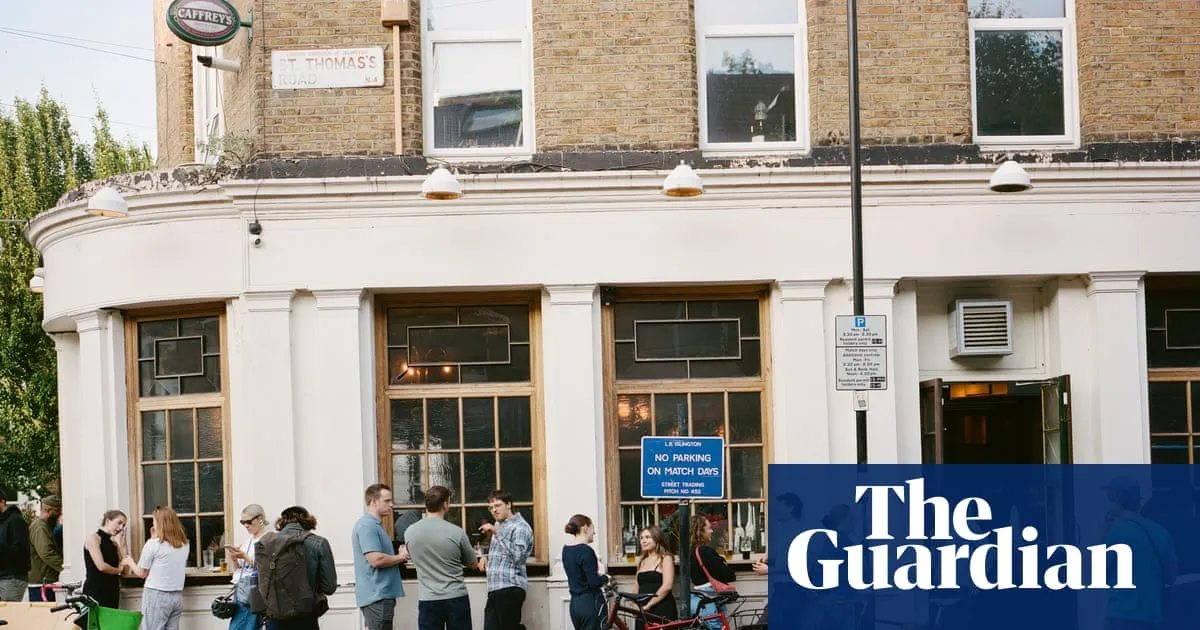
In the sweltering kitchen of the Plimsoll pub in north London, the head chef, Joshua Swinney, has a frozen tea towel wrapped around his neck to combat the heat.As temperatures exceeded 35C (95F) in the capital, workers who were not lucky enough to be in air-conditioned offices sweltered in the heat.To cope, Swinney said the pub tried to put more dishes on the menu that did not require ovens or stoves. That is tricky, however, when it is most famed for its cheeseburger, the making of which entails standing over a grill.“Suddenly you realise you have seven salads on and can’t get enough raw fish dishes in there,” he said. “As for the heat itself, fans help, but mostly just blow the hot air around, and you can’t have them in the service kitchen.” He said kitchen staff had been known to keep cool a number of ways: “I’ve even seen someone take an ice bath in a flexi bucket.”Swinney is just about managing, but bakers, construction workers, bus drivers, paramedics and teachers all say heatwaves are becoming incredibly dangerous for them. A campaign for a maximum working temperature, to bring England into line with other European countries, is gathering pace.A worker sweeps the street outside a construction site during a heatwave in June. Photograph: Toby Shepheard/AFP/Getty ImagesSpain is the gold standard: the maximum working temperatures for sedentary work, such as office work, is 27C, while for light physical work it is 25C. In Belgium, it is 29C for light physical work, 26C for a moderately heavy physical work, 22C for heavy physical work and 18C for very heavy physical work.Kenny Dinsdale, a construction worker, said there was a risk to life from working in extreme heat. “If you’re not careful, you run the risk of significant injury, either through dehydration or through heat stroke or, you know, the ultimate thing is death.”He said the demographics of the construction industry meant workers like him were particularly at risk. “We’re an older workforce. I’m 65 years of age coming up this birthday, I’m still working in the industry.” He suggested construction should adopt more “Mediterranean-style hours” to avoid the heat of the day.Bakers, with their large, hot ovens, often working in small unventilated spaces, were also struggling. Sarah Woolley, the chair of the Bakers, Food and Allied Workers’ Union, said: “As it heats up outside, an already hot workplace with ovens and provers is going to get hotter still.” Her union has been calling for a maximum working temperature for a decade.Bakers often work in small poorly ventilated spaces. Photograph: Andrew HassonShe said that rather than just putting regular fans in their bakeries, some employers had implemented extra measures, such as relaxing the uniform guidance without impacting food safety standards, providing cold water and offering additional breaks. “But others, where we haven’t got [union] recognition, stay open and expect workers to continue as normal. Some employers have provided isotonic drinks rather than just ice pops, reduced lines running, and instructed unnecessary equipment, like hot holds, to be turned off rather than adding to the heat.”It is difficult for essential workers, such as paramedics, to stop working in intense heat, but they are asking to be allowed to shed their sweltering uniforms when temperatures reach a certain level.An ambulance medical technician in Birmingham said: “Working in the heat has been awful. It’s vile. It’s also ridiculously busy when it’s hot. We have one uniform, whether it’s -10C or 30C. You’re sweating even when you’re just driving. I could have cried during my last shift. I often think: ‘I can’t do this again’.”A London paramedic said of his uniform: “I love the good weather, but the minute I put my uniform on, it’s unbearable. I recently had to carry someone down from the seventh floor, and I don’t think I’ve ever sweated that much in my life. I work at capacity, both physically and mentally. The physical demands of working in the heat are extreme.”Unison’s head of policy, Sampson Low, said: “Paramedics, cleaners and other public sector workers have no choice but to carry on when the mercury rises. Extreme heat not only brings a rise in demand for care but can also affect the health of staff. What’s needed are thresholds based on evidence. This is for jobs where work can’t simply stop when a temperature is reached.”Bus drivers have been voicing their frustration about the greenhouse-like effect in their cabs, where air conditioning, if it exists, often does not work and temperatures can exceed 40C. Some have recently gone on strike to protest against their conditions.One London bus driver said: “The buses are at the poorest state ever. The aircon barely works, the heatwave is icing on the cake. I feel we as bus drivers are treated extremely unfairly and we just add up numbers, to the companies we mean nothing.’Another added: “The buses don’t have AC, they think putting a little fan in the cab helps. It doesn’t. The cab’s temperature is hotter than being outside, it’s ridiculous. Something needs to be done. I have suffered with migraines and when it’s hot they get worse.”The Trades Union Congress’s health and safety lead, Huma Haq, said: “The experience from other countries is clear: maximum workplace temperatures can work. If they work in Spain, where summers are far hotter than in the UK, they can work here too. Unions are calling for rules that require employers to take action to reduce temperatures when they exceed 24C, and for work to stop when temperatures reach 30C, or 27C for strenuous jobs.“Unions have been leading this campaign, and right now workers are taking action to keep themselves safe as temperatures climb to extremes again. From bus drivers in north London to front of house at the V&A Museum, workers are using their collective power to bring about the changes needed for cooler and safer workplaces.”
SRCThe Guardian - World News
LANGEN
LEANCenter-Left
WORDS981
ENT12
FRI · 2026-08-14 · 05:00 GMTBRIEF NSR-2026-0814-102179
NSR-2026-0814-102179News Report·EN·Public Health
Builders, bakers and cheeseburger-makers: the UK workers struggling in extreme heat
UK workers in physically demanding jobs, including chefs, construction workers, bakers, paramedics, and bus drivers, are struggling with extreme heat. Temperatures exceeding 35C are making workplaces like kitchens and construction sites dangerous, leading to risks of dehydration and heatstroke.
Helena Horton and Deborah SolomonThe Guardian - World NewsFiled 2026-08-14 · 05:00 GMTLean · Center-LeftRead · 4 min
The Guardian - World NewsFIG 01
Reading time
4min
Word count
981words
Sources cited
3cited
Entities identified
12entities
Quality score
100%
§ 01
Briefing Summary
AI-generatedNEWSAR · AI
UK workers in physically demanding jobs, including chefs, construction workers, bakers, paramedics, and bus drivers, are struggling with extreme heat. Temperatures exceeding 35C are making workplaces like kitchens and construction sites dangerous, leading to risks of dehydration and heatstroke. Unions are advocating for a maximum working temperature, similar to European countries, to protect workers. Some employers are implementing measures like providing cold water and extra breaks, while others expect work to continue as normal. Essential workers like paramedics are requesting to shed uniforms in high temperatures, and bus drivers are protesting poor conditions in their cabs.
Confidence 0.90Sources 3Claims 5Entities 12
§ 02
Article analysis
Model · rule-basedFraming
Public Health
Human Interest
Tone
Mixed Tone
AI-assessed
CalmNeutralAlarmist
Factuality
0.70 / 1.00
Factual
LowHigh
Sources cited
3
Well sourced
FewMany
§ 03
Key claims
5 extracted01
Extreme heat poses risks of dehydration, heat stroke, and potentially death to outdoor and physically demanding workers.
quoteKenny Dinsdale
Confidence
0.95
02
Bakers, working in hot environments with ovens, face exacerbated heat conditions during heatwaves.
quoteSarah Woolley
Confidence
0.90
03
Spain has maximum working temperatures of 27C for sedentary work and 25C for light physical work.
statistic
Confidence
0.90
04
Workers in non-air-conditioned environments struggle significantly in extreme heat exceeding 35C.
factual
Confidence
0.90
05
A campaign for a maximum working temperature in England is gaining momentum, aiming to align with European standards.
factual
Confidence
0.85
§ 04
Full report
4 min read · 981 words§ 05
Entities
12 identifiedKey playerOppositionContextPositiveNeutralNegative
People4
Locations4
§ 06
Keywords & salience
10 termsextreme heat
1.00
working conditions
0.90
heatwaves
0.80
occupational health
0.70
maximum working temperature
0.70
construction workers
0.60
dehydration
0.50
heat stroke
0.50
bakers
0.50
uk workers
0.40
§ 07
Topic connections
Interactive graph Network visualization showing 16 related topics
View Full Graph Person Organization Location Event|Click node to navigate|Edge numbers = shared articles