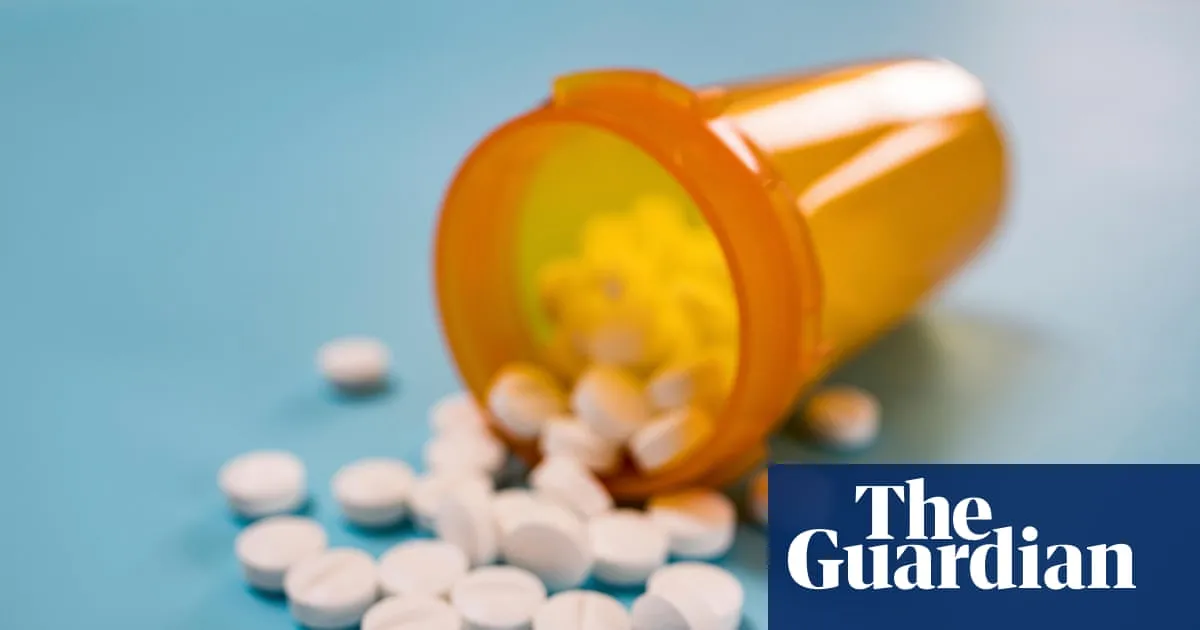
Experts are warning that fake weight-loss treatments could become more prevalent as tablet forms of the medications, currently available only via injections in the UK, are launched.They say stronger regulation and enforcement are needed to prevent fraudsters from cashing in on tablets which will be easier to counterfeit.While pill forms of weight-loss medications are expected to be much cheaper, and hence more accessible than injectable versions, experts have warned they are also an easier target for fraudsters.“Pills are much easier prey for scammers than injectables as they require relatively accessible equipment to manufacture the pill – something to mix the powders and a pill press – and can provide the scope for vast production,” said Bhavik Patel, a professor of clinical and bioanalytical chemistry at the University of Brighton.In the UK, the demand for weight-loss jabs such as Wegovy and Mounjaro has grown, with trials suggesting they can help people lose on average about 14% and 20% of their body weight respectively after 72 weeks.However, the jabs are expensive, require an injection pen and needles, and must be refrigerated.Now pharmaceutical companies are working on oral versions of the medications, creating tablets containing drugs that mimic the hormone GLP-1.A pill form of Wegovy, produced by Novo Nordisk, was approved by the US Food and Drug Administration (FDA) last month and is under assessment by the UK’s Medicines and Healthcare products Regulatory Agency (MHRA), while Orforglipron from Eli Lilly has completed phase-three clinical trials and has been submitted to the FDA for review.Dr Bernard Naughton, an associate professor and researcher in pharmaceutical regulation and innovation at Trinity College Dublin, said counterfeit pills could include medications taken out of the legitimate supply chain – and potentially stored incorrectly – while they could also be contaminated, or contain an incorrect dose, incorrect active ingredient or no active ingredient at all.“We can see already that there have been some examples of the injections being falsified,” said Naughton. “It’s relatively easy to just create a pill and, if you’ve got good packaging, to falsely put it forward as the legitimate product.”Naughton said his own research of patient behaviour with other medications has suggested people seemed more likely and more willing to take a risk online with tablets than injections.“So even when they think there might be something wrong, I have seen examples of people still going ahead and actually buying it and taking it,” he said.Novo Nordisk said its Wegovy pill not only contained the active ingredient semaglutide, but also a substance called SNAC (salcaprozate sodium) that enhances the absorption of the drug.“Only Novo Nordisk manufactures FDA-approved semaglutide medicines with this SNAC technology,” a spokesperson said. “Compounded semaglutide is not approved by the FDA and may contain impurities, unnecessary additives, and untested doses.”There is a precedent for fake weight-loss medications, with the MHRA having repeatedly issued warnings of the importance of buying jabs only from registered pharmacies or legitimate retailers.Oksana Pyzik, an associate professor at the UCL school of pharmacy, said demand for medications such as Wegovy and Mounjaro had outpaced regulated supply, while price rises for some products have also been linked to people seeking cheaper alternatives online via unlicensed routes.“While oral weight-loss drugs may improve access, it will also widen opportunity for criminals to falsify GLP-1s,” she said.In October last year the MHRA revealed it had carried out a raid on a factory in Northampton, seizing more than £250,000 worth of counterfeit weight-loss jabs, including injection pens for the experimental drug retatrutide, which is not licensed in the UK.At present it is unclear whether any arrests or prosecutions have been made in connection with the raid, with the MHRA saying it is unable to disclose information regarding ongoing investigations.However, a Guardian investigation revealed the company whose name featured on the packaging of the jabs, Alluvi, has continued to advertise its branded retatrutide pens on the social media platform Telegram.Patel said the recent raid showed the MHRA was highly proactive in protecting the public from counterfeit medicines. “However, the use of social media and online marketplaces provides a widespread access to consumers who wish to access the medicines, and this does pose a risk,” he said.“With the huge demand there will be [for] the pills, this will really stretch the UK Border Force and MHRA, as the scale is likely to be greater than injectables and we may not be able to completely eradicate these counterfeit products entering our market.”Eli Lilly and Novo Nordisk said they were taking action to combat counterfeits, with the latter noting that for the pill form of Wegovy this included online monitoring and removing, for example, websites or posts; sharing information about the pill’s supply chain flow and characteristics with authorities; and providing sample pills to the FDA’s Forensic Chemistry Center for testing and further investigations if needed.Andy Morling, deputy director of enforcement at the MHRA, said medicines for weight management must meet rigorous standards of safety, quality and effectiveness before they could be authorised for use in the UK.“We are working tirelessly through robust regulatory and enforcement processes to identify and take action against the illegal supply of unauthorised and falsified medicines, ensuring the UK legal supply chain remains strong, responsive and effective as new treatment formats become available,” he said.“Authorised medicines are subject to robust regulatory processes and ongoing oversight, including controls on how they are manufactured, supplied and monitored once on the market. Any medicine supplied illegally or without authorisation poses a risk to public health and patent safety, regardless of its format.”Pyzik, who is academic chair of the Fight the Fakes Alliance, said that the UK was beginning to use AI tools to detect falsified online adverts, but stronger regulation and enforcement were needed“Patients need to know that they should only access these products with a prescription, under medical supervision and to avoid purchasing any pharmaceuticals on social media,” she said.Pyzik added there had been a shift from falsified medical products being imported into the UK to increasingly sophisticated domestic operations.“When an illicit counterfeit factory can be raided, shut down, and then reappear online shortly afterwards apparently with no arrests or prosecutions as of yet, that is not a functioning deterrent and exposes real regulatory gaps,” she said.“Not only does it signal to criminal groups that the risk of prosecution is low and the rewards are high, but emboldens them to break further laws and take even more drastic measures to sell falsified pharmaceuticals.”Naughton said that, among other actions, the UK should ensure it was easy for patients to verify that they were buying medications from a legitimate online pharmacy – and develop public health campaigns targetting groups with different motivations and attitudes to risk when it comes to buying medications online.“I think that’s really important because there is value in buying medicines online, and it provides access to lots of people who wouldn’t have access otherwise,” he said.
SRCThe Guardian - World News
LANGEN
LEANCenter-Left
WORDS1 143
ENT9
SAT · 2026-01-24 · 10:00 GMTBRIEF NSR-2026-0124-10223
NSR-2026-0124-10223News Report·EN·Public Health
Fake weight-loss medication in tablet form could flood Britain, experts warn
Experts are warning that the upcoming launch of oral weight-loss medications in the UK could lead to a surge in counterfeit versions. Pharmaceutical companies are developing tablet forms of drugs like Wegovy and Orforglipron, currently available as expensive injections, to increase accessibility.
Nicola Davis Science correspondentThe Guardian - World NewsFiled 2026-01-24 · 10:00 GMTLean · Center-LeftRead · 5 min
The Guardian - World NewsFIG 01
Reading time
5min
Word count
1 143words
Sources cited
4cited
Entities identified
9entities
Quality score
100%
§ 01
Briefing Summary
AI-generatedNEWSAR · AI
Experts are warning that the upcoming launch of oral weight-loss medications in the UK could lead to a surge in counterfeit versions. Pharmaceutical companies are developing tablet forms of drugs like Wegovy and Orforglipron, currently available as expensive injections, to increase accessibility. However, experts like Bhavik Patel and Bernard Naughton caution that pills are easier to counterfeit than injectables, posing risks of contamination, incorrect dosage, or fake ingredients. Stronger regulation and enforcement are needed to combat potential fraud as oral weight-loss medications become more widely available. The US FDA has already approved an oral form of Wegovy, and the UK's MHRA is currently assessing it.
Confidence 0.90Sources 4Claims 5Entities 9
§ 02
Article analysis
Model · rule-basedFraming
Public Health
Economic Impact
Tone
Mixed Tone
AI-assessed
CalmNeutralAlarmist
Factuality
0.70 / 1.00
Factual
LowHigh
Sources cited
4
Well sourced
FewMany
§ 03
Key claims
5 extracted01
A pill form of Wegovy was approved by the US FDA last month and is under assessment by the UK’s MHRA.
factual
Confidence
1.00
02
Weight-loss jabs can help people lose on average about 14% and 20% of their body weight respectively after 72 weeks.
statisticTrials
Confidence
1.00
03
Pills are much easier prey for scammers than injectables.
quoteBhavik Patel, professor at the University of Brighton
Confidence
0.90
04
Counterfeit pills could include medications taken out of the legitimate supply chain.
quoteDr Bernard Naughton, Trinity College Dublin
Confidence
0.80
05
Fake weight-loss treatments could become more prevalent as tablet forms of the medications are launched.
predictionExperts
Confidence
0.80
§ 04
Full report
5 min read · 1 143 words§ 05
Entities
9 identifiedKey playerOppositionContextPositiveNeutralNegative
Organizations8
MA
Medicines and Healthcare products Regulatory Agency (MHRA)
MediaContext
80
US
United States Food and Drug Administration (FDA)
organizationContext
2x
80
W
Wegovy
HealthContext
2x
70
NN
Novo Nordisk
CompanyContext
60
M
Mounjaro
HealthContext
60
EL
Eli Lilly
CompanyContext
60
O
Orforglipron
HealthContext
60
UO
University of Brighton
EducationalContext
50
Locations1
§ 06
Keywords & salience
10 termsfake weight-loss medication
1.00
counterfeit pills
0.90
weight-loss drugs
0.80
tablet form
0.70
pharmaceutical regulation
0.60
fraudsters
0.60
wegovy
0.50
online risk
0.50
injectable medications
0.50
drug safety
0.40
§ 07
Topic connections
Interactive graph No topic relationship data available yet. This graph will appear once topic relationships have been computed.