One of the storks in the air after its release. Photograph: Jim Wileman/The GuardianTwenty-one birds released on Bodmin Moor where it is hoped they will one day return to produce their own youngBy ; photographs by Jim WilemanThey took a little coaxing at first – after all, they had got used to a safe, comfortable aviary tucked away in woodland on the edge of Bodmin Moor. But after a few minutes, the birds stepped out into freedom and the bolder ones were soon soaring into the blue, the first white storks to be released into the wilds of Cornwall.Yan Swiderski, the founder of the Cornwall-stork-project" class="entity-link entity-organization" data-entity-id="185326" data-entity-type="organization">Cornwall Stork Project, had tears in his eyes. “I do feel a bit emotional,” he said. He sounded a little like a proud father wanting to play down the achievements of his offspring – and failing. “They’re a little bit clumsy at the moment. They aren’t used to flying free … but they do look majestic, don’t they?”Stork released in CornwallTwenty-one white storks, most of whom hatched on the moor this year, were released on Thursday. They will probably spend a couple of months in Cornwall getting used to freedom before heading south for the winter, perhaps to southern Spain or Morocco.If all goes well, they will return in a few years’ time to the area where they hatched and produce their own young. “That will be so exciting,” Swiderski said. The storks in their enclosure before release The project is based at Hamatethy farm, which produces organic beef and pork but also runs rewilding schemes. Its stork project began in 2021 and it now has five pairs of adults that were either rescued or bred in captivity.Swiderski, a fund manager turned farmer, said it was not possible simply to release any old white stork into a landscape as it would try to return to the place where it was born.Storks in Hamatethy farm“The way to do it is to set up breeding aviaries. You can then release the chicks that are born in those aviaries. They’re like swallows, they have a very strong homing instinct, so they will migrate in the autumn, then hopefully come back and nest pretty much where they came from.”The project follows the model established at the Knepp estate in West Sussex, which has been operating since 2016 and has successfully reintroduced storks. It is possible the Bodmin storks will team up with the Knepp ones to fly away for winter. Jan Swiderski speaking at the event Staff at Hamathey farm listen to Swiderski Natural England, the government’s adviser for the natural environment in England, does not sound very enthusiastic about white stork releases, though it says they are not banned. It argues that neither white nor black storks were ever native breeding birds in England.It said there was one breeding record of the white stork in Scotland in 1416 and records of imports of storks from Calais in the 16th century.While recognising the value of white storks as a visible and charismatic species in engaging people, Natural England said releases of white storks “are not a priority for us”. Storks after being released from the enclosure Swiderski said: “To head off any controversy about native versus non-native, I think the important point here is that with climate change, the European natural range of birds is moving northward. We can point to the European bee-eater, the glossy ibis, the pallid harrier.”Swiderski was distracted as one of the storks came in low over the trees. “I don’t think I’ll get tired of the sight of them – they’re so brilliant,” he said.There was a tense moment when a crow appeared to be alarmed at the sight of a stork in its airspace and swooped in close, but nothing came of the confrontation. One of the storks flying high Capturing the big moment Swiderski said upland Cornwall was a decent habitat for white storks. “Bodmin Moor is good in the sense that you’re not in the middle of a chemical landscape. They just need healthy soils, earthworms and insects and a bit of wetland here and there,” he said.“People sometimes ask me what the ecological function of a white stork is and my answer is always that they engage humans with nature. If you can interest people in birds like storks – what they eat, where they come from, where they go – you can have all those conversations about healthy soils, the importance of organic farming for insects, the importance of not overgrazing for small mammal populations, thriving wetlands. And that is worth a lot.”
SRCThe Guardian - World News
LANGEN
LEANCenter-Left
WORDS763
ENT11
FRI · 2026-08-14 · 08:00 GMTBRIEF NSR-2026-0814-102248
NSR-2026-0814-102248News Report·EN·Human Interest
‘They do look majestic’: tears and pride as first white storks set free in Cornwall
Twenty-one white storks were released onto Bodmin Moor in Cornwall as part of the Cornwall Stork Project, founded by Yan Swiderski. The project aims to reintroduce the birds to the area, with the hope they will migrate south for winter and return in a few years to breed.
Steven Morris; photographs by Jim WilemanThe Guardian - World NewsFiled 2026-08-14 · 08:00 GMTLean · Center-LeftRead · 4 min
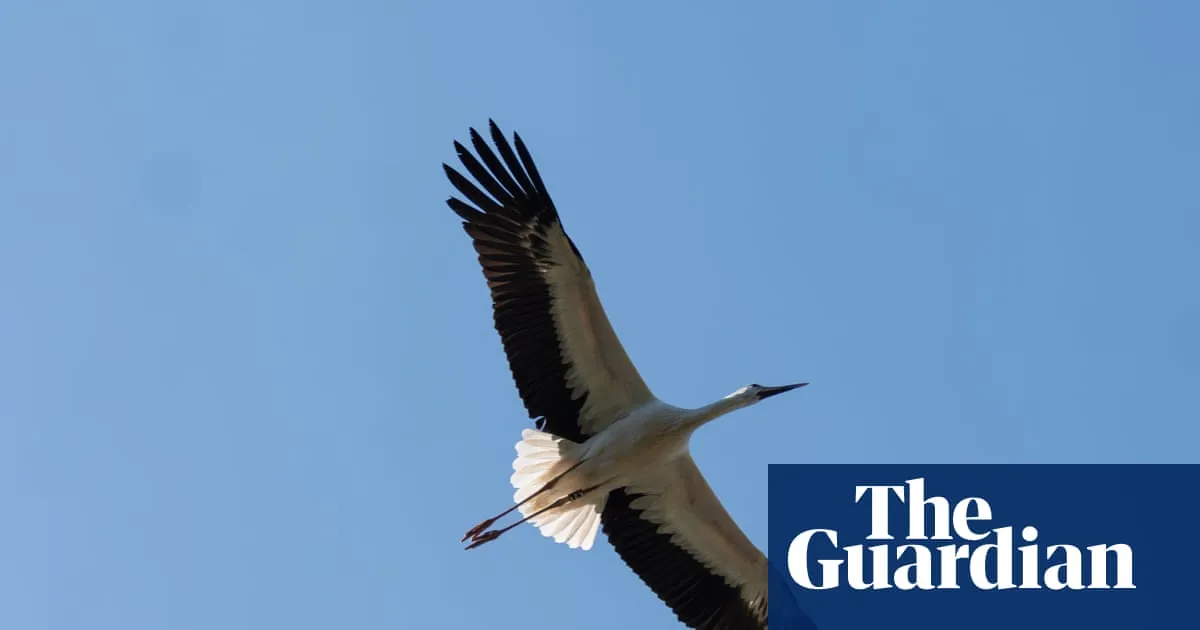
The Guardian - World NewsFIG 01
Reading time
4min
Word count
763words
Sources cited
2cited
Entities identified
11entities
Quality score
100%
§ 01
Briefing Summary
AI-generatedNEWSAR · AI
Twenty-one white storks were released onto Bodmin Moor in Cornwall as part of the Cornwall Stork Project, founded by Yan Swiderski. The project aims to reintroduce the birds to the area, with the hope they will migrate south for winter and return in a few years to breed. The storks, most of whom hatched on the moor this year, were coaxed out of their aviary and took to the sky. Swiderski expressed emotional pride at the release, noting the birds are still adapting to flying free. This reintroduction follows a model successfully used at the Knepp estate. Natural England has stated that white storks were not historically native breeding birds in England, but Swiderski believes climate change is shifting bird ranges northward. The project emphasizes the storks' role in engaging people with nature and promoting conversations about healthy ecosystems.
Confidence 0.90Sources 2Claims 5Entities 11
§ 02
Article analysis
Model · rule-basedFraming
Human Interest
Environmental
Tone
Measured
AI-assessed
CalmNeutralAlarmist
Factuality
0.70 / 1.00
Factual
LowHigh
Sources cited
2
Limited
FewMany
§ 03
Key claims
5 extracted01
The project follows a model established at the Knepp estate, which has successfully reintroduced storks since 2016.
factual
Confidence
1.00
02
Natural England states that neither white nor black storks were ever native breeding birds in England.
factualNatural England
Confidence
1.00
03
Twenty-one white storks were released into the wilds of Cornwall.
factual
Confidence
1.00
04
The Cornwall Stork Project aims for the storks to return in a few years to produce their own young.
predictionYan Swiderski
Confidence
0.80
05
The storks are expected to spend a couple of months in Cornwall before heading south for the winter.
prediction
Confidence
0.80
§ 04
Full report
4 min read · 763 words§ 05
Entities
11 identifiedKey playerOppositionContextPositiveNeutralNegative
§ 06
Keywords & salience
9 termswhite storks
1.00
cornwall
0.90
rewilding
0.80
release
0.70
conservation project
0.70
bodmin moor
0.60
breeding aviaries
0.50
homing instinct
0.50
knepp estate
0.40
§ 07
Topic connections
Interactive graph Network visualization showing 10 related topics
View Full Graph Person Organization Location Event|Click node to navigate|Edge numbers = shared articles