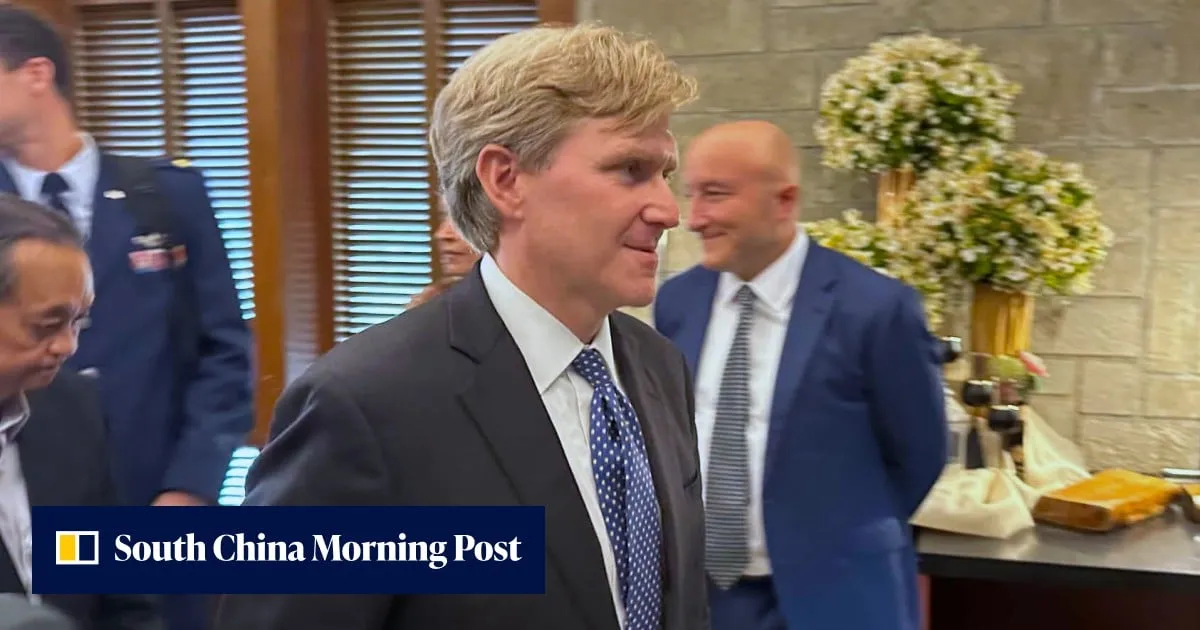
Why US Indo-Pacific ‘burden sharing’ risks deepening polarisation and big power rivalry3-MIN READ3-MIN0ListenPublished: 8:00pm, 15 Aug 2026The US push to promote “burden sharing” among its allies in the Indo-Pacific has seen it focusing on increasing its military capacity while lowering the political temperature in an effort to reassure its allies.But some analysts have questioned its chances of succeeding, arguing that this deterrence strategy has intensified great power rivalry and polarisation in the region, while driving deeper bilateral cooperation between China and Russia on the one hand and Russia and North Korea on the other.During a recent tour of Southeast Asia, defence undersecretary for policy Elbridge Colby told a forum in the Philippines that the United States was looking for “partners, not protectorates” and urged its allies to boost defence spending.Select VoiceSelect Speed0.8x0.9x1.0x1.1x1.2x1.5x1.75x00:0000:001.00x
SRCSouth China Morning Post
LANGEN
LEANCenter-Right
WORDS132
ENT10
SAT · 2026-08-15 · 12:00 GMTBRIEF NSR-2026-0815-102589
NSR-2026-0815-102589Analysis·EN·Political Strategy
Why US Indo-Pacific ‘burden sharing’ risks deepening polarisation and big power rivalry
The US is promoting "burden sharing" among its Indo-Pacific allies by increasing its military capacity and aiming to lower political tensions to reassure them. However, some analysts question the strategy's success, arguing it has intensified great power rivalry and regional polarization.
Fan ChenSouth China Morning PostFiled 2026-08-15 · 12:00 GMTLean · Center-RightRead · 1 min
South China Morning PostFIG 01
Reading time
1min
Word count
132words
Sources cited
1cited
Entities identified
10entities
Quality score
100%
§ 01
Briefing Summary
AI-generatedNEWSAR · AI
The US is promoting "burden sharing" among its Indo-Pacific allies by increasing its military capacity and aiming to lower political tensions to reassure them. However, some analysts question the strategy's success, arguing it has intensified great power rivalry and regional polarization. This approach is also seen as fostering deeper bilateral cooperation between China and Russia, and between Russia and North Korea. During a recent Southeast Asia tour, US defense official Elbridge Colby stated the US seeks "partners, not protectorates" and encouraged allies to increase defense spending.
Confidence 0.85Sources 1Claims 5Entities 10
§ 02
Article analysis
Model · rule-basedFraming
Political Strategy
Conflict
Tone
Measured
AI-assessed
CalmNeutralAlarmist
Factuality
0.40 / 1.00
Mixed
LowHigh
Sources cited
1
Limited
FewMany
§ 03
Key claims
5 extracted01
The United States was looking for 'partners, not protectorates' and urged allies to boost defense spending.
quoteElbridge Colby
Confidence
1.00
02
The US is focusing on increasing its military capacity while lowering the political temperature to reassure allies.
factual
Confidence
0.80
03
US Indo-Pacific 'burden sharing' risks deepening polarization and big power rivalry.
factual
Confidence
0.70
04
The US deterrence strategy is driving deeper bilateral cooperation between China and Russia, and Russia and North Korea.
factualanalysts
Confidence
0.60
05
The US deterrence strategy has intensified great power rivalry and polarization in the region.
factualanalysts
Confidence
0.60
§ 04
Full report
1 min read · 132 words§ 05
Entities
10 identifiedKey playerOppositionContextPositiveNeutralNegative
Locations6
§ 06
Keywords & salience
10 termsburden sharing
1.00
indo-pacific
1.00
big power rivalry
0.90
polarisation
0.80
deterrence strategy
0.70
military capacity
0.60
russia
0.50
china
0.50
us
0.40
southeast asia
0.40
§ 07
Topic connections
Interactive graph Network visualization showing 51 related topics
View Full Graph Person Organization Location Event|Click node to navigate|Edge numbers = shared articles