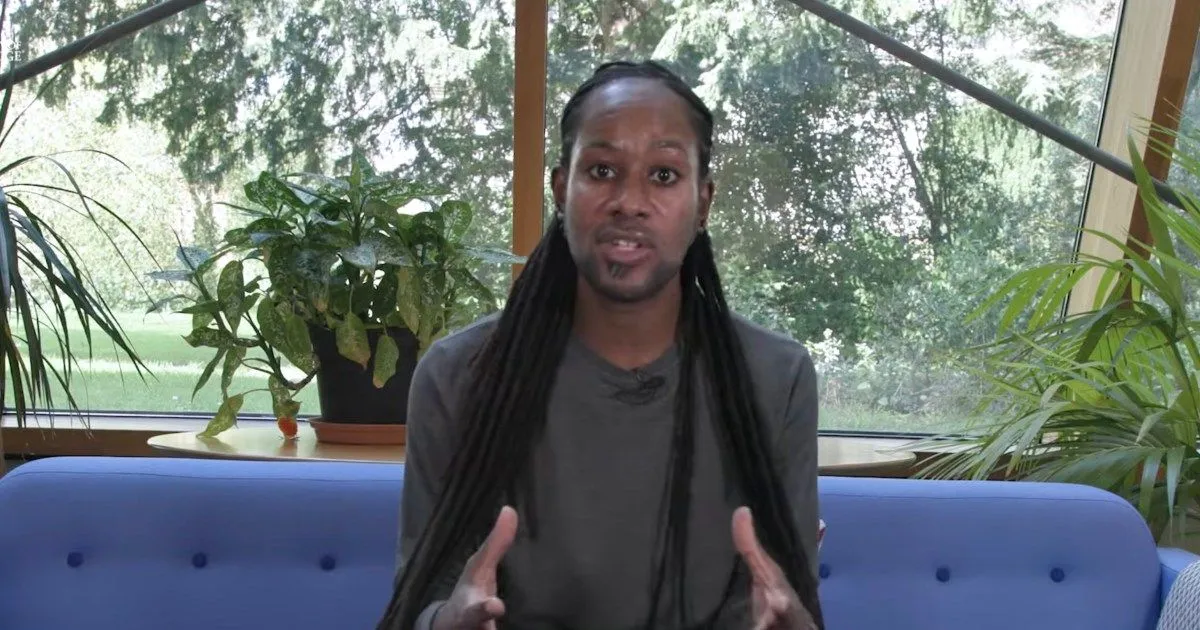
Arday was subjected to a vicious campaign fuelled by anti-Black racism.Published On 17 Aug 2026Jason Arday, who became the youngest Black professor in the history of University of Cambridge in 2023, stepped down on August 5, 2026, and was found dead on August 14, 2026 [Screengrab/YouTube/University of Cambridge]On August 14, Jason Arday, the youngest Black scholar to be appointed professor at Cambridge University, was found unresponsive in his home in London. More than a week earlier, he had resigned from his job after a vicious weeks-long campaign against him over allegations of plagiarism.The British media, the meme economy online and various commentators dissected every aspect of the professional and personal life of this 41-year-old Black man: from his manner of speaking to his scholarship. They gleefully claimed to expose his supposed “lies” and plagiarism, pillorying him mercilessly. Members of the media establishment defended what they claimed was their exposure of the “truth”.There was no ambiguity from the beginning that this so-called revelation of “plagiarism” was a cudgel: it was a way to make a point that equality, diversity and inclusion (EDI) initiatives are supposedly academically dishonest.The attacks came not just from the right – with The Spectator and The Telegraph running article after article about Arday – but also from the left. Aaron Bastani, for example, the cofounder of left-wing outlet Novara Media, gave his opinion on X that, in a 40-minute lecture available on YouTube, Arday had said “nothing”. He then called him a “conman”.All of this, we were assured, was in the interest of academic ethics. There was little scrutiny of what was behind this sudden appetite to single out and “expose” one Black scholar in academia. Instead, the lot jumped on an anti-EDI bandwagon: the left hopping on the “identity politics is bad” end, and the right embracing naked racism.Did Arday plagiarise his thesis or any other work? One investigation found he did not, and another was under way. The basis for the determinations and certainty on social media is a clip economy that has circulated isolated paragraphs of his work in comparison with the work of other scholars.There was also endless speculation about Arday’s autism and his athletic achievements: gleeful laughter about how ridiculous it all supposedly was. This ranged from rank disability denial to bizarrely petty articles about how Arday was late to give lectures or did not provide what one student considered sufficient citations for his racism claims.Many academics are investigated for misconduct in their scholarship every year. There is plagiarism, but also rampant unethical conduct in relation to research communities. We debate these issues at our conferences, sign letters to ask our institutions to act, and colleagues go through accountability processes.None of these should involve public shaming or racist glee. That lynch mob was a unique feature of Arday’s case. Indeed, rarely do calls for consequences resound so loudly even in cases where academics have been found to have engaged in sexual misconduct with their students and colleagues.Take the case of former lecturer Peter Hutchinson, who in 2015 was accused by 10 students of sexual harassment at Cambridge University. After he breached the sanctions imposed on him following an investigation, he had to withdraw from college affairs, only to be reinstated two years later. His case did not become a nationwide scandal.There is another, quite central, aspect to Arday’s case. The key instigator in this instance was Nathan Cofnas, a self-professed “race realist” who has widely written on his claims that Black people lack intelligence.He came under criticism and was eventually dismissed from Cambridge in 2024 after he published a Substack post claiming that Harvard University would have no Black professors if they were hired on merit alone. Cofnas has long been a darling of the free-speech crowd in Britain.In 2024, when students at Cambridge called for an investigation into him, an esteemed group of senior scholars published a letter defending his freedom of speech.The throughline from Cofnas’s dismissal to his successful instigation of the bullying of Arday is the academic and media establishment’s enduring failure – even by figures who would undoubtedly call themselves antiracists – to recognise systemic racism.Fascist talking points worm their way into legitimate public discourse by weaponising supposedly objective measures. Just because Cofnas’s graphs and statistical measures make the “race science” of intelligence appear authoritative does not mean they are worth treating as legitimate ideas for debate in public forums.And for any media outlet that claims seriousness to fail to investigate the intensity of the pile-on that Arday experienced, and its origins within a eugenicist’s fantasy of ridding universities of Black professors and antiracist scholarship, is profoundly irresponsible.If there was a story in the public interest in this case, it was that there is a growing legitimacy given to race science and eugenics even within major universities, and that this is putting Black and antiracist scholars at enormous risk. In an interview with conservative media personality Rob Montz, posted to YouTube on the day Arday died, Cofnas admitted what happened to Arday was not really about plagiarism, which he noted is common in academia, but about his “exalted position”. He goes on to fantasise about one day becoming head of a department of race science and eugenics at Harvard.Many of the problems in the reporting of the allegations against Arday feel deeply familiar to me. For decades in India, where I am from, caste elites have insisted that “merit” in academia requires the ending of affirmative action policies for caste-marginalised scholars.As Harvard scholar Ajantha Subramanian’s work on this issue shows, “merit” in South Asia is the logic of caste made secular: a seemingly objective measure that allows the reproduction of a violent system of exclusion and dehumanisation. This is precisely the story that underlies Arday’s violent harassment in the British press.With this context in mind, it is worth drawing on the framework that Dalit scholars have advanced to narrate such deaths: that of institutional murder. The phrase first gained salience after Rohith Vemula, a Dalit PhD student, took his own life in 2016 after prolonged persecution by the University of Hyderabad.The idea of institutional murder allows for a systemic analysis of deaths that result from entrenched violence, narrowing the conditions of liveability. To use this framework is to reject an individualising narrative, or indeed calls against the political reading of such deaths.Arday’s harassment and death are not idiosyncrasies: they are very much a case of institutional murder by a system infused with anti-Black racism.The views expressed in this article are the author’s own and do not necessarily reflect Al Jazeera’s editorial stance.
SRCAl Jazeera
LANGEN
LEANCenter
WORDS1 094
ENT11
MON · 2026-08-17 · 12:08 GMTBRIEF NSR-2026-0817-103075
NSR-2026-0817-103075Opinion·EN·Social Justice
Jason Arday’s death is institutional murder
Jason Arday, the youngest Black professor at Cambridge University, died on August 14, 2026, shortly after resigning on August 5, 2026. His resignation followed a public campaign against him concerning allegations of plagiarism.
Sneha KrishnanAl JazeeraFiled 2026-08-17 · 12:08 GMTLean · CenterRead · 5 min
Al JazeeraFIG 01
Reading time
5min
Word count
1 094words
Sources cited
2cited
Entities identified
11entities
Quality score
100%
§ 01
Briefing Summary
AI-generatedNEWSAR · AI
Jason Arday, the youngest Black professor at Cambridge University, died on August 14, 2026, shortly after resigning on August 5, 2026. His resignation followed a public campaign against him concerning allegations of plagiarism. The article states this campaign, fueled by anti-Black racism, involved intense scrutiny of his personal and professional life by the media and commentators. Investigations into his work found no plagiarism, with the allegations stemming from circulated clips of his work. The article suggests the attacks were part of an anti-EDI agenda, with some critics labeling him a "conman." It highlights the role of Nathan Cofnas, who has written about Black people lacking intelligence, as a key instigator. The article argues that the academic and media establishments failed to recognize systemic racism in their handling of the situation.
Confidence 0.90Sources 2Claims 5Entities 11
§ 02
Article analysis
Model · rule-basedFraming
Social Justice
Human Interest
Tone
Sensational
AI-assessed
CalmNeutralAlarmist
Factuality
0.30 / 1.00
Opinion-Heavy
LowHigh
Sources cited
2
Limited
FewMany
§ 03
Key claims
5 extracted01
Aaron Bastani called Jason Arday a 'conman' and stated he said 'nothing' in a lecture.
quoteAaron Bastani
Confidence
1.00
02
Jason Arday resigned from his job on August 5, 2026, and was found dead on August 14, 2026.
factualScreengrab/YouTube/University of Cambridge
Confidence
1.00
03
The British media, online meme economy, and commentators dissected Arday's professional and personal life over plagiarism allegations.
factual
Confidence
0.95
04
Jason Arday was subjected to a vicious campaign fuelled by anti-Black racism.
factual
Confidence
0.90
05
One investigation found Arday did not plagiarize his thesis, and another was underway.
factual
Confidence
0.85
§ 04
Full report
5 min read · 1 094 words§ 05
Entities
11 identifiedKey playerOppositionContextPositiveNeutralNegative
Organizations4
§ 06
Keywords & salience
9 termsanti-black racism
1.00
institutional murder
1.00
plagiarism allegations
0.90
equality diversity inclusion
0.80
jason arday
0.70
media campaign
0.60
cambridge university
0.60
academic ethics
0.50
autism speculation
0.40
§ 07
Topic connections
Interactive graph Network visualization showing 6 related topics
View Full Graph Person Organization Location Event|Click node to navigate|Edge numbers = shared articles