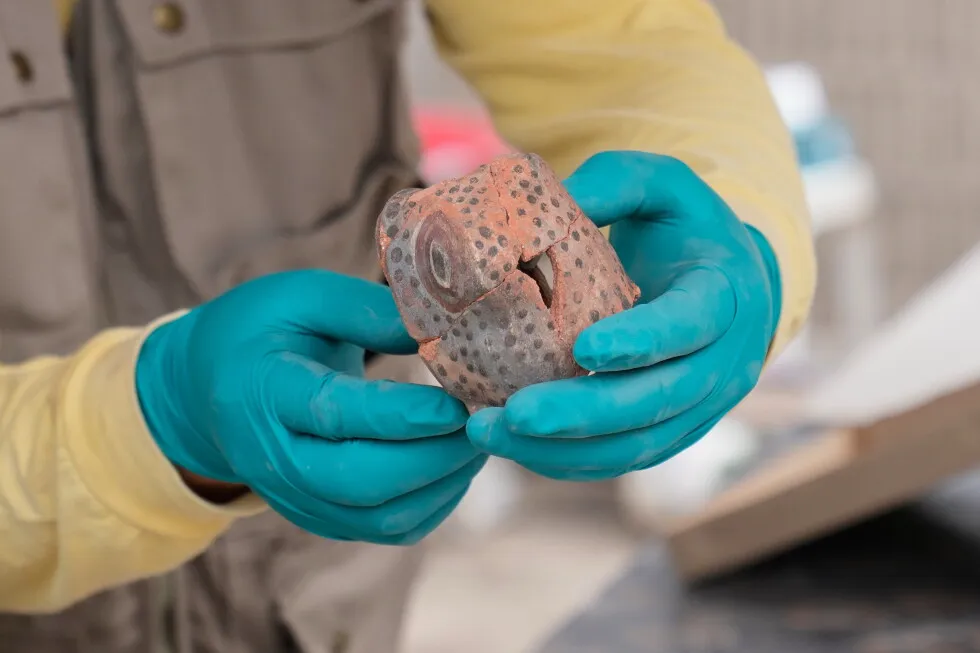
Archaeologists unveil skeletal remains believed to be ritual offering in Lima 1 of 4 | Peruvian archeologists presented Tuesday findings from an excavation site in the country’s capital that revealed the skeletal remains of an adult who is believed to have been placed as an offering at a pre-Hispanic ceremonial center known as Pucllana. (AP video by AP video by Mauricio Muñoz.) 2 of 4 | An archaeologist holds up a ceramic snake head that he unearthed while excavating skeletal remains at the Huaca Pucllana archaeological site in Lima, Peru, Tuesday, Aug. 18, 2026. The findings are from the Lima-culture" class="entity-link entity-topic" data-entity-id="188225" data-entity-type="topic">Lima culture, according to the excavation’s leader Gladys Paz. (AP Photo/Martin Mejia) 3 of 4 | An archaeologist excavates skeletal remains at the Huaca Pucllana archaeological site in Lima, Peru, Tuesday, Aug. 18, 2026. The remains are from the Lima-culture" class="entity-link entity-topic" data-entity-id="188225" data-entity-type="topic">Lima culture, according to the excavation’s leader Gladys Paz. (AP Photo/Martin Mejia) 4 of 4 | An archaeologist excavates skeletal remains at the Huaca Pucllana archaeological site in Lima, Peru, Tuesday, Aug. 18, 2026. The remains are from the Lima-culture" class="entity-link entity-topic" data-entity-id="188225" data-entity-type="topic">Lima culture, according to the excavation’s leader Gladys Paz. (AP Photo/Martin Mejia) 1 of 4 Peruvian archeologists presented Tuesday findings from an excavation site in the country’s capital that revealed the skeletal remains of an adult who is believed to have been placed as an offering at a pre-Hispanic ceremonial center known as Pucllana. (AP video by AP video by Mauricio Muñoz.) Add AP News on Google Add AP News as your preferred source to see more of our stories on Google. Share 2 of 4 | An archaeologist holds up a ceramic snake head that he unearthed while excavating skeletal remains at the Huaca Pucllana archaeological site in Lima, Peru, Tuesday, Aug. 18, 2026. The findings are from the Lima-culture" class="entity-link entity-topic" data-entity-id="188225" data-entity-type="topic">Lima culture, according to the excavation’s leader Gladys Paz. (AP Photo/Martin Mejia) 2 of 4 An archaeologist holds up a ceramic snake head that he unearthed while excavating skeletal remains at the Huaca Pucllana archaeological site in Lima, Peru, Tuesday, Aug. 18, 2026. The findings are from the Lima-culture" class="entity-link entity-topic" data-entity-id="188225" data-entity-type="topic">Lima culture, according to the excavation’s leader Gladys Paz. (AP Photo/Martin Mejia) Add AP News on Google Add AP News as your preferred source to see more of our stories on Google. Share 3 of 4 | An archaeologist excavates skeletal remains at the Huaca Pucllana archaeological site in Lima, Peru, Tuesday, Aug. 18, 2026. The remains are from the Lima-culture" class="entity-link entity-topic" data-entity-id="188225" data-entity-type="topic">Lima culture, according to the excavation’s leader Gladys Paz. (AP Photo/Martin Mejia) 3 of 4 An archaeologist excavates skeletal remains at the Huaca Pucllana archaeological site in Lima, Peru, Tuesday, Aug. 18, 2026. The remains are from the Lima-culture" class="entity-link entity-topic" data-entity-id="188225" data-entity-type="topic">Lima culture, according to the excavation’s leader Gladys Paz. (AP Photo/Martin Mejia) Add AP News on Google Add AP News as your preferred source to see more of our stories on Google. Share 4 of 4 | An archaeologist excavates skeletal remains at the Huaca Pucllana archaeological site in Lima, Peru, Tuesday, Aug. 18, 2026. The remains are from the Lima-culture" class="entity-link entity-topic" data-entity-id="188225" data-entity-type="topic">Lima culture, according to the excavation’s leader Gladys Paz. (AP Photo/Martin Mejia) 4 of 4 An archaeologist excavates skeletal remains at the Huaca Pucllana archaeological site in Lima, Peru, Tuesday, Aug. 18, 2026. The remains are from the Lima-culture" class="entity-link entity-topic" data-entity-id="188225" data-entity-type="topic">Lima culture, according to the excavation’s leader Gladys Paz. (AP Photo/Martin Mejia) Add AP News on Google Add AP News as your preferred source to see more of our stories on Google. Share Updated [hour]:[minute] [AMPM] [timezone], [monthFull] [day], [year] Lima, Peru (AP) — Archaeologists in Peru on Tuesday unveiled the skeletal remains of an adult they believe was buried as an offering near the base of Huaca Pucllana, an ancient adobe pyramid in Lima, the nation’s capital.The remains are believed to be those of a man who may have been sacrificed during a ritual in which a canal linked to a ceremonial pool was closed.Gladys Paz, the archaeologist who led the excavation, said the bones will help researchers better understand “the rituals of the Lima-culture" class="entity-link entity-topic" data-entity-id="188225" data-entity-type="topic">Lima culture” and reconstruct ceremonies performed hundreds of years ago.Paz said that the body was buried inside a canal, resting on its left flank, with the skull facing the pyramid and the Pacific Ocean.The Lima-culture" class="entity-link entity-topic" data-entity-id="188225" data-entity-type="topic">Lima culture flourished between the 1st and 7th centuries along Peru’s arid central coast, about 700 years before the rise of the Inca Empire. Huaca Pucllana was one of the most important ceremonial and administrative centers of the Lima-culture" class="entity-link entity-topic" data-entity-id="188225" data-entity-type="topic">Lima culture, which disappeared centuries before a group of Spanish conquistadors founded Lima in 1535.Today, the pyramid is surrounded by parks, leafy streets and upscale apartment buildings in the districts of Miraflores and San Isidro.Huaca Pucllana is open to tourists, with a restaurant serving Peruvian specialties like ceviche, stir-fried beef and roasted alpaca meat. 2 MIN READ 1 MIN READ 3 MIN READ According to Peru’s government, there are more than 400 archaeological sites across metropolitan Lima. Pieter Van Dalen, an archaeology professor at the National University of San Marcos who was not involved in the excavation, said that it’s common to find tombs, mummified remains and other burial-related items along Peru’s coast. Such discoveries have also been made while construction workers dig canals to install gas pipes.___Follow AP’s coverage of Latin America and the Caribbean at https://apnews.com/hub/latin-america
SRCAssociated Press (AP)
LANGEN
LEANCenter
WORDS876
ENT8
TUE · 2026-08-18 · 21:23 GMTBRIEF NSR-2026-0818-103587
NSR-2026-0818-103587News Report·EN·Human Interest
Archaeologists unveil skeletal remains believed to be ritual offering in Lima
Archaeologists in Lima, Peru, have unveiled skeletal remains believed to be a ritual offering found at the Huaca Pucllana archaeological site. The remains, identified as belonging to the Lima culture, are thought to be of a man sacrificed during a ceremony involving the closure of a canal linked to a ceremonial pool.
By
FRANKLIN BRICEÑOAssociated Press (AP)Filed 2026-08-18 · 21:23 GMTLean · CenterRead · 4 min
Associated Press (AP)FIG 01
Reading time
4min
Word count
876words
Sources cited
1cited
Entities identified
8entities
Quality score
100%
§ 01
Briefing Summary
AI-generatedNEWSAR · AI
Archaeologists in Lima, Peru, have unveiled skeletal remains believed to be a ritual offering found at the Huaca Pucllana archaeological site. The remains, identified as belonging to the Lima culture, are thought to be of a man sacrificed during a ceremony involving the closure of a canal linked to a ceremonial pool. Excavation leader Gladys Paz stated that the discovery will aid in understanding the rituals and ceremonies of the Lima culture, which flourished between the 1st and 7th centuries. The body was found buried within a canal, facing the pyramid and the Pacific Ocean. Huaca Pucllana was a significant ceremonial and administrative center for this culture, which predated the Inca Empire.
Confidence 0.90Sources 1Claims 5Entities 8
§ 02
Article analysis
Model · rule-basedFraming
Human Interest
Tone
Measured
AI-assessed
CalmNeutralAlarmist
Factuality
0.90 / 1.00
Factual
LowHigh
Sources cited
1
Limited
FewMany
§ 03
Key claims
5 extracted01
A ceramic snake head was unearthed during the excavation.
factualAP News
Confidence
1.00
02
The findings are from the Lima culture.
factualGladys Paz
Confidence
1.00
03
Skeletal remains of an adult were unearthed at the Huaca Pucllana archaeological site.
factualAP News
Confidence
1.00
04
Archaeologists presented findings from an excavation site in Lima, Peru.
factualAP News
Confidence
1.00
05
The skeletal remains are believed to have been placed as a ritual offering.
factualAP News
Confidence
0.80
§ 04
Full report
4 min read · 876 words§ 05
Entities
8 identifiedKey playerOppositionContextPositiveNeutralNegative
People3
Organizations1
§ 06
Keywords & salience
9 termsritual offering
1.00
skeletal remains
1.00
archaeology
0.90
lima culture
0.80
pre-hispanic
0.70
ceremonial center
0.60
huaca pucllana
0.50
peru
0.40
ceramic snake head
0.40
§ 07
Topic connections
Interactive graph Network visualization showing 42 related topics
View Full Graph Person Organization Location Event|Click node to navigate|Edge numbers = shared articles