REPORTER'S NOTEBOOKIt is extremely difficult for trucks to get through the Israeli blockade, let alone for drivers to reach aid warehouses.Deir el-Balah, Gaza – Behind every truck full of food, medicine or fuel is a logistics chain that keeps those vehicles running.But in Gaza, this chain has been disrupted by the Israeli genocide.Recommended Stories list of 4 itemslist 1 of 4Aid workers faced record number of attacks in 2025list 2 of 4Breastfeeding in Gaza: Mothers seek help to provide for their babieslist 3 of 4Israeli strike reported to kill at least six in Gaza Citylist 4 of 4Humanitarianism is not collapsing. It is being traded and compromisedend of listBefore the war, about 1,200 vehicles served Gaza’s transportation and aid needs. Today, only a small number are operating, according to the Euro-Med Human Rights Monitor, which follows the situation of humanitarian aid in the Strip.At least 150 vehicles have been damaged or destroyed, and many others are held together with a combination of repairs and parts from vehicles no longer in use.We followed mechanics and drivers in Gaza who were repairing each other’s trucks and draining fuel from damaged vehicles. “With these hands, I save one truck and let it go so that another can come and take its place,” said one driver.Tyres, oil and engines are in short supply. Mechanics and drivers say that the lack of supplies and spare parts adds to the challenge of keeping the limited number of working vehicles on the road.(Al Jazeera)A drive through devastated GazaFrom the Rafah crossing, trucks carrying goods from Egypt arrive in Gaza.They pass through inspection and enter the Strip, but the road to distribution centres and aid warehouses still lies ahead. The vehicles traverse either Salah al-Din Street or the Philadelphi Corridor (to the main coastal highway, al-Rashid Street).This means the aid has to pass through several points before reaching Gaza governorates, and every step of the way can be blocked due to the devastation in the enclave.
SRCAl Jazeera
LANGEN
LEANCenter
WORDS328
ENT12
WED · 2026-08-19 · 13:01 GMTBRIEF NSR-2026-0819-103836
NSR-2026-0819-103836News Report·EN·Conflict
Why aid entering Gaza may not reach those who need it
Aid entering Gaza faces significant logistical challenges in reaching those in need. The Israeli blockade severely hinders trucks from entering and drivers from reaching aid warehouses.
Tareq Abu AzzoumAl JazeeraFiled 2026-08-19 · 13:01 GMTLean · CenterRead · 2 min
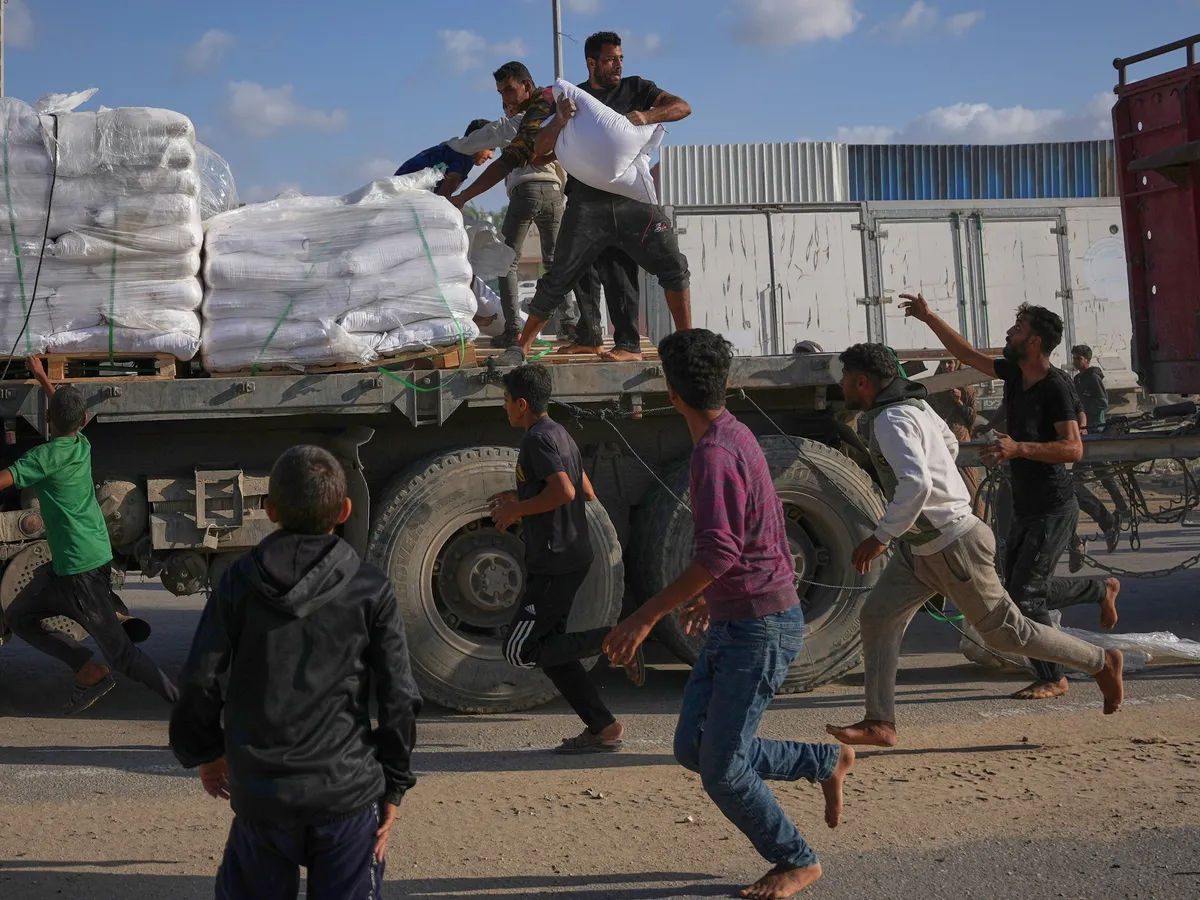
Al JazeeraFIG 01
Reading time
2min
Word count
328words
Sources cited
1cited
Entities identified
12entities
Quality score
100%
§ 01
Briefing Summary
AI-generatedNEWSAR · AI
Aid entering Gaza faces significant logistical challenges in reaching those in need. The Israeli blockade severely hinders trucks from entering and drivers from reaching aid warehouses. Before the conflict, Gaza had approximately 1,200 vehicles for transportation and aid; now, only a fraction are operational, with many damaged or destroyed and others kept running through makeshift repairs and salvaged parts. Mechanics and drivers are struggling with severe shortages of essential supplies like tires, oil, and engines. Even after trucks pass inspection at the Rafah crossing, the journey to distribution centers is fraught with obstacles due to widespread devastation and multiple checkpoints along routes like Salah al-Din Street and the Philadelphi Corridor.
Confidence 0.90Sources 1Claims 5Entities 12
§ 02
Article analysis
Model · rule-basedFraming
Conflict
Human Rights
Tone
Mixed Tone
AI-assessed
CalmNeutralAlarmist
Factuality
0.60 / 1.00
Mixed
LowHigh
Sources cited
1
Limited
FewMany
§ 03
Key claims
5 extracted01
Tyres, oil, and engines are in short supply for vehicles in Gaza.
factual
Confidence
0.90
02
At least 150 vehicles in Gaza have been damaged or destroyed.
statisticEuro-Med Human Rights Monitor
Confidence
0.90
03
Before the war, about 1,200 vehicles served Gaza’s transportation and aid needs; today, only a small number are operating.
statisticEuro-Med Human Rights Monitor
Confidence
0.90
04
The Israeli blockade makes it extremely difficult for trucks to get through and for drivers to reach aid warehouses in Gaza.
factual
Confidence
0.90
05
The logistics chain for aid in Gaza has been disrupted by the Israeli genocide.
factual
Confidence
0.30
§ 04
Full report
2 min read · 328 words§ 05
Entities
12 identifiedKey playerOppositionContextPositiveNeutralNegative
Locations8
§ 06
Keywords & salience
9 termsaid delivery
1.00
gaza
1.00
logistics chain
0.90
israeli blockade
0.80
humanitarian aid
0.80
vehicle repair
0.70
supply shortage
0.60
distribution centers
0.50
euro-med human rights monitor
0.40
§ 07
Topic connections
Interactive graph Network visualization showing 51 related topics
View Full Graph Person Organization Location Event|Click node to navigate|Edge numbers = shared articles