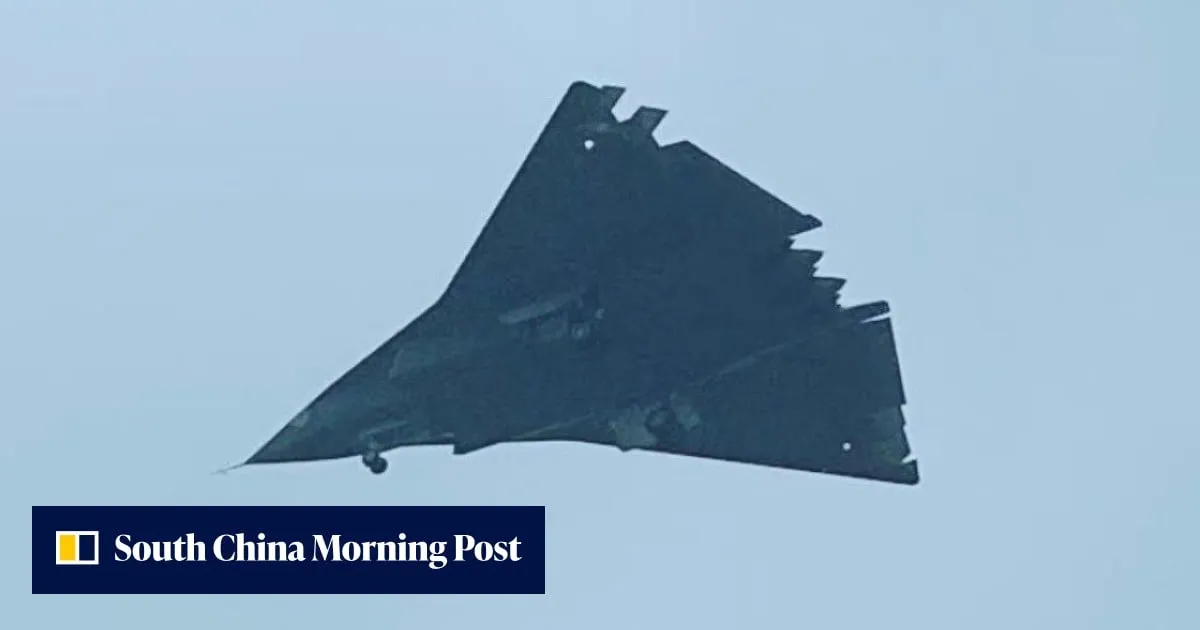
Large language models are expert in intelligence work, able to quickly mine key data and analyse weapons performance – tasks that once took analysts huge amounts of time and effort.But engineers at China’s AVIC Chengdu Aircraft Research and Design Institute, developer of the People’s Liberation Army’s backbone J-20 and next generation J-36 stealth fighters, have urged caution.In a paper published on June 20, engineer Zhang Xianzhe said that “AI models can invent aircraft specifications – length, payload, weapons, speed, combat radius – and get radar scan ranges and frequency bands wrong”.
SRCSouth China Morning Post
LANGEN
LEANCenter-Right
WORDS91
ENT8
WED · 2026-08-19 · 14:00 GMTBRIEF NSR-2026-0819-103879
NSR-2026-0819-103879News Report·EN·Technology
China’s J-36 fighter jet designers report danger of military AI hallucinations
Engineers at China's AVIC Chengdu Aircraft Research and Design Institute, responsible for developing the J-20 and J-36 fighter jets, have raised concerns about the potential for military AI hallucinations. In a paper published on June 20, engineer Zhang Xianzhe highlighted that large language models, while adept at intelligence tasks like data mining and weapons analysis, can inaccurately generate aircraft specifications.
Zhang TongSouth China Morning PostFiled 2026-08-19 · 14:00 GMTLean · Center-RightRead · 1 min
South China Morning PostFIG 01
Reading time
1min
Word count
91words
Sources cited
1cited
Entities identified
8entities
Quality score
100%
§ 01
Briefing Summary
AI-generatedNEWSAR · AI
Engineers at China's AVIC Chengdu Aircraft Research and Design Institute, responsible for developing the J-20 and J-36 fighter jets, have raised concerns about the potential for military AI hallucinations. In a paper published on June 20, engineer Zhang Xianzhe highlighted that large language models, while adept at intelligence tasks like data mining and weapons analysis, can inaccurately generate aircraft specifications. These AI models may invent details such as length, payload, weapons, speed, and combat radius, and also misrepresent radar scan ranges and frequency bands. The institute's caution stems from the AI's ability to perform tasks that previously required significant analyst effort.
Confidence 0.85Sources 1Claims 4Entities 8
§ 02
Article analysis
Model · rule-basedFraming
Technology
National Security
Tone
Measured
AI-assessed
CalmNeutralAlarmist
Factuality
0.70 / 1.00
Factual
LowHigh
Sources cited
1
Limited
FewMany
§ 03
Key claims
4 extracted01
AI models can get radar scan ranges and frequency bands wrong.
quoteZhang Xianzhe
Confidence
1.00
02
AI models can invent aircraft specifications – length, payload, weapons, speed, combat radius.
quoteZhang Xianzhe
Confidence
1.00
03
Engineers at China’s AVIC Chengdu Aircraft Research and Design Institute have urged caution regarding military AI.
factualarticle
Confidence
0.90
04
Large language models are expert in intelligence work, able to quickly mine key data and analyse weapons performance.
factualarticle
Confidence
0.80
§ 04
Full report
1 min read · 91 words§ 05
Entities
8 identifiedKey playerOppositionContextPositiveNeutralNegative
People1
Organizations3
Locations1
§ 06
Keywords & salience
8 termsmilitary ai hallucinations
1.00
large language models
0.90
j-36 stealth fighters
0.80
ai models
0.70
aircraft specifications
0.60
weapons performance
0.50
intelligence work
0.40
radar scan ranges
0.40
§ 07
Topic connections
Interactive graph Network visualization showing 51 related topics
View Full Graph Person Organization Location Event|Click node to navigate|Edge numbers = shared articles