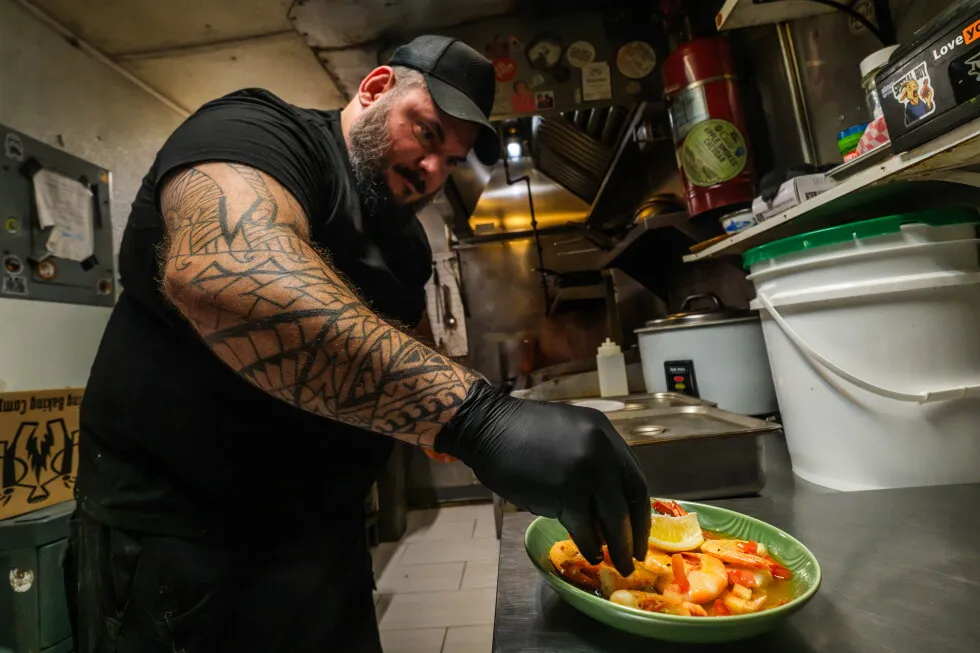
Sea Wolf head chef Justin Waldman prepares a dish with fresh local shrimp at his restaurant on Tybee Island, Ga., Friday, Aug. 14, 2026. (Justin Taylor/The Current GA/CatchLight/Report for America via AP) 2026-08-19T19:22:18Z Coastal Georgia is known for its hospitality as well as its shrimp-abundant waterways and estuaries. However, not all restaurants along the coast source their seafood from local waters, while allowing people to assume they do. Foreign imports have flooded the market in the United States, selling farm-raised shrimp for lower prices and making it difficult for local shrimpers to compete. A new state law, House Bill 117 , took effect on July 1, turning the tide for both Georgia shrimpers and the state’s restaurants. The bill requires that all Georgia restaurants, excluding those operated by a state agency, disclose whether the menu items they serve contain foreign imported shrimp. The disclosure can be labeled either on the menu or on signs visible to the public. While HB 117 has officially been signed into law, it will not be enforced until January in order to give restaurants time to prepare. Chefs and restaurant owners around downtown Savannah, many food service establishments who sell imported shrimp say they are in no hurry to update their menus. State Rep. Jesse Petrea, who represents parts of Chatham and Bryan counties, sponsored HB117. Petrea drafted the bill with the intent of providing transparency for consumers to make informed decisions about the seafood that they choose to buy. “There’s a lack of information by consumers,” said Petrea, “and what you discover, if you dig superficially, is that we have huge problems with foreign imports having a multitude of things that cause them to be sent back.” According to the U.S. Food and Drug Administration (FDA), 94% of all seafood consumed in the U.S. is imported, with shrimp being the most popular seafood product in the nation. Although federal programs serve to ensure the safety of our food, foreign imports are sometimes flagged or recalled by the FDA as unfit for consumption. (
SRCAssociated Press (AP)
LANGEN
LEANCenter
WORDS339
ENT12
WED · 2026-08-19 · 19:53 GMTBRIEF NSR-2026-0819-103943
NSR-2026-0819-103943News Report·EN·Economic Impact
Under new legislation, restaurants prep to post origin country for shrimp
A new Georgia law, House Bill 117, requires restaurants to disclose if their menu items contain imported shrimp, effective January 2027. The bill, sponsored by State Rep.
Associated Press (AP)Filed 2026-08-19 · 19:53 GMTLean · CenterRead · 2 min
Associated Press (AP)FIG 01
Reading time
2min
Word count
339words
Sources cited
2cited
Entities identified
12entities
Quality score
100%
§ 01
Briefing Summary
AI-generatedNEWSAR · AI
A new Georgia law, House Bill 117, requires restaurants to disclose if their menu items contain imported shrimp, effective January 2027. The bill, sponsored by State Rep. Jesse Petrea, aims to provide consumers with transparency regarding their seafood choices, as a significant portion of shrimp consumed in the U.S. is imported and has faced recalls. This legislation also seeks to support local shrimpers who struggle to compete with lower-priced foreign imports. While the law is enacted, restaurants have until January to comply with menu or sign disclosures. Previous DNA testing revealed discrepancies in shrimp sourcing at many Georgia restaurants, highlighting the need for clear origin labeling.
Confidence 0.90Sources 2Claims 5Entities 12
§ 02
Article analysis
Model · rule-basedFraming
Economic Impact
Legal & Judicial
Tone
Measured
AI-assessed
CalmNeutralAlarmist
Factuality
0.70 / 1.00
Factual
LowHigh
Sources cited
2
Limited
FewMany
§ 03
Key claims
5 extracted01
HB 117 will not be enforced until January to give restaurants time to prepare.
factual
Confidence
1.00
02
94% of all seafood consumed in the U.S. is imported, with shrimp being the most popular seafood product.
statisticU.S. Food and Drug Administration (FDA)
Confidence
1.00
03
The law aims to provide transparency for consumers to make informed decisions about seafood purchases.
quoteState Rep. Jesse Petrea
Confidence
1.00
04
A new state law, House Bill 117, requires Georgia restaurants to disclose if menu items contain foreign imported shrimp.
factual
Confidence
1.00
05
Foreign imports are sometimes flagged or recalled by the FDA as unfit for consumption.
factual
Confidence
0.90
§ 04
Full report
2 min read · 339 words§ 05
Entities
12 identifiedKey playerOppositionContextPositiveNeutralNegative
Locations6
§ 06
Keywords & salience
9 termsshrimp origin
1.00
seafood imports
0.90
consumer transparency
0.80
house bill 117
0.70
restaurant disclosure
0.60
local shrimpers
0.60
georgia
0.50
fda
0.50
seafood safety
0.40
§ 07
Topic connections
Interactive graph No topic relationship data available yet. This graph will appear once topic relationships have been computed.