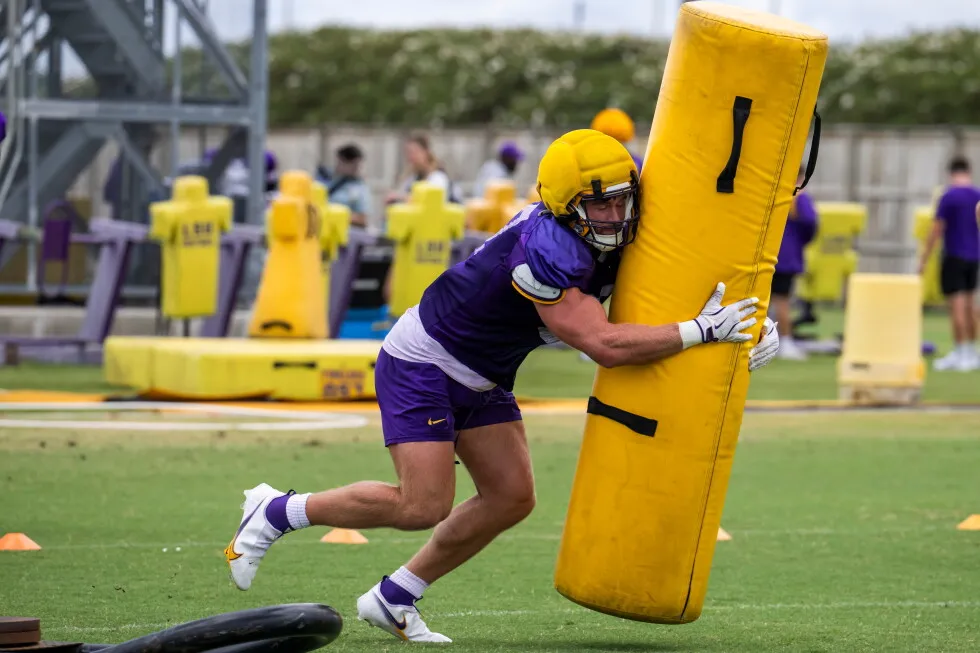
NIL is just the latest chapter in the long and uneven history of compensation in college sports 1 of 2 | LSU defensive end Dylan Carpenter drives into a tackling dummy during an NCAA college football practice Monday, Aug. 10, 2026, in Baton Rouge, La. (Michael Johnson/The Advocate via AP) 2 of 2 | Texas defensive back Zelus Hicks (13) catches a ball during a drill as Texas holds their second NCAA college football practice of the summer in preparation for the 2026 season, Friday, Aug. 6, 2026. (Sara Diggins /The San Antonio Express-News via AP) By The Associated Press Updated 12:33 AM MESZ, August 20, 2026 Add AP News on Google Add AP News as your preferred source to see more of our stories on Google. Share Share Facebook Copy Link copied Print Email X LinkedIn Bluesky Flipboard Pinterest Reddit The introduction of name, image likeness payments that rule the college landscape is hardly the first time atheltes have been compensated for playing. Almost since the beginning, they’ve received train tickets, some walking-around money and scholarships. For decades, a lot of the money came to players and their families under the table. Now, that money comes with the OK of the NCAA , though it doesn’t mean college sports is truly clean. A brief look at the history of athlete compensation in college sports: The NCAA was founded in 1906, in a push from President Teddy Roosevelt to do something about the sometimes-fatal violence in college football and to set some eligibility standards. Long before its rulebook became a spiraling document covering hundreds of pages, athletes would accept cash or train tickets as inducements to come to particular schools. Sometimes tuition and room and board got covered, too. Very few got in trouble. In 1948, the NCAA produced the Sanity Code in an attempt to rein in what was becoming an out-of-control flood of recruiting inducemments to lure what were supposed to be amateur athletes. The organization initially opposed athletic scholarships, arguing they were a violation of amateurism. But the NCAA standardized the granting of scholarships in 1956, opening the door for eventual change. Part of this was meant to eliminate the cash and perks that also played a role in recruiting, but that never really went away. Louisiana court order gives players signed by NFL teams a shot at returning to college sports Jimmy Rogers follows Iowa State’s greatest football era and seeks to avoid return to bad old days Deputy tried to serve civil papers to Deion Sanders at Colorado practice, but coach was unavailable Athletes win but chaos ensues When former UCLA basketball star Ed O’Bannon won a class-action lawsuit in 2014 over the use of his likeness in a video game, it marked the first of a series of losses in court for the NCAA that tranformed college sports and illustrated the NCAA’s lack of preparedness to go along with the idea that players should make money off the enterprise they built. The O’Bannon win helped clear the way for athletes to receive a stipend to cover cost-of-living expenses that fell outside their scholarships. Eleven years later, the ratifying of the House settlement, which stemmed from another lawsuit, allowed schools to share athletic revenue with players every year to the tune of up to $21.3 million this season. It also legitimized the concept of third-party name, image and likeness deals that allows schools to blow well past that cap and has led to football rosters with $50 million payrolls. A bill waiting for a vote in the Senate hopes to put into law many of the rules spelled out in the House settlement. But perhaps the most important part of that law would be a doubling of the salary cap to nearly $49 million per school, with the hope that shifting the money from third-party NIL to under the cap will set a more realistic limit on what schools can spend. This is our AP Top 25 Poll newsletter. You can subscribe below and we will email it you weekly. This site is protected by reCAPTCHA and the Google and Terms of Service apply. If that bill doesn’t pass, the biggest conferences — the SEC and the Big Ten — could try to establish a framework to keep the college system together. At peril would be Olympic and women’s sports programs, which operate on funds generated by football and basketball. Without cost controls, the entire industry could end up looking to private equity and a potential superleague to inject funds.
SRCAssociated Press (AP)
LANGEN
LEANCenter
WORDS755
ENT12
WED · 2026-08-19 · 23:53 GMTBRIEF NSR-2026-0820-104000
NSR-2026-0820-104000News Report·EN·Legal & Judicial
NIL is just the latest chapter in the long and uneven history of compensation in college sports
Name, Image, and Likeness (NIL) payments are the latest development in a long history of college athlete compensation, which began with basic benefits like train tickets and scholarships. For decades, under-the-table payments were common, but the NCAA's evolving rules, influenced by court cases like Ed O'Bannon's in 2014, have gradually legitimized athlete earnings.
Associated Press (AP)Filed 2026-08-19 · 23:53 GMTLean · CenterRead · 4 min
Associated Press (AP)FIG 01
Reading time
4min
Word count
755words
Sources cited
0cited
Entities identified
12entities
Quality score
100%
§ 01
Briefing Summary
AI-generatedNEWSAR · AI
Name, Image, and Likeness (NIL) payments are the latest development in a long history of college athlete compensation, which began with basic benefits like train tickets and scholarships. For decades, under-the-table payments were common, but the NCAA's evolving rules, influenced by court cases like Ed O'Bannon's in 2014, have gradually legitimized athlete earnings. A recent House settlement allows schools to share revenue with players, and third-party NIL deals have significantly increased compensation. A proposed Senate bill aims to codify these changes and establish a salary cap, while major conferences may form their own frameworks if legislation fails, potentially impacting non-revenue-generating sports.
Confidence 0.90Claims 4Entities 12
§ 02
Article analysis
Model · rule-basedFraming
Legal & Judicial
Economic Impact
Tone
Measured
AI-assessed
CalmNeutralAlarmist
Factuality
0.70 / 1.00
Factual
LowHigh
Sources cited
0
No named sources
FewMany
§ 03
Key claims
4 extracted01
The Ed O'Bannon lawsuit in 2014 was a significant legal loss for the NCAA regarding athlete compensation.
factual
Confidence
1.00
02
The NCAA standardized athletic scholarships in 1956, which contributed to changes in athlete compensation.
factual
Confidence
1.00
03
The NCAA was founded in 1906 to address violence in college football and establish eligibility standards.
factual
Confidence
1.00
04
NIL payments are not the first instance of college athletes receiving compensation for playing.
factual
Confidence
1.00
§ 04
Full report
4 min read · 755 words§ 05
Entities
12 identifiedKey playerOppositionContextPositiveNeutralNegative
People3
Organizations5
§ 06
Keywords & salience
8 termsathlete compensation
1.00
college sports
1.00
nil payments
0.90
ncaa
0.80
history of compensation
0.70
amateurism
0.60
athletic scholarships
0.50
recruiting inducements
0.40
§ 07
Topic connections
Interactive graph No topic relationship data available yet. This graph will appear once topic relationships have been computed.