A new study from China has warned Beijing of the danger of defence contractors having too much influence over defence policy, pointing to the profit-driven expansion of the US military-industrial complex as a salutary example.In the study published on Monday, researchers at Shanghai Jiao Tong University’s National Institute of Strategic Studies said Washington’s “iron triangle” – linking the Department of Defence, private contractors and congressional committees – had hijacked US national security policy.Defence contractors, the military, and politicians formed a mutually reinforcing alliance where profits, expanded budgets, and political capital aligned, the study said.
SRCSouth China Morning Post
LANGEN
LEANCenter-Right
WORDS94
ENT8
THU · 2026-08-20 · 01:00 GMTBRIEF NSR-2026-0820-104035
NSR-2026-0820-104035News Report·EN·National Security
Be wary of defence contractors, Chinese study warns, pointing to US system
A study published Monday by researchers at Shanghai Jiao Tong University’s National Institute of Strategic Studies warns China about the risks of defense contractors wielding excessive influence over defense policy. The study cites the United States' military-industrial complex as an example, suggesting its profit-driven expansion has led to a situation where the Department of Defense, private contractors, and congressional committees form an "iron triangle." This alliance, according to the researchers, has resulted in a mutually reinforcing system where profits, increased defense budgets, and political capital are aligned, potentially hijacking U.S.
Alyssa ChenSouth China Morning PostFiled 2026-08-20 · 01:00 GMTLean · Center-RightRead · 1 min
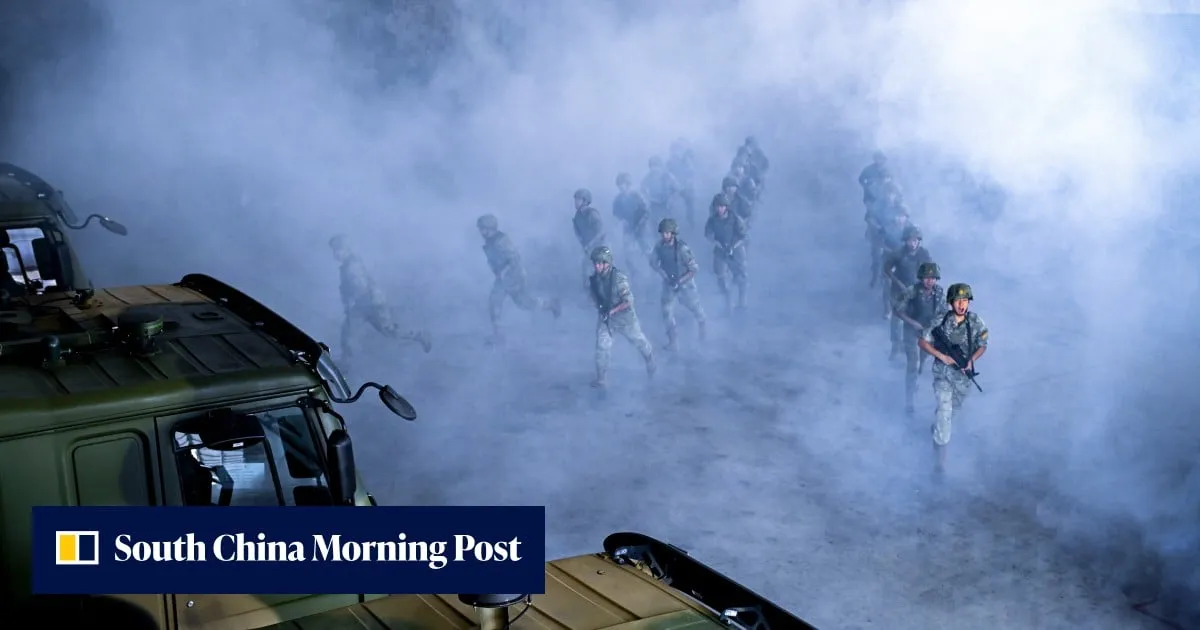
South China Morning PostFIG 01
Reading time
1min
Word count
94words
Sources cited
1cited
Entities identified
8entities
Quality score
100%
§ 01
Briefing Summary
AI-generatedNEWSAR · AI
A study published Monday by researchers at Shanghai Jiao Tong University’s National Institute of Strategic Studies warns China about the risks of defense contractors wielding excessive influence over defense policy. The study cites the United States' military-industrial complex as an example, suggesting its profit-driven expansion has led to a situation where the Department of Defense, private contractors, and congressional committees form an "iron triangle." This alliance, according to the researchers, has resulted in a mutually reinforcing system where profits, increased defense budgets, and political capital are aligned, potentially hijacking U.S. national security policy. The study aims to advise Beijing on avoiding similar pitfalls.
Confidence 0.85Sources 1Claims 4Entities 8
§ 02
Article analysis
Model · rule-basedFraming
National Security
Political Strategy
Tone
Measured
AI-assessed
CalmNeutralAlarmist
Factuality
0.60 / 1.00
Mixed
LowHigh
Sources cited
1
Limited
FewMany
§ 03
Key claims
4 extracted01
The US military-industrial complex's profit-driven expansion serves as a cautionary example.
factualShanghai Jiao Tong University's National Institute of Strategic Studies
Confidence
0.90
02
A Chinese study warns Beijing about the dangers of defense contractors influencing defense policy.
factualShanghai Jiao Tong University's National Institute of Strategic Studies
Confidence
0.90
03
Defense contractors, the military, and politicians form a mutually reinforcing alliance for profit, budget expansion, and political capital.
factualShanghai Jiao Tong University's National Institute of Strategic Studies
Confidence
0.80
04
Washington's 'iron triangle' (Dept. of Defense, private contractors, congressional committees) has hijacked US national security policy.
factualShanghai Jiao Tong University's National Institute of Strategic Studies
Confidence
0.80
§ 04
Full report
1 min read · 94 words§ 05
Entities
8 identifiedKey playerOppositionContextPositiveNeutralNegative
Organizations3
§ 06
Keywords & salience
8 termsmilitary-industrial complex
1.00
defence contractors
1.00
us national security policy
0.90
defence policy
0.80
us military
0.70
profit-driven expansion
0.60
iron triangle
0.50
shanghai jiao tong university
0.40
§ 07
Topic connections
Interactive graph Network visualization showing 51 related topics
View Full Graph Person Organization Location Event|Click node to navigate|Edge numbers = shared articles