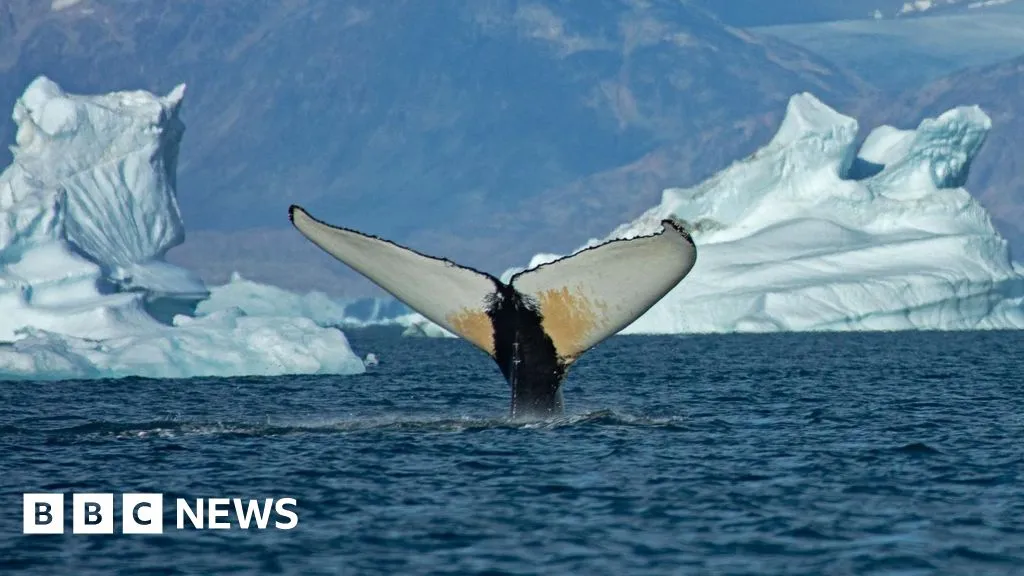
Sea ice has been disappearing from Greenland" class="entity-link entity-location" data-entity-id="48364" data-entity-type="location">East Greenland, allowing giant whales to take advantage and move in to previously inaccessible areas.That is the conclusion of a decades-long study that has recorded - and filmed - hundreds of the world's biggest whales including humpbacks, minke and fin whales, feeding in ice-free seas along the coast in summer.None of these marine mammals were historically found here as they have been locked out of the coastal waters by ice. Now, as Climate Change warms the sea and melts that ice, they have adapted. Scientists describe the result as seasonal Arctic "feeding frenzies" - part of a major regime shift in the ocean environment along Greenland" class="entity-link entity-location" data-entity-id="48364" data-entity-type="location">East Greenland.Fernando Ugarte A humpback whale feeding in coastal subarctic waters The change is dramatic: ship-based surveys in the region did not record a single humpback whale sighting there until 2006. In 2007, seven humpbacks were seen, and by 2024, there were 150 ship-based sightings of these giant whales.The first systematic aerial surveys of baleen whales - a group that includes fin, minke and humpbacks - off the Greenland" class="entity-link entity-location" data-entity-id="48364" data-entity-type="location">East Greenland coast were carried out by the researchers during the summers of 2015 and 2024.
SRCBBC News - World
LANGEN
LEANCenter
WORDS195
ENT8
THU · 2026-08-20 · 02:05 GMTBRIEF NSR-2026-0820-104043
NSR-2026-0820-104043News Report·EN·Environmental
Giant whales move into Greenland waters as ice disappears
Giant whales, including humpbacks, minke, and fin whales, are now frequently observed feeding in previously inaccessible coastal waters off East Greenland during the summer months. This shift is attributed to the melting of sea ice, a consequence of climate change, which has opened up these areas.
2 hours agoShareSaveAdd as preferred on GoogleVictoria GillScience correspondentBBC News - WorldFiled 2026-08-20 · 02:05 GMTLean · CenterRead · 1 min
BBC News - WorldFIG 01
Reading time
1min
Word count
195words
Sources cited
1cited
Entities identified
8entities
Quality score
100%
§ 01
Briefing Summary
AI-generatedNEWSAR · AI
Giant whales, including humpbacks, minke, and fin whales, are now frequently observed feeding in previously inaccessible coastal waters off East Greenland during the summer months. This shift is attributed to the melting of sea ice, a consequence of climate change, which has opened up these areas. Decades of study and recent aerial surveys confirm a dramatic increase in whale sightings, with humpback whale sightings rising from none before 2006 to 150 by 2024. Scientists describe these events as seasonal Arctic "feeding frenzies," indicating a significant change in the ocean environment. These marine mammals were historically excluded from these waters by ice but have adapted to the warming seas.
Confidence 0.90Sources 1Claims 4Entities 8
§ 02
Article analysis
Model · rule-basedFraming
Environmental
Human Interest
Tone
Measured
AI-assessed
CalmNeutralAlarmist
Factuality
0.80 / 1.00
Factual
LowHigh
Sources cited
1
Limited
FewMany
§ 03
Key claims
4 extracted01
Scientists describe the result as seasonal Arctic 'feeding frenzies' - part of a major regime shift in the ocean environment along East Greenland.
quoteScientists
Confidence
1.00
02
Ship-based surveys recorded no humpback whale sightings in East Greenland until 2006, with sightings increasing to 150 by 2024.
statistic
Confidence
1.00
03
Hundreds of humpbacks, minke, and fin whales have been recorded feeding in ice-free seas along the East Greenland coast in summer.
factual
Confidence
1.00
04
Sea ice has been disappearing from East Greenland, allowing giant whales to move into previously inaccessible areas.
factual
Confidence
1.00
§ 04
Full report
1 min read · 195 words§ 05
Entities
8 identifiedKey playerOppositionContextPositiveNeutralNegative
§ 06
Keywords & salience
10 termssea ice melt
1.00
climate change
1.00
greenland waters
0.90
giant whales
0.90
marine mammals
0.80
humpback whales
0.70
baleen whales
0.70
fin whales
0.60
minke whales
0.60
ocean environment
0.50
§ 07
Topic connections
Interactive graph No topic relationship data available yet. This graph will appear once topic relationships have been computed.