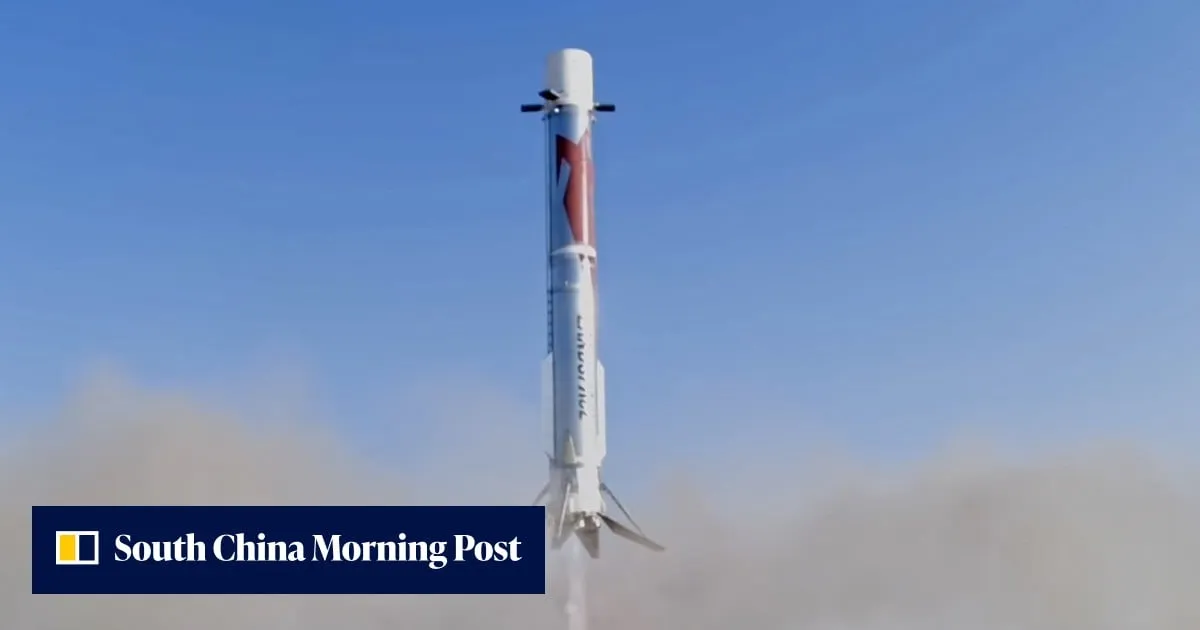
A pair of landmark rocket recoveries in recent weeks has brought China a step closer to mastering reusable launch technology – a breakthrough analysts said could give the People’s Liberation Army an advantage in combat by increasing the resilience of its satellite-supported “kill chain”, the process of identifying, tracking and engaging a target.In a first for China, commercial rocket company LandSpace recovered a stainless-steel booster using deployable legs after an orbital flight earlier this week. This followed a successful launch last month by state-owned China-aerospace-science-and-technology-corporation" class="entity-link entity-organization" data-entity-id="151125" data-entity-type="organization">China Aerospace Science and Technology Corporation (CASC), which achieved the world’s first recovery of an orbital-class booster at sea using a net-capture system.Defence experts said the technology would dramatically lower the cost of putting satellites into space and increase the frequency of launches. Mastering reusability will improve the PLA’s space capabilities – including communication, navigation and surveillance – much like how SpaceX supports the US military.
SRCSouth China Morning Post
LANGEN
LEANCenter-Right
WORDS150
ENT10
FRI · 2026-08-21 · 13:12 GMTBRIEF NSR-2026-0821-104530
NSR-2026-0821-104530Analysis·EN·National Security
Why China’s reusable rocket breakthrough matters for the PLA’s ‘kill chain’
China has achieved significant milestones in reusable rocket technology with two recent successful booster recoveries. Commercial company LandSpace recovered a stainless-steel booster using deployable legs after an orbital flight, marking a first for China.
Albee Zhang,Gabriel DominguezSouth China Morning PostFiled 2026-08-21 · 13:12 GMTLean · Center-RightRead · 1 min
South China Morning PostFIG 01
Reading time
1min
Word count
150words
Sources cited
2cited
Entities identified
10entities
Quality score
100%
§ 01
Briefing Summary
AI-generatedNEWSAR · AI
China has achieved significant milestones in reusable rocket technology with two recent successful booster recoveries. Commercial company LandSpace recovered a stainless-steel booster using deployable legs after an orbital flight, marking a first for China. This follows a successful sea-based net-capture recovery of an orbital-class booster by state-owned China Aerospace Science and Technology Corporation (CASC) last month. Analysts suggest this breakthrough will lower launch costs and increase launch frequency, potentially enhancing the People's Liberation Army's (PLA) satellite-supported "kill chain" by improving communication, navigation, and surveillance capabilities. This advancement could provide the PLA with an advantage in combat by increasing the resilience of its target identification, tracking, and engagement processes.
Confidence 0.90Sources 2Claims 5Entities 10
§ 02
Article analysis
Model · rule-basedFraming
National Security
Technology
Tone
Mixed Tone
AI-assessed
CalmNeutralAlarmist
Factuality
0.70 / 1.00
Factual
LowHigh
Sources cited
2
Limited
FewMany
§ 03
Key claims
5 extracted01
CASC achieved the world’s first recovery of an orbital-class booster at sea using a net-capture system.
factual
Confidence
0.95
02
LandSpace recovered a stainless-steel booster using deployable legs after an orbital flight.
factual
Confidence
0.95
03
China's reusable rocket breakthrough brings it closer to mastering reusable launch technology.
factual
Confidence
0.90
04
Mastering reusability will improve the PLA’s space capabilities, similar to how SpaceX supports the US military.
quoteDefence experts
Confidence
0.85
05
Reusable rocket technology could give the PLA an advantage in combat by increasing the resilience of its satellite-supported 'kill chain'.
quoteanalysts
Confidence
0.80
§ 04
Full report
1 min read · 150 words§ 05
Entities
10 identifiedKey playerOppositionContextPositiveNeutralNegative
Organizations4
§ 06
Keywords & salience
8 termsreusable rocket technology
1.00
people's liberation army (pla)
0.90
kill chain
0.80
satellite capabilities
0.70
rocket recovery
0.60
landspace
0.50
china aerospace science and technology corporation (casc)
0.50
launch cost reduction
0.40
§ 07
Topic connections
Interactive graph Network visualization showing 51 related topics
View Full Graph Person Organization Location Event|Click node to navigate|Edge numbers = shared articles