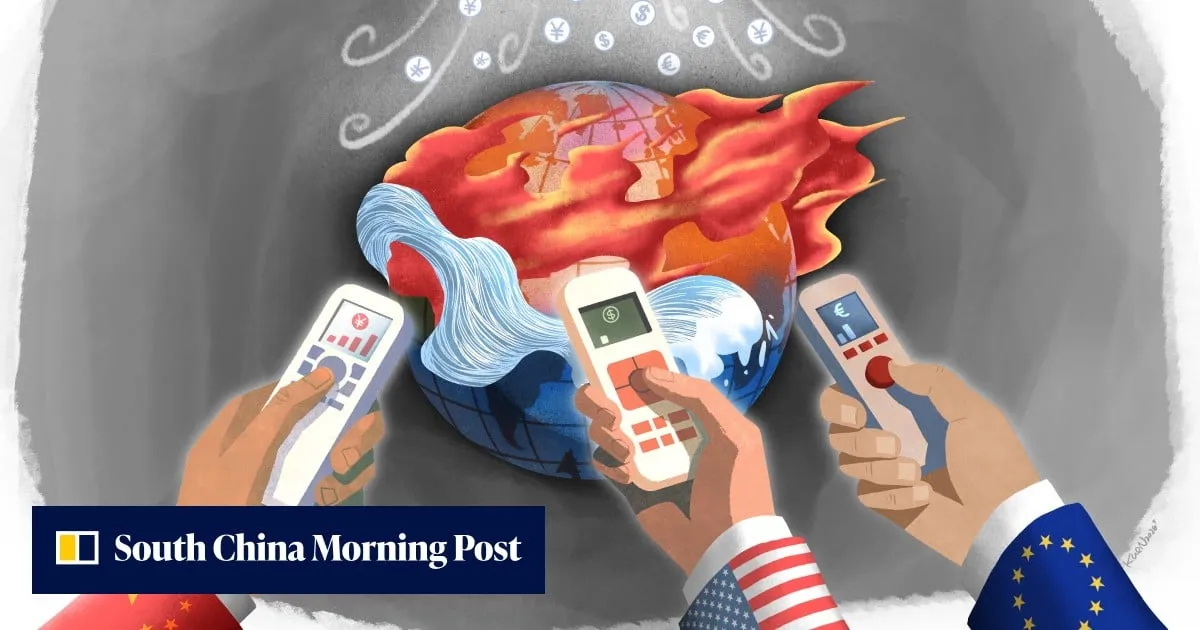
A punishing drought is draining Europe’s great rivers, pushing the Loire, the Danube and the Rhine towards record lows.At the Kaub gauging station, the reference point for shipping on the Rhine – Germany’s economic artery – the water level fell to 17cm (6.7 inches) this month, a low unseen since measurements began in 1880.Meanwhile, wildfires are burning across southern Europe, forcing the evacuation of hundreds of thousands and producing the defining image of a European summer in which disaster has come to feel as seasonal as the holidays.But this is not a story unique to any one continent or hemisphere. In recent weeks, smoke from intensified Canadian wildfires drifted down the American east coast, leaving New Yorkers struggling to breathe, while China has battled a prolonged heatwave and persistent floods while bracing for what could be the strongest El Nino cycle in the past 150 years.The cascade of crises has revived an old question: how should societies adapt to a rapidly changing climate? It is one the world’s three leading economies are answering very differently.The green transition is no longer something [China] needs external pressure to pursue. It’s a basic national development strategyJiangwen Guo, Chatham HouseThe results, analysts warn, are just as disparate. China’s government can set long-term plans and back them with public money and strong execution.
SRCSouth China Morning Post
LANGEN
LEANCenter-Right
WORDS218
ENT12
FRI · 2026-08-21 · 22:00 GMTBRIEF NSR-2026-0822-104705
NSR-2026-0822-104705Analysis·EN·Political Strategy
As natural disasters rage, does China’s ‘top-down’ climate model provide a way forward?
Europe is experiencing severe drought, with rivers like the Loire, Danube, and Rhine reaching record low levels, impacting shipping on the Rhine. Simultaneously, southern Europe is battling wildfires, forcing evacuations.
Xiaofei XuSouth China Morning PostFiled 2026-08-21 · 22:00 GMTLean · Center-RightRead · 1 min
South China Morning PostFIG 01
Reading time
1min
Word count
218words
Sources cited
1cited
Entities identified
12entities
Quality score
100%
§ 01
Briefing Summary
AI-generatedNEWSAR · AI
Europe is experiencing severe drought, with rivers like the Loire, Danube, and Rhine reaching record low levels, impacting shipping on the Rhine. Simultaneously, southern Europe is battling wildfires, forcing evacuations. These extreme weather events are not isolated, with Canada's wildfires affecting air quality in the US and China facing heatwaves, floods, and the potential for a strong El Nino. This global pattern of climate crises prompts questions about societal adaptation. China, unlike other leading economies, can implement long-term plans backed by public funding and strong execution, viewing its green transition as a national development strategy.
Confidence 0.90Sources 1Claims 5Entities 12
§ 02
Article analysis
Model · rule-basedFraming
Political Strategy
Environmental
Tone
Mixed Tone
AI-assessed
CalmNeutralAlarmist
Factuality
0.60 / 1.00
Mixed
LowHigh
Sources cited
1
Limited
FewMany
§ 03
Key claims
5 extracted01
The green transition is a basic national development strategy for China, not requiring external pressure.
quoteJiangwen Guo, Chatham House
Confidence
1.00
02
Wildfires are burning across southern Europe, forcing evacuations and producing significant smoke.
factual
Confidence
0.90
03
Europe is experiencing a punishing drought with rivers like the Loire, Danube, and Rhine reaching record lows.
factual
Confidence
0.90
04
China has battled a prolonged heatwave and persistent floods while bracing for a potentially strong El Nino cycle.
factual
Confidence
0.80
05
China's government can set long-term plans and back them with public money and strong execution.
factualanalysts
Confidence
0.70
§ 04
Full report
1 min read · 218 words§ 05
Entities
12 identifiedKey playerOppositionContextPositiveNeutralNegative
Organizations1
Locations5
Events1
§ 06
Keywords & salience
9 termsclimate change
1.00
natural disasters
0.90
china
0.80
climate model
0.70
wildfires
0.60
drought
0.60
green transition
0.50
floods
0.50
el nino
0.40
§ 07
Topic connections
Interactive graph Network visualization showing 51 related topics
View Full Graph Person Organization Location Event|Click node to navigate|Edge numbers = shared articles