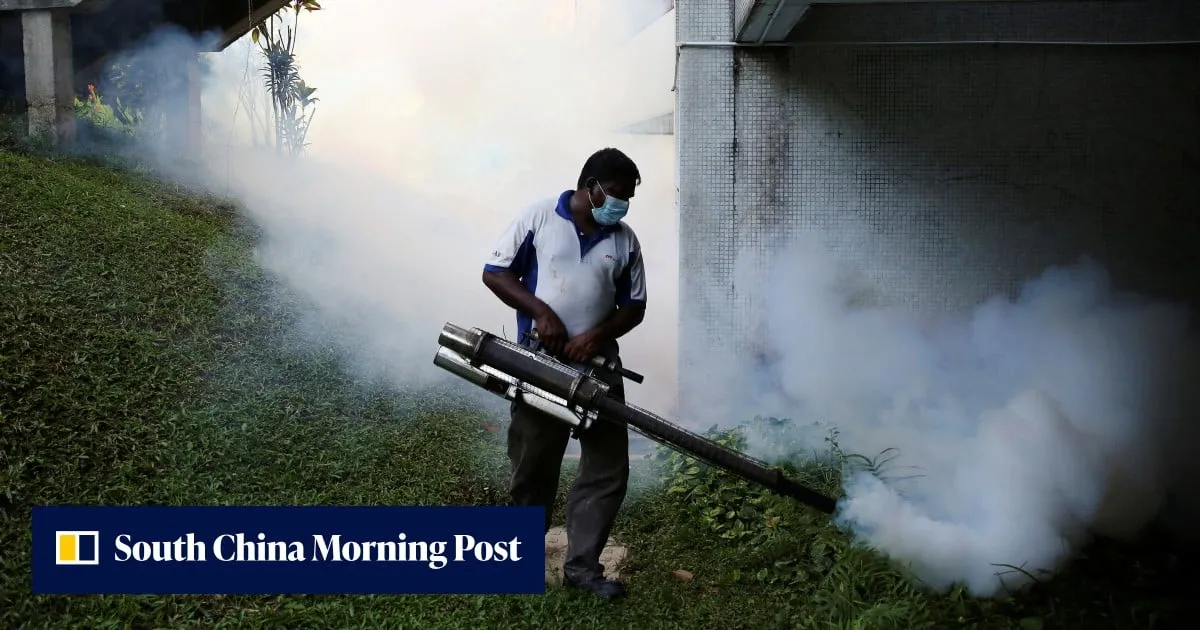
Dengue infections in Malaysia have surged 56.2 per cent this year, with 58,079 cases and 55 deaths recorded so far, even as take-up of the Dengue vaccine remains low.Dr Shanmuganathan TV Ganeson, president of the Malaysia" class="entity-link entity-organization" data-entity-id="190815" data-entity-type="organization">Federation of Private Medical Practitioners’ Associations, Malaysia, said cost was one factor behind the low vaccine uptake.A two-dose regime could cost between 420 and 500 ringgit (US$104 to US$124), depending on the facility, and was generally cheaper in general practitioner clinics, he said, adding that GPs also lag larger facilities in terms of publicity.The Dengue vaccine also had to compete with other vaccines that were more affordable, he said, especially the flu vaccine.“People here tend to opt for flu protection, especially travellers, which costs less than 100 ringgit, rather than an expensive Dengue vaccine,” Shanmuganathan said.He explained that the Dengue vaccine could not be given to pregnant women, breastfeeding mothers or immunocompromised patients and was recommended only for those aged between four and 60.Dengue-prevention-advocacy-Malaysia" class="entity-link entity-organization" data-entity-id="190817" data-entity-type="organization">Dengue Prevention Advocacy Malaysia co-chairman Professor Zamberi Sekawi said there was some hesitancy, as with other vaccines, but cautioned against reading the low uptake as anti-vaccine sentiment.A pest control worker sprays insecticide to help control the spread of Dengue fever carried by mosquitoes in Kuala Lumpur, Malaysia, in 2014. Photo: Reuters“The evidence suggests that many Malaysians are undecided rather than opposed. They want to know how effective the vaccine is, its long-term safety, and the recommendation of their doctor,” he said, adding that public awareness of the vaccine was limited.“Cost and access must not be mistaken for hesitancy. Since we have to pay for it, it creates an additional barrier.”He said studies had shown that acceptance of the vaccine improved when people understood its risks and when doctors themselves recommended the jab.“We need better public education and, importantly, doctors who are confident enough to have personalised conversations about Dengue prevention and vaccination,” he said.Further ReadingChecks by local reporters on prices at various private facilities found that two doses of the Dengue vaccine can cost up to 480 ringgit.The Health Ministry said last year that it had no immediate plans to include the vaccine in the National Immunisation Programme.High-risk regionsIn a statement issued on Friday, the Health Ministry said the increase in cases was initially concentrated in the Klang Valley region, particularly Selangor state, as well as the federal territories of Kuala Lumpur and Putrajaya.“The risk of Dengue transmission remains high and the national situation remains worrying following increases in cases now also detected in several other states,” it said.Intensive, targeted prevention and control measures, including early case detection, vector control, outbreak management and personnel mobilisation, had since begun to show positive results, the ministry noted.The northern state of Perlis recorded the highest percentage increase, up 207 per cent from 55 cases between January and August last year to 169 this year.Johor’s cases more than doubled, climbing 109 per cent from 4,140 to 8,639, while Kuala Lumpur and Putrajaya recorded a 106 per cent increase, from 5,013 to 10,316 cases.Selangor continued to be the worst-affected state in absolute terms, with 25,090, up 61 per cent from 15,610 cases. Sabah recorded 3,753 cases, up 34 per cent from 2,806 previously.Only Penang, Melaka and Kedah recorded reductions, with cases falling by 26 per cent, 36 per cent and 60 per cent, respectively.The ministry attributed the rise in Dengue cases to several factors, including weather favourable to mosquito breeding.This article was first published by The Star
SRCSouth China Morning Post
LANGEN
LEANCenter-Right
WORDS570
ENT11
SAT · 2026-08-22 · 03:55 GMTBRIEF NSR-2026-0822-104735
NSR-2026-0822-104735News Report·EN·Public Health
Dozens die as dengue surges in Malaysia while vaccine uptake stalls
Malaysia is experiencing a significant surge in dengue infections, with 58,079 cases and 55 deaths recorded this year, a 56.2% increase. The uptake of the dengue vaccine remains low, attributed primarily to its high cost, with a two-dose regimen costing between US$104 and US$124.
The StarSouth China Morning PostFiled 2026-08-22 · 03:55 GMTLean · Center-RightRead · 3 min
South China Morning PostFIG 01
Reading time
3min
Word count
570words
Sources cited
2cited
Entities identified
11entities
Quality score
100%
§ 01
Briefing Summary
AI-generatedNEWSAR · AI
Malaysia is experiencing a significant surge in dengue infections, with 58,079 cases and 55 deaths recorded this year, a 56.2% increase. The uptake of the dengue vaccine remains low, attributed primarily to its high cost, with a two-dose regimen costing between US$104 and US$124. Other factors contributing to low uptake include competition from more affordable vaccines like the flu vaccine, and limited public awareness and doctor recommendations. While some hesitancy exists, it's not necessarily anti-vaccine sentiment, but rather a desire for more information on effectiveness and safety. The Health Ministry has no immediate plans to include the vaccine in the national program. The rise in cases is linked to favorable weather conditions for mosquito breeding, with the Klang Valley and several other states heavily affected.
Confidence 0.90Sources 2Claims 5Entities 11
§ 02
Article analysis
Model · rule-basedFraming
Public Health
Economic Impact
Tone
Measured
AI-assessed
CalmNeutralAlarmist
Factuality
0.80 / 1.00
Factual
LowHigh
Sources cited
2
Limited
FewMany
§ 03
Key claims
5 extracted01
Many Malaysians are undecided rather than opposed to the dengue vaccine, wanting to know its effectiveness, long-term safety, and doctor recommendations.
quoteProfessor Zamberi Sekawi
Confidence
1.00
02
The increase in dengue cases was initially concentrated in the Klang Valley region, including Selangor, Kuala Lumpur, and Putrajaya.
factualHealth Ministry
Confidence
1.00
03
The Health Ministry has no immediate plans to include the dengue vaccine in the National Immunisation Programme.
factualHealth Ministry
Confidence
1.00
04
The cost of a two-dose dengue vaccine regime in Malaysia ranges between 420 and 500 ringgit (US$104 to US$124).
statisticDr Shanmuganathan TV Ganeson
Confidence
1.00
05
Dengue infections in Malaysia have surged 56.2 per cent this year, with 58,079 cases and 55 deaths recorded so far.
statistic
Confidence
1.00
§ 04
Full report
3 min read · 570 words§ 05
Entities
11 identifiedKey playerOppositionContextPositiveNeutralNegative
Organizations4
§ 06
Keywords & salience
10 termsdengue
1.00
vaccine uptake
0.90
malaysia
0.80
public health
0.70
vaccine cost
0.70
disease prevention
0.60
public awareness
0.50
immunization
0.50
insecticide
0.40
healthcare access
0.40
§ 07
Topic connections
Interactive graph Network visualization showing 2 related topics
View Full Graph Person Organization Location Event|Click node to navigate|Edge numbers = shared articles