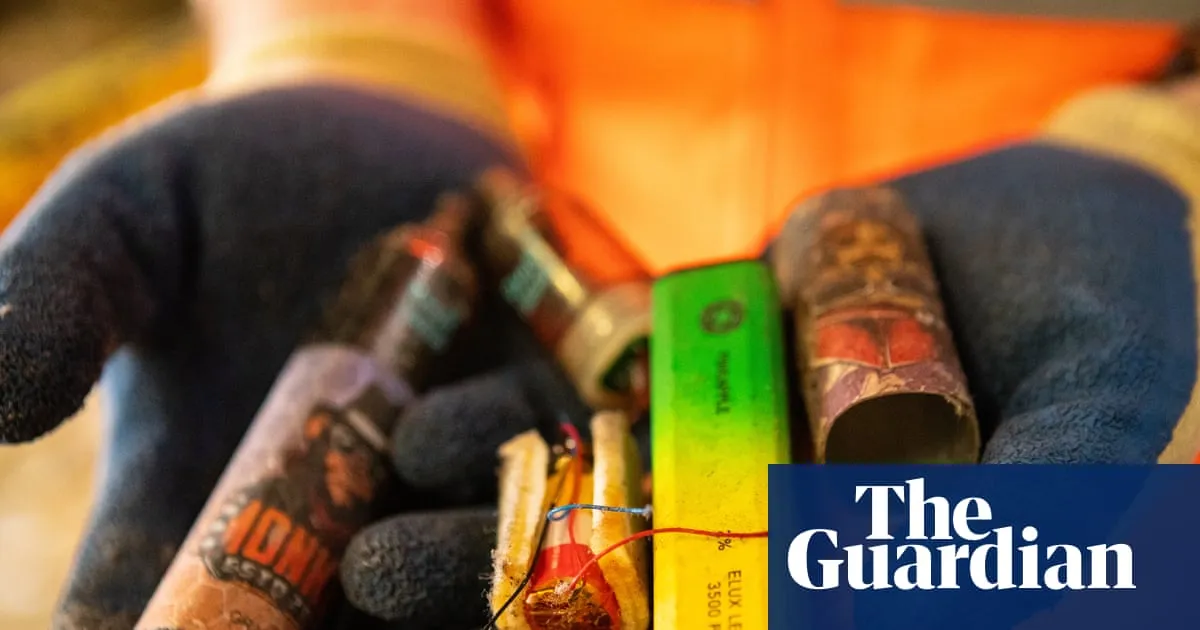
Fires at recycling centres caused by wrongly discarded lithium batteries such as those found in vapes are occurring at the rate of more than 10 a week, according to new figures.Experts say the sheer volume of battery fires now occurring at waste facilities has reached a crisis that is putting lives at risk, costing £1bn a year and frustrating fire chiefs.In figures shared with the Guardian, the Environment Services Association (ESA), the trade body for waste management companies, said its members had reported 1,518 fires in the year to March 2026. At least 541 of these fires were directly attributed to lithium ion batteries, the survey found. There were a further 216 battery fires in bin lorries.The ESA said the reported number of battery-related fires underestimated the scale of the problem, because in most incidents it was impossible to determine the cause of the blaze. A spokesperson said: “We know 40% of fires at recycling centres are caused by batteries, but we think the actual number is more like 70%.”It estimates that annual cost of these fires has increased from £150m in 2021 to £1bn today. The cause of this week’s blaze at a recycling centre in Deptford, south-east London, has yet to be determined. It was the latest in a series of fires at recycling centre and bin lorries, many of which have been blamed on batteries, particularly those in vapes. They include: Ilford in east London; Caerwent in Monmouthshire; Widnes in Cheshire; Glasgow; Costessey near Norwich, and Dereham in Norfolk.Fire chiefs have been alarmed by the rise in this type of blaze and the resources needed to put them out.After the Ilford fire, which took 25 firefighters to control, a spokesperson for London fire brigade said: “We’ve seen a growing number of fires at waste disposal sites that are believed to have been caused by a lithium battery.”“Fires that we attend at sites like recycling centres and scrap yards can be very time consuming for our firefighters and often require a high level of resources to put the fire out. We’ve also seen the detrimental environmental and societal impact these fires can have on local communities.”Dr Francesco Restuccia, a fire expert at King’s College London, said: “There has been exponential increase in fires at recycling centres, mainly because we are using and discarding lithium batteries in everyday objects like smartphones, children’s toys, toothbrushes and vapes. If they are not disposed off properly there’s a high chance of ignition.”Bin lorry fire in Lafone Street, south London. There has been a rise in fires caused by electrical products using lithium-ion batteries, such as strimmers, drills, power banks and e-scooters. Photograph: Jill Mead/The GuardianExplaining what happens when a lithium battery gets crushed, Restuccia said: “If the separator is pierced – which happens a lot at recycling centres – it creates a lot of internal short circuits in the battery, causing the temperature to increase until it reaches ignition point.”The ESA commissioned the Health and Safety Executive to test what happens when a vape battery is punctured while next to paper and card. Video of the experiment, shared with the Guardian, showed the vape igniting like a sparkler and setting alight the paper and card. Temperatures of the vape reached more 750C in the experiment and became hot enough to ignite paper for two minutes.The ESA hopes the experiment will demonstrate the need to safely dispose vapes to policymakers and the public. The waste management company Biffa said it has recovered 500,000 vapes at its facilities this summer alone.The ESA is calling for a £5 deposit scheme on the sale of all vapes to ensure that vape users have an incentive to return used devices to retailers for safe disposal.Patrick Brighty, the head of recycling policy at the ESA, said: “battery fires are reaching epidemic proportions across Britain’s recycling and waste industry, placing workers at risk and threatening vital infrastructure upon which we all rely every day.“It only takes a single battery hidden in household rubbish or recycling to cause a huge fire and decimate a facility. The total cost of battery fires now exceeds £1bn a year, with huge knock-on implications for insurance costs.“vapes are among the biggest culprits because they’re cheap, abundant and typically have a short use-life. ESA and others across our industry are calling on the government to implement a mandatory deposit scheme for vapes to incentivise users to return them safely back to the point of purchase so they can be recycled properly and away from other waste.”
SRCThe Guardian - World News
LANGEN
LEANCenter-Left
WORDS751
ENT12
SAT · 2026-08-22 · 06:00 GMTBRIEF NSR-2026-0822-104771
NSR-2026-0822-104771News Report·EN·Economic Impact
Battery fires at recycling centres are costing UK £1bn a year, figures show
Fires caused by wrongly discarded lithium batteries, particularly from vapes, are occurring at UK recycling centres at a rate of over 10 per week, according to the Environment Services Association (ESA). These fires are costing the UK £1 billion annually, a significant increase from £150 million in 2021, and are putting lives at risk.
Matthew WeaverThe Guardian - World NewsFiled 2026-08-22 · 06:00 GMTLean · Center-LeftRead · 4 min
The Guardian - World NewsFIG 01
Reading time
4min
Word count
751words
Sources cited
3cited
Entities identified
12entities
Quality score
100%
§ 01
Briefing Summary
AI-generatedNEWSAR · AI
Fires caused by wrongly discarded lithium batteries, particularly from vapes, are occurring at UK recycling centres at a rate of over 10 per week, according to the Environment Services Association (ESA). These fires are costing the UK £1 billion annually, a significant increase from £150 million in 2021, and are putting lives at risk. The ESA estimates that batteries are responsible for up to 70% of fires at waste facilities, with incidents reported across various locations. Experts explain that damaged lithium batteries can easily ignite, as demonstrated by an experiment showing a punctured vape battery reaching over 750°C and igniting paper. In response, the ESA is advocating for a £5 deposit scheme on vapes to encourage their safe return and disposal.
Confidence 0.90Sources 3Claims 5Entities 12
§ 02
Article analysis
Model · rule-basedFraming
Economic Impact
Public Health
Tone
Mixed Tone
AI-assessed
CalmNeutralAlarmist
Factuality
0.70 / 1.00
Factual
LowHigh
Sources cited
3
Well sourced
FewMany
§ 03
Key claims
5 extracted01
There has been an exponential increase in fires at recycling centres due to the widespread use and improper disposal of lithium batteries.
quoteDr Francesco Restuccia, fire expert at King's College London
Confidence
0.90
02
At least 541 fires in the year to March 2026 were directly attributed to lithium ion batteries, with a further 216 in bin lorries.
statisticEnvironment Services Association (ESA)
Confidence
0.90
03
Fires at UK recycling centres caused by wrongly discarded lithium batteries occur at a rate of more than 10 per week.
statisticEnvironment Services Association (ESA)
Confidence
0.90
04
The annual cost of these fires has increased from £150m in 2021 to £1bn today.
statisticEnvironment Services Association (ESA)
Confidence
0.80
05
Experts believe that up to 70% of fires at recycling centres are caused by batteries, though only 40% are definitively identified.
statisticEnvironment Services Association (ESA) spokesperson
Confidence
0.70
§ 04
Full report
4 min read · 751 words§ 05
Entities
12 identifiedKey playerOppositionContextPositiveNeutralNegative
Organizations1
Locations8
§ 06
Keywords & salience
9 termsbattery fires
1.00
lithium batteries
1.00
recycling centres
0.90
waste management
0.80
vapes
0.70
economic cost
0.60
fire risk
0.60
environment services association
0.50
bin lorries
0.40
§ 07
Topic connections
Interactive graph No topic relationship data available yet. This graph will appear once topic relationships have been computed.