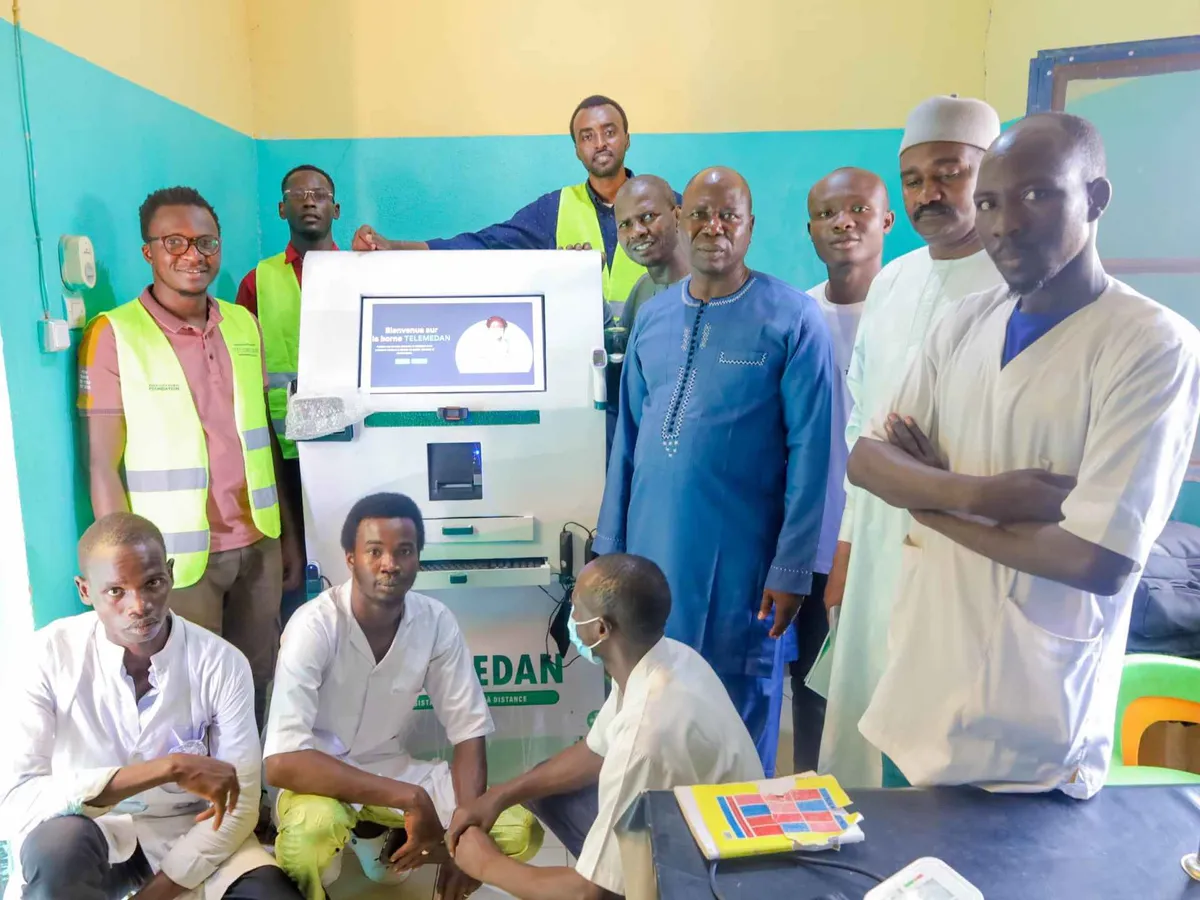
Solar-powered telemedicine is helping rural Chadians overcome distance and limited access to doctors.A solar-powered Telemedan telemedicine kiosk provides remote healthcare consultations to people in rural Chad, helping bring medical services closer to communities far from health facilities [Yahuza Bawage/Al Jazeera]Published On 23 Aug 2026Bitkine, Chad – For Ache Kodo, seeing a doctor once meant saving money for the journey.Living in Bitkine, in central Chad, she said a medical visit could mean paying for transport, the consultation and other costs of travelling to a larger town.Now, she can consult a doctor remotely through a Telemedan kiosk closer to home.“Telemedan changed how my family accessed healthcare services,” Ache told Al Jazeera. “It was difficult before, as it involved me saving money to travel just to see a doctor. Now I’m able to do it on time with fewer costs from where I am. It has also enhanced my economic status.”For people in rural Chad, distance can be as much of a barrier to healthcare as the shortage of doctors themselves. Medical facilities and specialists are concentrated in larger towns and cities, leaving many communities far from basic services.Abakar Mahamat grew up with that reality.A patient uses a Telemedan kiosk in rural Chad to access healthcare remotely, with the solar-powered facility helping overcome distance and limited medical services [Yahuza Bawage/ Al Jazeera]“The problem wasn’t only the lack of doctors,” he said. “It was also the distance between those doctors and the communities that needed them.”In 2021, he launched Telemedan, a telemedicine initiative designed to bring consultations closer to communities where electricity, internet access and medical infrastructure are limited.“Instead of asking people to travel hundreds of kilometres to find a doctor, I wanted to use technology to bring the doctor closer to them,” Abakar told Al Jazeera.A clinic powered by the sunThe kiosks run on solar panels and batteries, allowing them to operate without reliable grid electricity.A local operator registers the patient and takes basic measurements using equipment including blood-pressure monitors, glucometers, thermometers, pulse oximeters and electrocardiogram (ECG) machines.The doctor joins remotely, appearing on a screen as the operator assists with the examination.Telemedan says its kiosks can also be equipped with diagnostic tools including stethoscopes, temperature sensors and, in some cases, ultrasound equipment. A trained local operator helps patients use them.The system is designed for places where internet access may be unreliable. Patient information can be stored locally and synchronised when connectivity returns. An Unstructured Supplementary Service Data (USSD) service allows people without internet access to book appointments and access health information.A Telemedan solar-powered kiosk helps patients in rural Chad access doctors remotely, reducing the need to travel long distances for medical care [Yahuza Bawage/Al Jazeera]Depending on the location, the kiosks can connect through mobile networks or satellite links.“We want to see that the absence of reliable electricity or the internet should not mean the absence of healthcare,” Abakar said.The cost of getting to a doctorAbakar said some journeys for medical care can cost $200 or more once transport, accommodation, logistics and medical consultations are included.Telemedan consultations cost between $2 and $15, depending on the service.For Abakar, the issue is also about what families can afford to give up to obtain care.“A patient should not have to choose between seeking medical care and being able to feed their family,” he said.From pilot to wider networkTelemedan began as a pilot and has expanded with support from grants and institutional partnerships, including Chad’s Ministry of Public Health and Prevention.Abakar said the initiative now has 37 kiosks across 11 provinces and has reached an estimated 143,000 people.A Telemedan kiosk in rural Chad is equipped with medical devices that allow local health workers to conduct examinations while doctors consult patients remotely [Yahuza Bawage/Al Jazeera]Telemedan has also begun using artificial intelligence to help screen for diabetic retinopathy, a complication of diabetes that can damage vision. The initiative says the technology is intended to assist healthcare professionals rather than replace them.But a remote consultation has limits.A kiosk cannot provide emergency treatment or perform every examination. Patients who need specialist care, laboratory tests, medicines or hospital treatment still have to reach the next level of the health system.Can the kiosks last?Telemedan’s expansion comes as Chad develops its wider digital health system.Youssouf Silay, an assistant to the coordinator of Chad’s National Digital Health Programme, told Al Jazeera that the country’s National Health Development Plan for 2022–2030 identifies digital health as a way to expand access to care.Chad established the National telemedicine Programme in 2021 and launched its National Digital Health Programme in 2023, Youssouf said. The Ministry of Health is also developing a legal and regulatory framework for digital health services.“The objective is to promote innovative solutions that can improve access to healthcare, particularly in areas with limited medical and energy infrastructure,” Youssouf told Al Jazeera. “Solutions such as solar-powered telemedicine kiosks can contribute to this effort by bringing healthcare services closer to underserved populations.”But putting a kiosk in a village is only the beginning.The equipment has to keep working. Connectivity has to be available. Local operators need training. Doctors need to be there when patients call. And people who need care beyond the kiosk need a way to reach it.In Chad, solar-powered Telemedan kiosks are designed to overcome two rural healthcare challenges at once: unreliable electricity and the long distances patients often travel to see a doctor [Yahuza Bawage/ Al Jazeera]Each kiosk costs about $10,000, according to Abakar. Telemedan sells the units to governments, public health programmes and partner organisations, which then operate them. The model means patients are not paying for the infrastructure itself.Telemedan says it wants to reach one million people in rural communities across sub-Saharan Africa.A solar-powered kiosk cannot replace a hospital. It cannot replace a doctor in every circumstance.But it can shorten the distance between a patient and the health system.“We want Telemedan to become a sustainable layer of healthcare infrastructure, not simply a collection of technology projects,” Abakar told Al Jazeera.
SRCAl Jazeera
LANGEN
LEANCenter
WORDS985
ENT9
SUN · 2026-08-23 · 03:21 GMTBRIEF NSR-2026-0823-104968
NSR-2026-0823-104968News Report·EN·Technology
In rural Chad, solar kiosks bring healthcare closer
In rural Chad, solar-powered Telemedan kiosks are bridging the gap in healthcare access for communities far from medical facilities. Launched in 2021 by Abakar Mahamat, the initiative uses solar energy to power kiosks equipped with diagnostic tools, allowing local operators to conduct examinations while doctors consult remotely via screens.
By Yahuza BawageAl JazeeraFiled 2026-08-23 · 03:21 GMTLean · CenterRead · 4 min
Al JazeeraFIG 01
Reading time
4min
Word count
985words
Sources cited
3cited
Entities identified
9entities
Quality score
100%
§ 01
Briefing Summary
AI-generatedNEWSAR · AI
In rural Chad, solar-powered Telemedan kiosks are bridging the gap in healthcare access for communities far from medical facilities. Launched in 2021 by Abakar Mahamat, the initiative uses solar energy to power kiosks equipped with diagnostic tools, allowing local operators to conduct examinations while doctors consult remotely via screens. This system overcomes challenges of distance, limited electricity, and unreliable internet, offering consultations at a fraction of the cost of traditional travel. Telemedan has expanded to 37 kiosks across 11 provinces, reaching an estimated 143,000 people, and is exploring AI for screenings. While not a replacement for emergency care or specialist services, these kiosks significantly improve timely access to medical advice for many Chadians.
Confidence 0.90Sources 3Claims 5Entities 9
§ 02
Article analysis
Model · rule-basedFraming
Technology
Human Interest
Tone
Measured
AI-assessed
CalmNeutralAlarmist
Factuality
0.70 / 1.00
Factual
LowHigh
Sources cited
3
Well sourced
FewMany
§ 03
Key claims
5 extracted01
The kiosks are equipped with basic medical measurement tools and can be equipped with diagnostic equipment like ultrasound.
factual
Confidence
1.00
02
Telemedan kiosks operate on solar panels and batteries, and can function with limited internet connectivity.
factual
Confidence
1.00
03
Abakar Mahamat launched Telemedan in 2021 to address distance and limited access to doctors in rural Chad.
factualAbakar Mahamat
Confidence
1.00
04
Ache Kodo states that Telemedan has reduced her healthcare costs and improved timely access to doctors.
quoteAche Kodo
Confidence
1.00
05
Solar-powered telemedicine kiosks are being used in rural Chad to provide remote healthcare consultations.
factual
Confidence
1.00
§ 04
Full report
4 min read · 985 words§ 05
Entities
9 identifiedKey playerOppositionContextPositiveNeutralNegative
Organizations3
§ 06
Keywords & salience
10 termsrural healthcare
1.00
telemedicine
1.00
solar kiosks
1.00
access to healthcare
0.90
chad
0.80
remote consultations
0.70
healthcare access
0.70
solar power
0.60
telemedan
0.50
medical infrastructure
0.40
§ 07
Topic connections
Interactive graph Network visualization showing 12 related topics
View Full Graph Person Organization Location Event|Click node to navigate|Edge numbers = shared articles