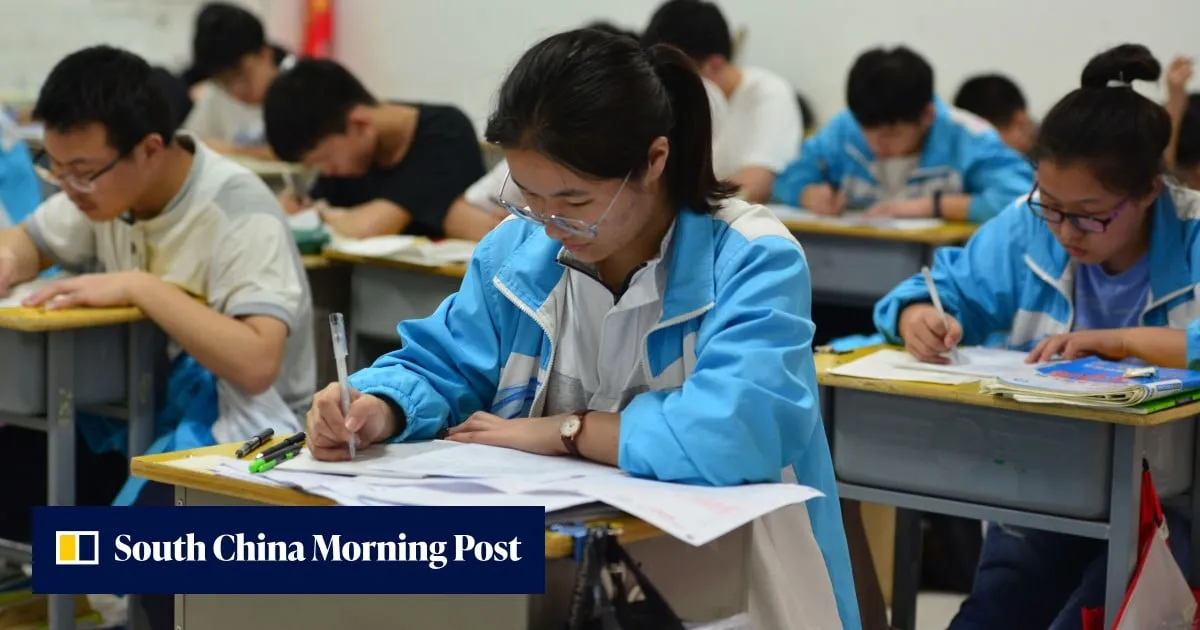
China’s secondary school students are dropping history as an exam subject, a trend that could leave the public more vulnerable to distorted narratives in the future, an academic at a top university has warned.The note of caution comes as Beijing steps up efforts to counter “historical nihilism” – the official term for narratives that contradict or undermine the state’s official historical line – as well as pseudo-history, such as claims that Ancient Greece did not exist.“History education in secondary schools is an important means of preserving historical, cultural, ethnic and national identity,” said Liu Linhai, dean of the school of history at Beijing Normal University, in a commentary in the state-backed China-teacher-paper" class="entity-link entity-organization" data-entity-id="191372" data-entity-type="organization">China Teacher Paper.“Its current weakening and even marginalisation should be a matter of urgent concern for policymakers, who should take coordinated and effective measures to address the structural problems affecting the subject,” Liu wrote.Authorities in China have become increasingly alert to challenges to the orthodox view of the country’s history.On Thursday, a newspaper published by the Chinese Academy of Social Sciences ran two front-page pieces framing pseudo-history as a “new variant” of historical nihilism.
SRCSouth China Morning Post
LANGEN
LEANCenter-Right
WORDS185
ENT8
SUN · 2026-08-23 · 04:00 GMTBRIEF NSR-2026-0823-104997
NSR-2026-0823-104997News Report·EN·Political Strategy
Gaokao reforms could leave Chinese public vulnerable to pseudo-history, top academic warns
A top academic from Beijing Normal University has warned that a decline in history as an exam subject among Chinese secondary students could make the public more susceptible to distorted historical narratives. This concern arises as Beijing intensifies its efforts to combat "historical nihilism," which refers to narratives contradicting the state's official historical line, and pseudo-history.
Meredith ChenSouth China Morning PostFiled 2026-08-23 · 04:00 GMTLean · Center-RightRead · 1 min
South China Morning PostFIG 01
Reading time
1min
Word count
185words
Sources cited
2cited
Entities identified
8entities
Quality score
100%
§ 01
Briefing Summary
AI-generatedNEWSAR · AI
A top academic from Beijing Normal University has warned that a decline in history as an exam subject among Chinese secondary students could make the public more susceptible to distorted historical narratives. This concern arises as Beijing intensifies its efforts to combat "historical nihilism," which refers to narratives contradicting the state's official historical line, and pseudo-history. Liu Linhai, dean of the school of history, stated that weakening history education is a significant concern and urged policymakers to address structural issues affecting the subject. The Chinese Academy of Social Sciences recently published articles framing pseudo-history as a new form of historical nihilism, highlighting the authorities' growing vigilance against challenges to orthodox historical views.
Confidence 0.90Sources 2Claims 4Entities 8
§ 02
Article analysis
Model · rule-basedFraming
Political Strategy
Social Justice
Tone
Mixed Tone
AI-assessed
CalmNeutralAlarmist
Factuality
0.60 / 1.00
Mixed
LowHigh
Sources cited
2
Limited
FewMany
§ 03
Key claims
4 extracted01
China is increasing efforts to counter 'historical nihilism' and pseudo-history.
factualarticle
Confidence
0.90
02
History education is crucial for preserving national identity.
quoteLiu Linhai
Confidence
0.90
03
Pseudo-history is being framed as a 'new variant' of historical nihilism by state-backed media.
factualarticle
Confidence
0.80
04
Dropping history as an exam subject could leave the public vulnerable to distorted narratives.
predictionLiu Linhai
Confidence
0.70
§ 04
Full report
1 min read · 185 words§ 05
Entities
8 identifiedKey playerOppositionContextPositiveNeutralNegative
Organizations3
§ 06
Keywords & salience
9 termspseudo-history
1.00
historical nihilism
0.90
gaokao reforms
0.90
history education
0.80
china
0.70
national identity
0.60
beijing
0.50
secondary school students
0.50
academic warning
0.40
§ 07
Topic connections
Interactive graph No topic relationship data available yet. This graph will appear once topic relationships have been computed.