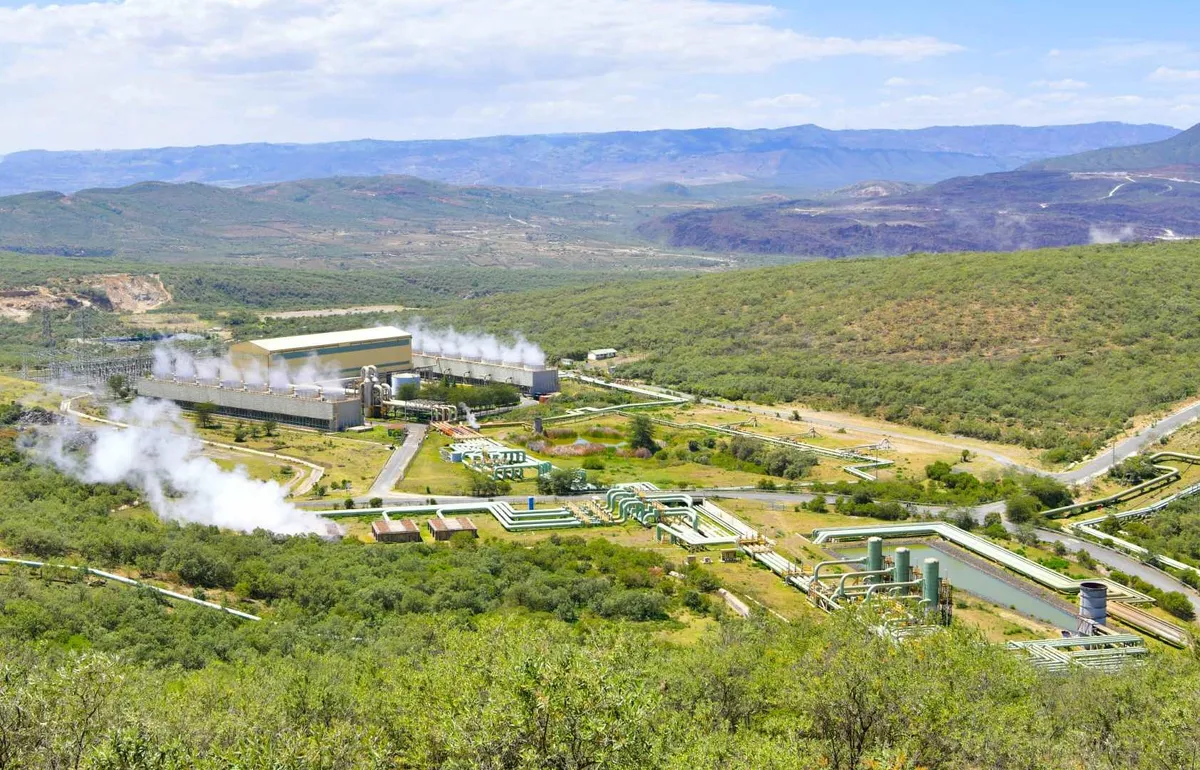
As Kenya courts data-centre investment, communities fear growing pressure on an already stressed water system.An aerial view of the Olkaria geothermal fields near Naivasha, Kenya [Hafsa Abdiwahab Sheikh/Al Jazeera]Published On 24 Aug 2026Naivasha, Kenya – For communities living around Naivasha, water is not an abstract resource. It sustains families, livestock, farms and schools.That reality has taken on new significance after plans for a major Microsoft-G42 data centre in Olkaria, near Lake Naivasha, stalled in May 2026 over concerns about available power capacity.Microsoft and United Arab Emirates-based Artificial Intelligence company G42 announced the project in 2024 as part of a $1bn digital investment package for Kenya. The proposed facility was to run on Geothermal Energy and eventually scale to as much as 1 gigawatt of capacity.The uncertainty has also prompted questions about what another major industrial user could mean for water in a region where residents already report shortages.Microsoft and G42 said the proposed data centre campus would run entirely on renewable Geothermal Energy and incorporate water conservation technology. The companies did not disclose a project-specific water consumption figure in their 2024 announcement.Kenya-electricity-generating-company" class="entity-link entity-organization" data-entity-id="191853" data-entity-type="organization">Kenya Electricity Generating Company (KenGen) communications director Frank David Ochieng told Al Jazeera that the data centre remains at the design stage and that he could not comment further until the project is ready to proceed.For residents like Musa Olorkedienye, who spoke to Al Jazeera, water scarcity is already a daily concern. He says communities around Olkaria have seen changes in access to water, including the loss of reliable piped supplies that residents previously received from KenGen.“Currently, we are relying on water vendors to get water, our animals are walking for kilometres, and we fear things could get worse as demand for water rises,” Olorkedienye says.Pastoralist Isaac Leshishi, who also spoke to Al Jazeera, says increasingly harsh weather is adding to the pressure.Why Olkaria?The choice of Olkaria was closely tied to energy. The area is home to Kenya’s major geothermal operations, making it an attractive location for a power-intensive facility.River Malewa, a major tributary of Lake Naivasha, in Kenya [Hafsa Abdiwahab Sheikh/Al Jazeera]KenGen operates the Olkaria geothermal complex, while Microsoft and G42 planned to power the proposed data centre entirely with Geothermal Energy.A lake under pressureNaivasha is a freshwater lake in Kenya’s Rift Valley whose catchment supports agriculture, tourism, livestock and domestic water use. Its basin also hosts geothermal development and other economic activity.Grace Kimani, a patrol leader with Lake Naivasha and Oloiden, told Al Jazeera that the reservoir is under growing pressure from population growth, agriculture, water abstraction, climate variability, pollution and ecosystem degradation.“The planned Microsoft-G42 data centre in Olkaria could bring jobs and investment, but its water demand raises concerns about adding pressure to already competing needs, particularly during dry periods,” she said.Kimani said there is limited public information about the project’s expected water demand, source and cooling technology. She said transparency and an assessment of its cumulative impact on water resources would be important.She also called for water-efficient or water-free cooling, water recycling and the use of treated wastewater, as well as sustainable abstraction limits and community involvement in monitoring.Kamere landing beach has been flooded by rising water levels in Lake Naivasha, Kenya [Hafsa Abdiwahab Sheikh/Al Jazeera]Silas Wanjala of the Lake Naivasha Riparian Association, who spoke to Al Jazeera, said the region is heavily dependent on groundwater and that declining water flows are adding to the pressure.“These industries, especially EcoCloud, which deal with data, will consume a lot of water at a time when rivers are drying, and demand for water is on the rise,” Wanjala said.Olkaria EcoCloud Data Centre is a local partner in the G42-led development. In 2024, the Kenya News Agency reported that G42, Microsoft and EcoCloud signed a letter of intent for the wider data-centre initiative, with EcoCloud described as a local partner that had previously signed a memorandum of understanding with G42.Wanjala points to past fluctuations in Lake Naivasha as a warning.“This lake in 2010 nearly dried up due to over-abstraction, and this could be repeated due to high demand for water by these investors in Olkaria,” he says.His concern comes against a wider backdrop of water scarcity in Kenya. The Food and Agriculture Organization (FAO) of the United Nations says Kenya has about 527 cubic metres (527,000 litres) of freshwater available per person, below the 1,000-cubic-metre threshold for water scarcity, and estimates availability could fall to about 475 cubic metres per person by 2030.The figures do not show what effect the proposed data centre would have on Lake Naivasha. They provide context, however, for why the prospect of another major water user is drawing scrutiny in a region where demand is already high.How much water would it use?The amount of water the proposed Microsoft-G42 facility itself would require remains unclear.The project announcement provides no projected consumption figure.Existing industrial use offers some context.A KenGen environmental and social impact assessment records that 195,165 cubic metres of water were abstracted from Lake Naivasha in July 2023 for domestic and commercial uses at Olkaria and for operations and domestic use at Eburru.Of that total, 153,918 cubic metres were used for commercial operations at Olkaria. The assessment records the abstraction as within Water Resources Authority (WRA) permitted levels.Those figures relate to existing KenGen operations, not the proposed data centre.For farmer Eskimos Kobia, who spoke to Al Jazeera, the potential competition extends beyond households and livestock. He says farmers, pastoralists, schools and investors will all face greater pressure as demand increases.Kimani said climate variability has also led to fluctuations in lake levels, with periods of flooding followed by prolonged dry conditions.“Water quality is affected by agricultural run-off, untreated wastewater in some areas and invasive species,” she says.Investment versus local concernsNot everyone in Naivasha opposes the investment.Absolom Mukhuusi of the Naivasha Professional Association, who spoke to Al Jazeera, says the technology sector could bring jobs, infrastructure and new businesses to the area. But he says economic benefits should not come at the expense of local communities.The Wildlife Research and Training Institute wetland research centre has been flooded by rising water levels in Lake Naivasha [Hafsa Abdiwahab Sheikh/Al Jazeera]“Even as we welcome the investors, our biggest fear is what happens to our water bodies and communities as water is diverted to Olkaria for the heavy users,” he says.Could technology help?Geologist Kenyatta Otieno, who spoke to Al Jazeera, sees another potential benefit.He recalls the pressure large flower farms once placed on the lake’s ecosystem, saying many have since left or scaled back their operations.Otieno says the proposed centre would have included a resource centre to monitor lake levels and weather patterns. Such monitoring, he says, could help identify the highest water level over time and guide riparian land zoning.“The centre being built with water conservation in mind would be futuristic as Naivasha is generally a water-scarce area. It would be a model for future development,” Otieno said.Kenya already has regulators responsible for managing competing demands. The WRA regulates water abstraction and issues water-use permits, while the National Environment Management Authority (NEMA) oversees environmental impact assessments under the country’s environmental regulatory framework.Attempts by Al Jazeera to obtain comments from WRA and NEMA officials were unsuccessful. Efforts to reach Microsoft-G42 officials and Kenyan government officials for comment on the project’s status and water requirements were also unsuccessful.For now, the project’s eventual scale, design and water requirements remain unclear, according to KenGen.“We are now competing with the multibillion [-dollar] companies for water, and we fear that we shall be the losers in the long run,” Leshishi said.
SRCAl Jazeera
LANGEN
LEANCenter
WORDS1 245
ENT12
MON · 2026-08-24 · 02:09 GMTBRIEF NSR-2026-0824-105217
NSR-2026-0824-105217News Report·EN·Environmental
Can Kenya’s AI ambitions coexist with Naivasha’s water needs?
Kenya is attracting data center investment, with a proposed Microsoft-G42 facility planned for Olkaria near Lake Naivasha. This project, part of a $1 billion digital investment, aims to run on geothermal energy.
By Hafsa Abdiwahab SheikhAl JazeeraFiled 2026-08-24 · 02:09 GMTLean · CenterRead · 5 min
Al JazeeraFIG 01
Reading time
5min
Word count
1 245words
Sources cited
3cited
Entities identified
12entities
Quality score
100%
§ 01
Briefing Summary
AI-generatedNEWSAR · AI
Kenya is attracting data center investment, with a proposed Microsoft-G42 facility planned for Olkaria near Lake Naivasha. This project, part of a $1 billion digital investment, aims to run on geothermal energy. However, local communities fear the data center's potential water demand will exacerbate existing water scarcity in the Naivasha region, which already faces pressure from population growth, agriculture, and climate variability. Residents report declining access to reliable water supplies, forcing reliance on vendors. While Microsoft and G42 state the facility will use renewable energy and water conservation technology, specific water consumption figures have not been disclosed. Concerns remain about the cumulative impact on the already stressed water system, with calls for transparency and water-efficient technologies.
Confidence 0.90Sources 3Claims 5Entities 12
§ 02
Article analysis
Model · rule-basedFraming
Environmental
Economic Impact
Tone
Measured
AI-assessed
CalmNeutralAlarmist
Factuality
0.70 / 1.00
Factual
LowHigh
Sources cited
3
Well sourced
FewMany
§ 03
Key claims
5 extracted01
Lake Naivasha faces pressure from population growth, agriculture, water abstraction, climate variability, pollution, and ecosystem degradation.
quoteGrace Kimani
Confidence
0.90
02
Residents report experiencing water scarcity, including loss of reliable piped supplies and reliance on water vendors.
quoteMusa Olorkedienye
Confidence
0.90
03
Microsoft and G42 stated the data centre would run on renewable geothermal energy and use water conservation technology.
quoteMicrosoft and G42
Confidence
0.90
04
A proposed Microsoft-G42 data centre in Olkaria, near Lake Naivasha, stalled due to power capacity concerns.
factual
Confidence
0.90
05
Kenya is attracting data-centre investment, raising concerns about pressure on its water systems.
factual
Confidence
0.90
§ 04
Full report
5 min read · 1 245 words§ 05
Entities
12 identifiedKey playerOppositionContextPositiveNeutralNegative
People3
Organizations3
Locations4
§ 06
Keywords & salience
10 termswater needs
1.00
data centre
1.00
artificial intelligence
1.00
naivasha
0.90
geothermal energy
0.80
g42
0.70
microsoft
0.70
water scarcity
0.60
kenya
0.50
digital investment
0.40
§ 07
Topic connections
Interactive graph Network visualization showing 51 related topics
View Full Graph Person Organization Location Event|Click node to navigate|Edge numbers = shared articles