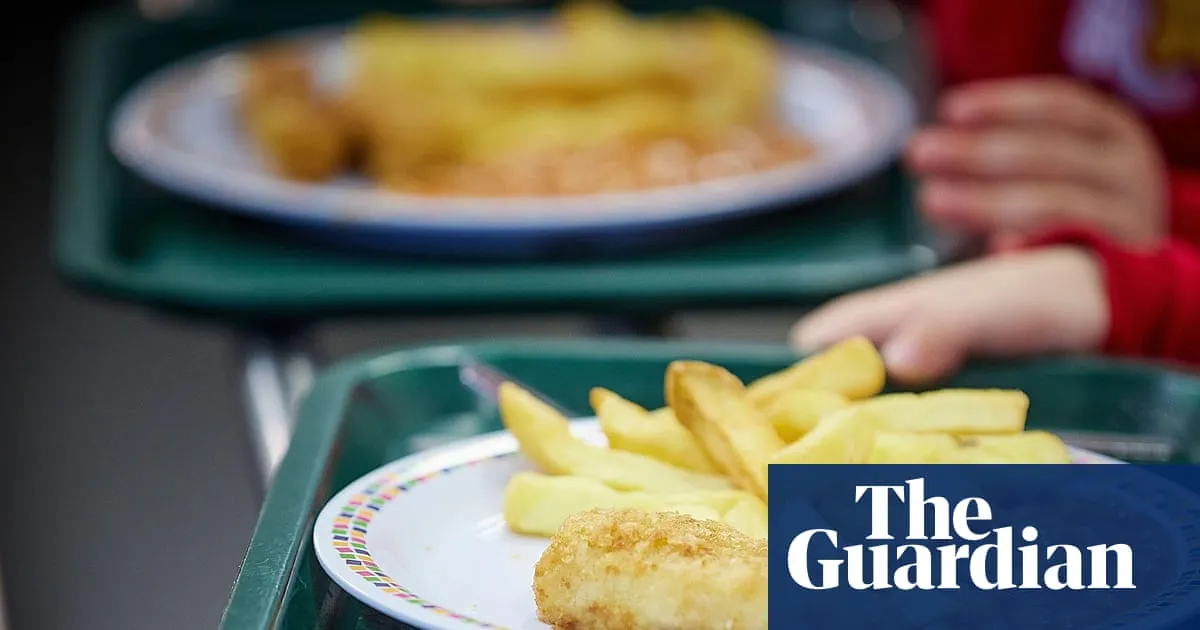
Three-quarters of secondary schools in England are breaking the rules on food offered to pupils by serving chips, burgers and hash browns too often – and sweets and crisps at breakfast time, according to a report.“Shocking” breaches of school food standards have been exposed on Monday, in a new analysis of the food provided at almost 400 state secondaries undertaken by Bite Back, a food charity set up by the chef Jamie Oliver.D’Arcy Williams, Bite Back’s chief executive, said the picture of schools’ widespread noncompliance with the government-set standards that emerged from its analysis was alarming.Three out of four menus it analysed at 391 state secondary schools in England contained at least one breach of the standards. Most involved schools offering unhealthy foods more often than is allowed.At 206 schools (53%), products high in fat, sugar or salt that are meant to be banned altogether – such as crisps, Oreos, Mini Cheddars, chocolate bars and pastries – were being offered to pupils to buy as snacks, including at breakfast time and at lunchtime. Schools are allowed to sell only nuts, seeds, plain vegetables and plain fruit as snacks.The research also found that: There were 224 schools (57%) providing meat products such as burgers, nuggets, sausages and goujons more often than the twice a week permitted by the standards. Hash browns, which as a fried starchy food should be a menu option only twice a week, were being offered more often than that at 144 schools (37%). There were 123 schools (31%) using chocolate in solid form, such as chocolate chips or chocolate coating, as an ingredient in dessert or bakes, despite it being banned.“These findings are very alarming and expose a system that is fundamentally failing our children,” said Williams.“It is shocking to find crisps and chocolate being pushed at breakfast time or processed meats like sausage rolls and bacon baps being served far more frequently than the rules allow.“Young people have been telling us for years that their school food is ‘beige, bland and boring’ and now we have more evidence that they are being surrounded by unhealthy food throughout the school day.“Schools should be a sanctuary for health and learning, yet the current postcode lottery of food quality is undermining that mission.”But in other findings that parents may find reassuring, only eight schools (2%) were flouting the ban on selling confectionery such as KitKats, Haribo sweets and Maltesers as standalone items. And even fewer – just three schools (1%) – were selling banned sugary drinks such as Coca-Cola, Pepsi, Fanta and Sprite.Campaigners for healthier food voiced concern at the findings. Katharine Jenner, the executive director of the Obesity Health Alliance, said: “Schools should be one of the places where we can be confident children are being given nutritious food. Yet this research suggests too many are still being routinely exposed to processed meat, fried foods, pastries and confectionery beyond what the standards allow.“Children are already growing up surrounded by unhealthy food across the wider food system, from what is marketed to them to what is promoted in shops. If we can’t even get the food environment right in schools, where children spend such a large part of their lives, then we have a serious problem.”Ministers are preparing to unveil an overhaul of the school food standards, which child health and anti-obesity organisations have been seeking for years.At the start of the new academic year in England next month, there will be a major expansion of access to free school meals instigated by the Labour government. From now on, all pupils from a household where someone is receiving universal credit will qualify in England.The Department for Education acknowledged that schools did flout the standards. A spokesperson said: “We want every child to be healthy, happy and ready to learn, and nutritious food plays a vital role in helping them achieve that.“That’s why we are delivering the most ambitious overhaul of school food in a generation, making sure children have access to healthy, balanced meals, get more of their five a day and are protected from the harms of eating too much ultra-processed food.“We know not every school is following these standards, which is exactly why we will introduce a strengthened enforcement regime, alongside requiring every school to publish their food policy and menus online to improve transparency for parents.”
SRCThe Guardian - World News
LANGEN
LEANCenter-Left
WORDS720
ENT10
MON · 2026-08-24 · 04:00 GMTBRIEF NSR-2026-0824-105251
NSR-2026-0824-105251News Report·EN·Public Health
Most English secondary schools are breaking healthy food rules, finds report
A report by the food charity Bite Back has found that three-quarters of English secondary schools are not adhering to healthy food standards. The analysis of nearly 400 schools revealed widespread breaches, including serving unhealthy snacks like crisps and chocolate at breakfast, and offering processed meats and fried foods more often than permitted.
Denis Campbell Health policy editorThe Guardian - World NewsFiled 2026-08-24 · 04:00 GMTLean · Center-LeftRead · 3 min
The Guardian - World NewsFIG 01
Reading time
3min
Word count
720words
Sources cited
2cited
Entities identified
10entities
Quality score
100%
§ 01
Briefing Summary
AI-generatedNEWSAR · AI
A report by the food charity Bite Back has found that three-quarters of English secondary schools are not adhering to healthy food standards. The analysis of nearly 400 schools revealed widespread breaches, including serving unhealthy snacks like crisps and chocolate at breakfast, and offering processed meats and fried foods more often than permitted. While outright bans on confectionery and sugary drinks were largely followed, campaigners expressed concern about the overall unhealthy food environment in schools. The Department for Education acknowledged these issues and plans to overhaul school food standards with strengthened enforcement and increased transparency for parents. This report comes just before a significant expansion of free school meals in England.
Confidence 0.90Sources 2Claims 5Entities 10
§ 02
Article analysis
Model · rule-basedFraming
Public Health
Human Interest
Tone
Mixed Tone
AI-assessed
CalmNeutralAlarmist
Factuality
0.80 / 1.00
Factual
LowHigh
Sources cited
2
Limited
FewMany
§ 03
Key claims
5 extracted01
Schools should be a sanctuary for health and learning, yet the current postcode lottery of food quality is undermining that mission.
quoteD’Arcy Williams, Bite Back’s chief executive
Confidence
1.00
02
The report exposed 'shocking' breaches of school food standards.
quoteBite Back report
Confidence
1.00
03
57% of schools provided meat products like burgers and sausages more often than the permitted twice a week.
statisticBite Back report
Confidence
1.00
04
53% of schools offered high-fat, high-sugar, or high-salt snacks banned from being sold, including at breakfast and lunchtime.
statisticBite Back report
Confidence
1.00
05
Three-quarters of secondary schools in England are breaking rules on food by serving chips, burgers, and hash browns too often, and sweets/crisps at breakfast.
statisticBite Back report
Confidence
1.00
§ 04
Full report
3 min read · 720 words§ 05
Entities
10 identifiedKey playerOppositionContextPositiveNeutralNegative
Organizations3
Locations1
§ 06
Keywords & salience
10 termsschool food standards
1.00
healthy eating
0.90
food rules
0.80
unhealthy foods
0.80
food charity
0.70
school meals
0.60
report
0.50
pupils
0.50
england
0.40
jamie oliver
0.40
§ 07
Topic connections
Interactive graph No topic relationship data available yet. This graph will appear once topic relationships have been computed.