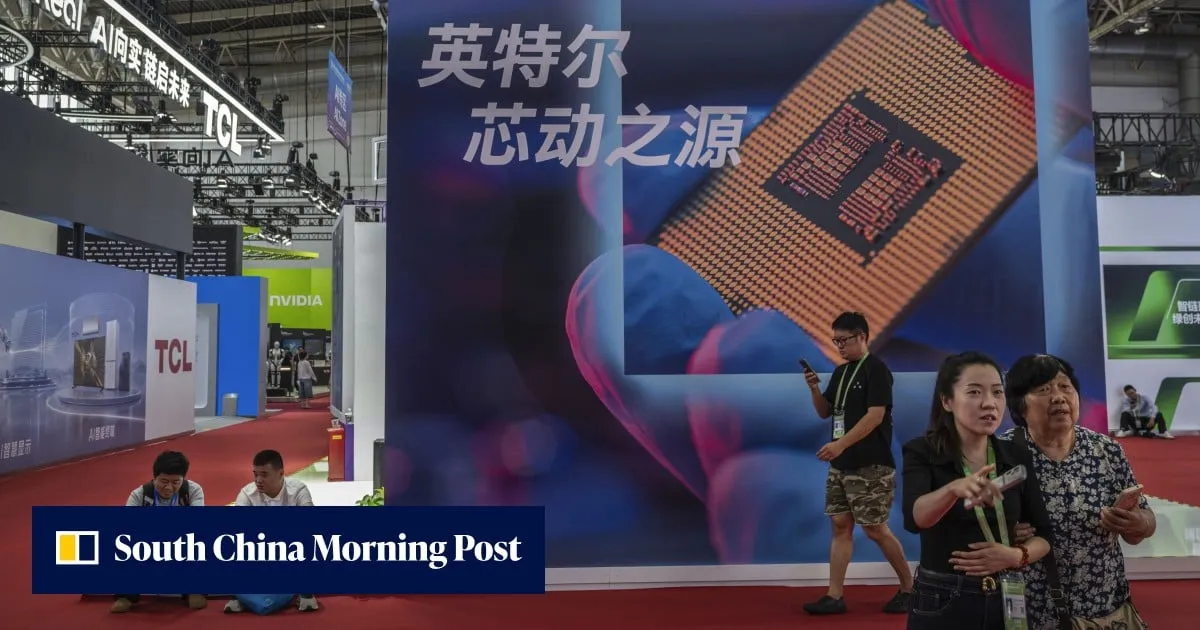
China is on track to dramatically slash its deficit in advanced chips over the next decade as domestic foundries rapidly scale up production, though the weak link of lithography threatens to keep full semiconductor independence out of reach, according to US investment bank Goldman Sachs.The supply of wafers made using 7-nanometre and below advanced processes is projected to grow at a compound annual rate of 46 per cent between 2025 and 2035, far outpacing the 17 per cent growth expected in domestic demand, Goldman analysts said in a report on Monday.That would narrow the gap between domestic supply and demand to 34 per cent by 2035, from 92 per cent in 2025, according to the investment bank. China’s advanced-node wafer supply is expected to reach 410,000 wafers per month by then, compared with demand of 619,000 wafers.The expected increase would be driven by aggressive capacity expansion at Semiconductor Manufacturing International Corp (SMIC), China’s largest contract chipmaker, as well as improving production yields.Goldman’s model assumes SMIC adds monthly capacity of between 30,000 and 50,000 advanced-node wafers each year from 2026 to 2031, before adding another 20,000 wafers per month annually through 2035. It also assumes yields rise from 23 per cent in 2026 to 50 per cent in 2030 and 75 per cent by 2035.The world’s No 1 foundry, Taiwan Semiconductor Manufacturing Company (TSMC), which started mass-producing 7nm chips in 2018, achieves yields that can exceed 90 per cent, depending on chip design and die size.Goldman’s model assumes SMIC will add monthly capacity of between 30,000 and 50,000 advanced-node wafers each year from 2026 to 2031. Photo: AFP
SRCSouth China Morning Post
LANGEN
LEANCenter-Right
WORDS267
ENT10
MON · 2026-08-24 · 12:00 GMTBRIEF NSR-2026-0824-105374
NSR-2026-0824-105374News Report·EN·Technology
China’s advanced chip supply to surge by 2035 despite equipment bottlenecks, Goldman says
Goldman Sachs projects China's domestic advanced chip supply, specifically wafers made using 7-nanometre and below processes, will surge by 46% annually between 2025 and 2035. This rapid scaling up by foundries like SMIC is expected to significantly reduce China's advanced chip deficit, narrowing the gap between domestic supply and demand from 92% in 2025 to 34% by 2035.
Howard LiuSouth China Morning PostFiled 2026-08-24 · 12:00 GMTLean · Center-RightRead · 2 min
South China Morning PostFIG 01
Reading time
2min
Word count
267words
Sources cited
1cited
Entities identified
10entities
Quality score
100%
§ 01
Briefing Summary
AI-generatedNEWSAR · AI
Goldman Sachs projects China's domestic advanced chip supply, specifically wafers made using 7-nanometre and below processes, will surge by 46% annually between 2025 and 2035. This rapid scaling up by foundries like SMIC is expected to significantly reduce China's advanced chip deficit, narrowing the gap between domestic supply and demand from 92% in 2025 to 34% by 2035. By 2035, China's advanced-node wafer supply is forecast to reach 410,000 wafers per month, though full semiconductor independence remains unlikely due to lithography equipment bottlenecks. This growth is attributed to aggressive capacity expansion and improving production yields at SMIC.
Confidence 0.90Sources 1Claims 5Entities 10
§ 02
Article analysis
Model · rule-basedFraming
Technology
Economic Impact
Tone
Measured
AI-assessed
CalmNeutralAlarmist
Factuality
0.70 / 1.00
Factual
LowHigh
Sources cited
1
Limited
FewMany
§ 03
Key claims
5 extracted01
SMIC's advanced-node wafer yields are assumed to rise from 23% in 2026 to 75% by 2035.
statisticGoldman Sachs
Confidence
0.90
02
The gap between China's domestic advanced chip supply and demand is expected to narrow to 34% by 2035.
statisticGoldman Sachs
Confidence
0.90
03
China's advanced-node wafer supply is expected to reach 410,000 wafers per month by 2035.
statisticGoldman Sachs
Confidence
0.90
04
China's advanced chip supply is projected to grow at a compound annual rate of 46% between 2025 and 2035.
statisticGoldman Sachs
Confidence
0.90
05
Lithography equipment bottlenecks threaten China's full semiconductor independence.
predictionGoldman Sachs
Confidence
0.80
§ 04
Full report
2 min read · 267 words§ 05
Entities
10 identifiedKey playerOppositionContextPositiveNeutralNegative
Organizations3
Locations1
§ 06
Keywords & salience
10 termsadvanced chips
1.00
semiconductor independence
0.90
lithography
0.80
smic
0.70
production yields
0.70
capacity expansion
0.60
goldman sachs
0.50
7-nanometre
0.50
domestic demand
0.40
wafer supply
0.40
§ 07
Topic connections
Interactive graph Network visualization showing 51 related topics
View Full Graph Person Organization Location Event|Click node to navigate|Edge numbers = shared articles