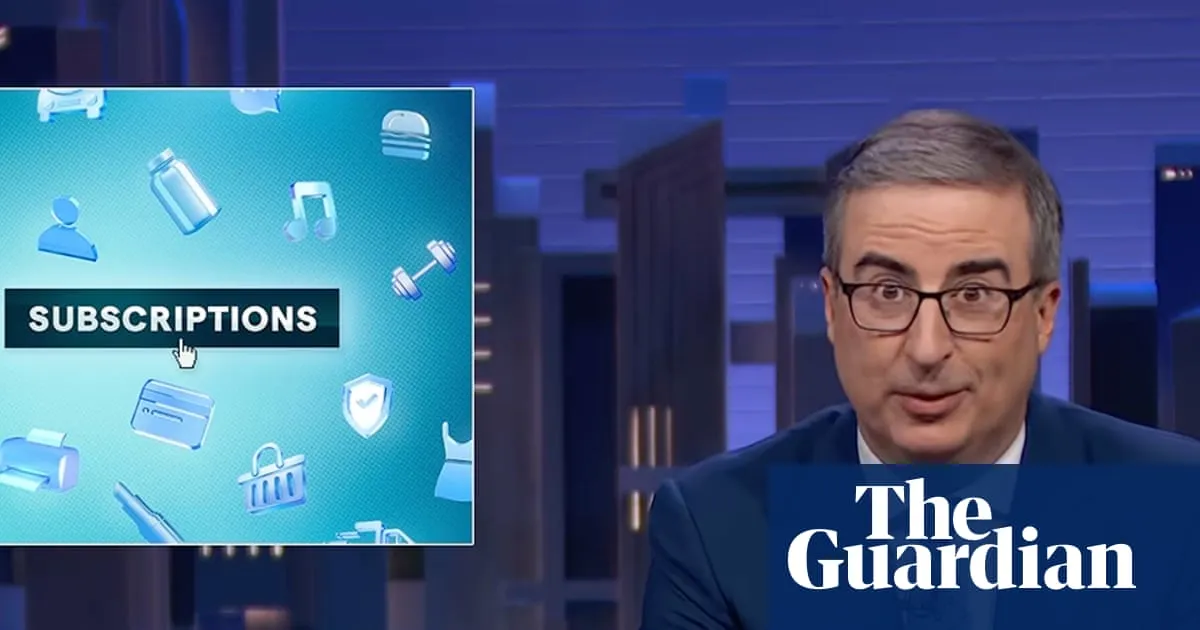
Last Week Tonight with John Oliver, 23 August 2026. Photograph: HBO View image in fullscreen Last Week Tonight with John Oliver, 23 August 2026. Photograph: HBO John Oliver on ‘smart’ appliances: ‘Spying on you through the washing machine’ The host also discussed the rise of forgotten monthly subscriptions for anything from dishwashers to litter boxes On the Sunday night episode of his HBO show, John Oliver discussed the rise of subscription-based business models across the worlds of music, film and TV, beauty, food, cleaning services and more. “Subscriptions are now basically everywhere and many of us don’t even realize how much we spend on them,” Oliver said. A recent report found that Americans pay double the amount that they thought in monthly subscriptions, while about half of those surveyed still pay for one they had forgotten about or do not use. “Subscriptions are a universally annoying problem,” Oliver said. While newspapers and magazines have long had a subscription based business model, “the internet has made it much easier to apply a subscription model to basically everything.” Now you can subscribe to just about anything such as Apocabox, which sends you survivalist tools, and BoneBox, which ships you (non-human) skulls. The normalization of subscriptions for music, film and TV streaming services began in the late 1990s when Netflix launched its DVD rental service and Salesforce introduced a subscription model for its software. Now, “smart” versions of appliances from baby alarm clocks to cat litter boxes often charge a subscription fee for continued use. The automobile industry has heavily leaned into the model, with up to $75 per month charged for services such as remote unlock or enhanced cruise control. General Motors are set to bring in $25bn a year from subscriptions by 2030, rivaling the takings of Netflix. Meanwhile, HP automatically kills your printer ink cartridges if you fail to keep up with monthly subscription fees. “That’s pretty annoying, isn’t it?” said Oliver. “She understandably assumed that she owned the ink that came with her printer, but suddenly she couldn’t use it, which does feel like a waste. “There’s an obvious reason companies love this model,” Oliver continued. “As HP’s CEO told investors, ‘We make more money per customer when they’re in the subscription program.’” Meanwhile, smart dishwashers, washing machines and other household appliances allow companies including General Electric to gather data about its customers’ lifestyle and habits – such as that they will be doing more laundry if they just welcomed a child. “That is so unsettling to me,” said Oliver. “No company needs to know I had a child. There is a reason that you start birth announcements with dear family and friends, and not, ‘To whom it may concern at the Whirlpool corporation.’” There are easier ways to spot a new parent such as their tired eyes and emotional volatility, the host joked, that “crucially don’t involve spying on them through their fucking washing machine”. Cancelling such subscriptions can be easier said than done. At times, people don’t even realize that they signed up for them in the first place. “Maybe you signed up for a bundle, so say you signed up for Lyft Pink and they threw in a year of GrubHub+” Oliver said. “You didn’t realize that after a year, GrubHub+ automatically converts into a paid subscription. The term “dark patterns” refers to companies making “deceptive design choices” that manipulate users into making decisions they may not have intended, continued Oliver. “While companies go out of their way to make it incredibly easy to subscribe, they can make canceling a fucking nightmare,” said Oliver. For instance, LA Fitness came under FTC scrutiny last year after they made canceling a gym membership a lengthy process that could involve placing phone calls to management and sending certified mail. “Companies can use the same dark patterns that got you into a subscription to confuse you when you’re trying to get out of it,” Oliver went on. For instance, cancelling a Hello Fresh subscription required navigating several confusing webpages until recently. “‘Pay attention’ and ‘read’ are two very difficult things to ask of the entire population all of the time,” said Oliver. “Companies are banking on that.” Oliver recommended that viewers check their bank accounts for recurring charges and to check their phone’s subscriptions tab to ensure that they haven’t accidentally been stung with recurring fees. Last summer, the FTC’s proposed “click to cancel” rule was struck down by the conservative US appeals court. “It is frustrating that there is a tantalizingly easy fix to a ubiquitous problem within reach and we can’t seem to have it,” Oliver concluded. Explore more on these topics John Oliver John Oliver recap Amazon E-commerce Consumer affairs Gadgets Smart homes Internet news Share Reuse this content
SRCThe Guardian - World News
LANGEN
LEANCenter-Left
WORDS792
ENT11
MON · 2026-08-24 · 16:18 GMTBRIEF NSR-2026-0824-105440
NSR-2026-0824-105440News Report·EN·Technology
John Oliver on ‘smart’ appliances: ‘Spying on you through the washing machine’
On his HBO show, John Oliver discussed the pervasive rise of subscription-based business models, noting that many consumers are unaware of their total spending on recurring fees. A recent report indicated Americans underestimate their subscription costs, with about half still paying for forgotten or unused services.
Guardian staffThe Guardian - World NewsFiled 2026-08-24 · 16:18 GMTLean · Center-LeftRead · 4 min
The Guardian - World NewsFIG 01
Reading time
4min
Word count
792words
Sources cited
2cited
Entities identified
11entities
Quality score
100%
§ 01
Briefing Summary
AI-generatedNEWSAR · AI
On his HBO show, John Oliver discussed the pervasive rise of subscription-based business models, noting that many consumers are unaware of their total spending on recurring fees. A recent report indicated Americans underestimate their subscription costs, with about half still paying for forgotten or unused services. Oliver highlighted how the internet has facilitated subscriptions for nearly everything, including "smart" appliances and even survivalist tools. Companies benefit financially from this model, with some smart appliances collecting user data. Oliver also addressed "dark patterns," deceptive design choices companies use to make subscribing easy but canceling difficult, citing examples like HP printers and gym memberships. He advised viewers to check bank accounts and phone subscriptions for recurring charges, lamenting the failure of a proposed "click to cancel" rule.
Confidence 0.90Sources 2Claims 5Entities 11
§ 02
Article analysis
Model · rule-basedFraming
Technology
Economic Impact
Tone
Mixed Tone
AI-assessed
CalmNeutralAlarmist
Factuality
0.60 / 1.00
Mixed
LowHigh
Sources cited
2
Limited
FewMany
§ 03
Key claims
5 extracted01
HP automatically kills printer ink cartridges if monthly subscription fees are not paid.
factualOliver
Confidence
0.95
02
Smart appliances can gather data about customers' lifestyle and habits.
factualOliver
Confidence
0.90
03
About half of surveyed Americans still pay for forgotten or unused subscriptions.
statisticOliver (citing a report)
Confidence
0.90
04
Americans pay double the amount they thought in monthly subscriptions.
statisticOliver (citing a report)
Confidence
0.90
05
General Motors is set to bring in $25bn a year from subscriptions by 2030.
predictionOliver
Confidence
0.85
§ 04
Full report
4 min read · 792 words§ 05
Entities
11 identifiedKey playerOppositionContextPositiveNeutralNegative
Organizations7
Locations1
§ 06
Keywords & salience
9 termssubscription models
1.00
smart appliances
0.90
data collection
0.80
consumer privacy
0.70
john oliver
0.60
business models
0.50
internet of things
0.40
general motors
0.40
hp
0.40
§ 07
Topic connections
Interactive graph No topic relationship data available yet. This graph will appear once topic relationships have been computed.