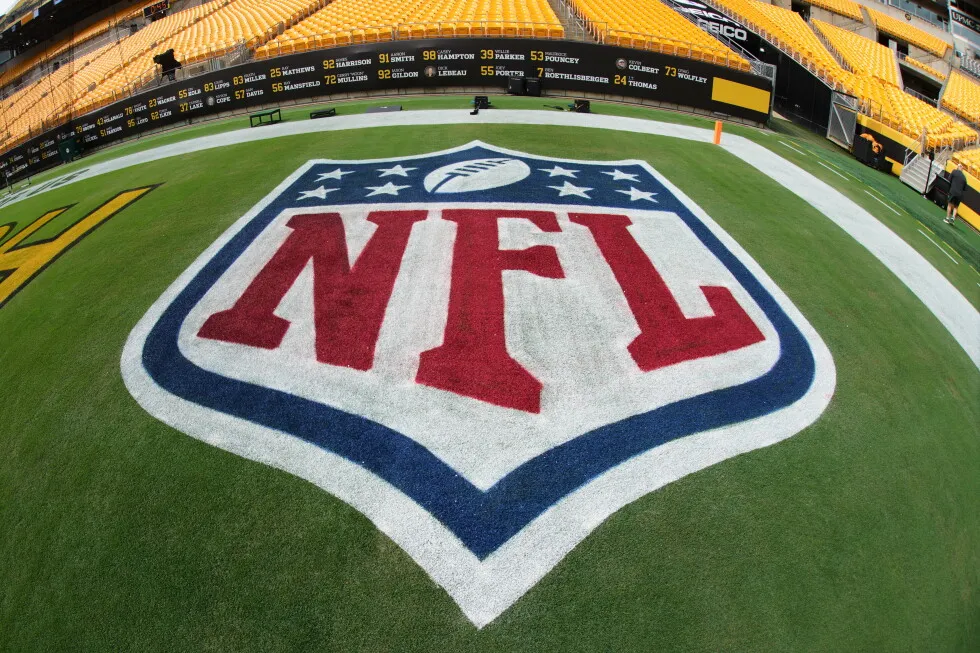
An NFL player coming back to college? Yes, it could happen. Here’s why 1 of 2 | The NFL logo is shown the field before the start of a preseason NFL football game between the Green Bay Packers and the Pittsburgh Steelers in Pittsburgh, Thursday, Aug. 13, 2026. (AP Photo/Gene J. Puskar) 2 of 2 | This photo taken with a fisheye lens shows the NCAA logo displayed at mid-court in Philadelphia, March 21, 2013. (AP Photo/Matt Slocum, File) By Eddie Pells Updated 11:08 PM MESZ, August 24, 2026 Add AP News on Google Add AP News as your preferred source to see more of our stories on Google. Share Share Facebook Copy Link copied Print Email X LinkedIn Bluesky Flipboard Pinterest Reddit These used to be among the fundamental facts about going to college in America: College lasts four years. And though that timeline had been flexible when it comes to sports, there was never much debate over the notion that once a player moved on to the pros their days as a college athlete were over. A recent rule passed by the NCAA has resulted in confusion, lawsuits and the once-unthinkable notion of players leaving college, signing with professional teams and now leaving those teams to head back to college. Among this week’s headline grabbers are Dae’Quan Wright, an undrafted tight end out of Ole Miss who had tryouts with the Eagles and Browns over the summer, but now has a deal in place to play this season at Ole Miss’ rival in the Southeastern Conference, No. 11 LSU. Wright is among a number of college athletes who have sued for the right to return to college to play as the start of both the college football and NFL seasons approach. A quick look at how we got here: NCAA passes new rule allowing for five years eligibility This part happened in June, and by the NCAA’s plodding standards, it happened quite fast. The rule now allows athletes to play five seasons over the span of five years. Most college athletes now see the “clock” start on their eligibility either when they enroll full-time in college or at the start of the regular school year immediately following their 19th birthday, whichever comes first. The rule itself isn’t all that outlandish. A lot of players were taking redshirt years (and getting extensions due to the pandemic) to prolong their eligibility to five, six, seven years and more, so putting some guardrails around it made some sense. Billy Edwards Jr. set to start at QB for UNC after injury-shortened year at Wisconsin QB Josh Hoover faces new challenge in replacing Heisman winner on defending champion Indiana College football 2026: What you need to know about the new season But the NCAA’s decision to start applying this new rule to athletes who graduated high school in 2023 is what caused the chaos. By not including those from the Class of ’22, many of whom saw their fourth and final year of eligibility end after last school year, they opened themselves up to trouble. The members of the Class of ‘22 are arguing they’re being deprived of education and potential NIL financial benefits by being excluded from the rule. Meanwhile, college athletes are suddenly looking at unexpected competition for roster spots and playing time coming from a class of players they thought would be gone this season. And teams, most of which have locked in their football rosters, are seeing a potential influx of talent they didn’t expect. This site is protected by reCAPTCHA and the Google and Terms of Service apply. A federal lawsuit filed by those who only got 4 years of college A basketball player named Brock Wisne filed a federal class-action lawsuit, saying the NCAA violated antitrust law by excluding that Class of 2022 from the new rule. A judge in Denver ruled in favor of Wisne, opening the door for everyone in the class to come back to college, but only to their former college. The judge left NCAA transfer portal rules in tact, meaning the players couldn’t come back, enter the (currently closed) portal and find a new school. An appeals court last Friday temporarily halted that judge’s order, though that was hardly the end of the confusion. State lawsuits pile up as a workaround the federal case Despite the federal court ruling, players across the country have filed lawsuits in state courts and many judges granted orders allowing them to come back to school. This “find a local judge” approach has generally been successful for the athlete over the past couple of years. In some cases — incluidng the case involving Wright in Louisiana — a judge not only said the players could come back, but also ordered a week-long reopening of the transfer portal, which gave the players a chance to shop around. Side note about Wright’s potential move from Ole Miss to LSU: The SEC forbids moves within the conference such as that one, unless they come when the transfer portal is open, which in football is January. There is no clarity on how the ruling impacts the SEC rule. Sam Ehrlich, a former lawyer who follows college sports litigation at Boise State, said the state lawsuits were filed “just in case” the federal order got overturned. It did, and that federal case had no bearing on the various state lawsuits. According to Ehrlich’s College Sports Litigation Tracker, at least 26 eligibility cases have been filed in state and county courts across the U.S. In at least 10 of those, judges have granted a restraining order or injunction favoring the players. In only one — involving basketball player Filip Borovicanin — has an appeals court overturned the initial decision, leading to a favorable outcome for the NCAA. Court cases move slowly, and in the Wisne case, odds are nothing will be final until long after football (and maybe basketball and baseball) season is over and there’s no relief left to give to the impacted players. While football teams are madly scrambling, trying to make sense of it all, basketball teams are also feeling some pressure. Teams are allowed to start practice on Sept. 25. A notable instance of where confusion might set in is Gonzaga, which recruited two players from that Class of ’22 who (presumably) had their eligibility restored. One, however, is Javon Bennett, who was part of the Borovicanin lawsuit that an Ohio court overturned. The other is Chauncey Wiggins, who comes from Florida State and was part of a case in Georgia, where the ruling favorable to the players remains in force.
SRCAssociated Press (AP)
LANGEN
LEANCenter
WORDS1 102
ENT12
MON · 2026-08-24 · 21:23 GMTBRIEF NSR-2026-0824-105522
NSR-2026-0824-105522News Report·EN·Legal & Judicial
An NFL player coming back to college? Yes, it could happen. Here’s why
A new NCAA rule allowing athletes five years of eligibility over five years has created confusion and lawsuits. The rule, applied to the graduating class of 2023 but not 2022, has led to legal challenges from athletes who believe they are being unfairly excluded.
Associated Press (AP)Filed 2026-08-24 · 21:23 GMTLean · CenterRead · 5 min
Associated Press (AP)FIG 01
Reading time
5min
Word count
1 102words
Sources cited
0cited
Entities identified
12entities
Quality score
100%
§ 01
Briefing Summary
AI-generatedNEWSAR · AI
A new NCAA rule allowing athletes five years of eligibility over five years has created confusion and lawsuits. The rule, applied to the graduating class of 2023 but not 2022, has led to legal challenges from athletes who believe they are being unfairly excluded. A federal lawsuit was filed, and while a judge initially ruled in favor of the athletes, an appeals court temporarily halted the order. Many athletes have also pursued state court lawsuits, with some judges granting injunctions allowing them to return to college. This situation has created uncertainty for players, teams, and conferences as court cases progress slowly, potentially impacting upcoming seasons.
Confidence 0.90Claims 5Entities 12
§ 02
Article analysis
Model · rule-basedFraming
Legal & Judicial
Human Interest
Tone
Measured
AI-assessed
CalmNeutralAlarmist
Factuality
0.70 / 1.00
Factual
LowHigh
Sources cited
0
No named sources
FewMany
§ 03
Key claims
5 extracted01
Dae’Quan Wright, an undrafted tight end, has a deal to play for Ole Miss' rival, No. 11 LSU, after NFL tryouts.
factual
Confidence
0.95
02
The NCAA rule allows athletes five seasons of eligibility over five years.
factual
Confidence
0.90
03
A recent rule passed by the NCAA allows players to leave professional teams and return to college.
factual
Confidence
0.90
04
The NCAA's decision to apply the new rule to 2023 high school graduates, but not 2022 graduates, has caused chaos.
factual
Confidence
0.85
05
Members of the Class of '22 are arguing they are being deprived of education.
factual
Confidence
0.80
§ 04
Full report
5 min read · 1 102 words§ 05
Entities
12 identifiedKey playerOppositionContextPositiveNeutralNegative
People3
Organizations8
NC
National Collegiate Athletic Association
SportsContext
4x
90
NF
National Football League
SportsContext
3x
80
OM
Ole Miss
SportsContext
2x
70
LS
Louisiana State University
EducationalContext
60
CB
Cleveland Browns
SportsContext
50
GB
Green Bay Packers
SportsContext
50
PS
Pittsburgh Steelers
SportsContext
50
PE
Philadelphia Eagles
GovernmentContext
50
Locations1
§ 06
Keywords & salience
10 termsnfl player returning to college
1.00
ncaa eligibility rules
1.00
college athlete rights
0.80
ncaa rule change
0.70
five-year eligibility
0.70
college football
0.60
ole miss
0.50
lsu
0.50
dae'quan wright
0.50
redshirt years
0.40
§ 07
Topic connections
Interactive graph Network visualization showing 5 related topics
View Full Graph Person Organization Location Event|Click node to navigate|Edge numbers = shared articles