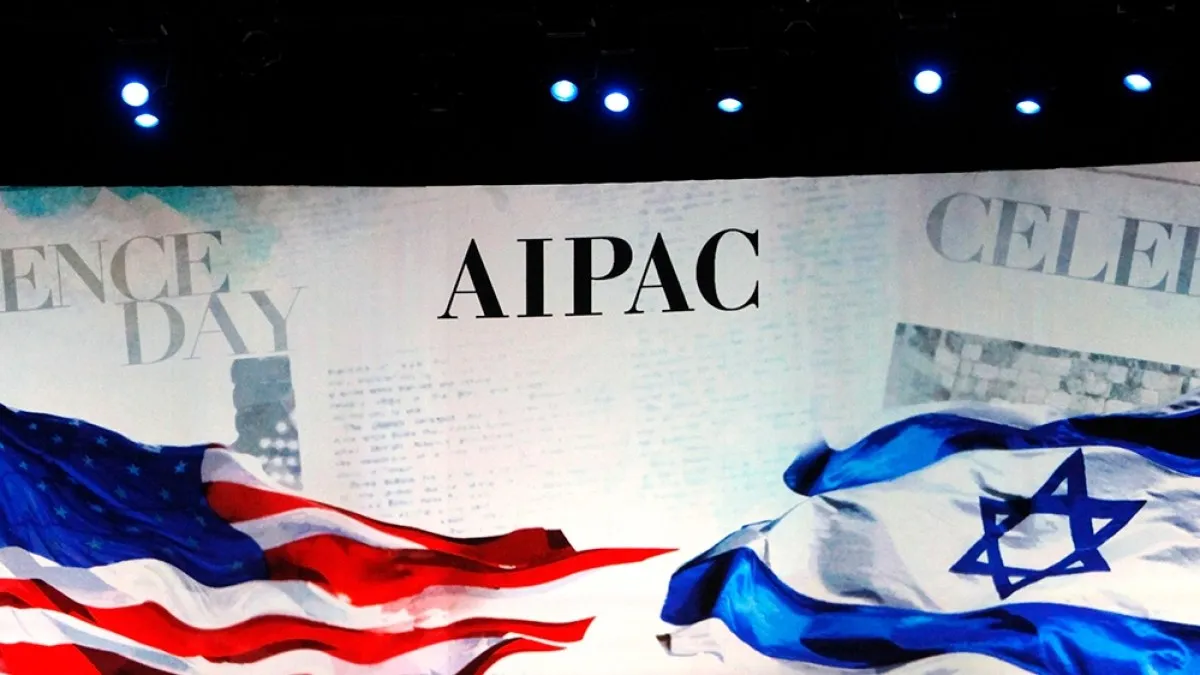
EXPLAINERThe powerful pro-Israeli lobby group is increasingly becoming a liability for both the progressive as well as the right wing.How is the pro-Israel lobby influencing US elections?Published On 25 Aug 2026Republican Mike Rogers and his allies have reportedly asked the pro-Israel lobby Israel-public-affairs-committee" class="entity-link entity-organization" data-entity-id="129599" data-entity-type="organization">American Israel Public Affairs Committee (AIPAC) not to run a campaign on his behalf ahead of the November midterm elections in the United States.Rogers, who is a Republican Senate candidate from Michigan — home to one of the country’s largest Arab-American populations — fears that open AIPAC support might backfire.Recommended Stories list of 3 itemslist 1 of 3How is the pro-Israel lobby influencing US elections?list 2 of 3Israel, Turkiye and the post-Abrahamic Middle Eastlist 3 of 3Why is Israel building new illegal settlements?end of listAccording to US media reports, the request to the pro-Israel lobby came after Rogers met the AIPAC chair, Michael Tuchin, in Los Angeles last week.This comes as the powerful pro-Israel lobby group has been facing mounting pressure from the progressive wing of the Democratic Party, which has been largely critical of Israel and its ongoing genocidal war on Gaza.But now even Republican Party candidates are looking to distance themselves from the group as a growing number of Americans, both on the left and the right, have started to challenge Israel" class="entity-link entity-topic" data-entity-id="192925" data-entity-type="topic">US support for Israel.So, what is AIPAC and why is an increasing number of US politicians refusing to receive its support?Here’s what we know:What is AIPAC?AIPAC is officially a nonpartisan group that advocates unconditional Israel" class="entity-link entity-topic" data-entity-id="192925" data-entity-type="topic">US support for Israel and pushes back against any criticism of Israeli governments and their human rights record.It was established in 1954, originally known as the American Zionist Committee for Public Affairs.Its founding objective was to persuade Congress to fund Israel’s economy and the absorption of Jewish refugees, and it was framed as a US national interest rather than a special-interest favour.After the 1967 Six-Day War and the 1973 Arab-Israeli War, its focus widened to military aid, advocating before US Congress members for military aid and joint defence cooperation for Israel.AIPAC itself gave nothing to electoral candidates until the early 1980s, when it began using a network of separately incorporated pro-Israel political action committees (PACs), private groups that pool contributions from people and donate them to political campaigns.That funding has been bipartisan, with AIPAC wielding significant influence in both parties; that was until a split emerged among Democrats, with progressives such as Rashida Tlaib and Ilhan Omar entering Congress around 2018 and pushing to condition military aid on human rights compliance.In December 2021, it changed strategy, directly spending through AIPAC PAC and AIPAC-affiliated Super PAC United Democracy Project (UDP).Super PACs are funded by individuals, unions and corporations and can donate unlimited amounts to independent organisations linked to a candidate.AIPAC said the shift was forced by a changed Washington, with its then-president Betsy Berns Korn, citing hyperpartisanship, high congressional turnover and the exponential growth in campaign costs.What has AIPAC’s strategy been ahead of November’s elections?AIPAC has focused on Democratic primaries in liberal-leaning congressional districts, as it has since the 2022 primaries, when progressives are more likely to succeed.Track AIPAC, an organisation that records the group’s funding of US politicians, has revealed that AIPAC spent more than $6m on just one Democratic candidate, Melissa Hernandez, who ran and lost against progressive Democrat California state Senator Aisha Wahab in a special election in California’s 14th district.UDP alone raised about $104m during the 2026 cycle, according to factcheck.org, a nonpartisan, nonprofit website, $87.1m more than it collected during the 2024 cycle.In Michigan’s Senate Democratic primary alone, it spent more than $30m backing four-term Congress member Haley Stevens against Abdul El-Sayed, an epidemiologist and former public health official.It is the most AIPAC has ever spent on one contest.Despite this, El-Sayed, who focused on healthcare for all and the Palestinian cause, won the primary election and will face Rogers in the November election.Shell PACsAIPAC has used shell PACs to obscure its spending in Democratic primaries.In the Michigan Democratic primaries, a newly formed group PAC called A Stronger Michigan donated $17m. The PAC has been mostly bankrolled by a nonprofit, Center Forward, whose stated mission is to foster partisanship.A Stronger Michigan has also received funds from another PAC that was established this year, Michigan Forward 2026.In mid-March, during elections in Illinois, AIPAC used three different PACs to advertise to boost congressional candidate Bushra Amiwala and siphon off votes from more viable progressive candidates – namely, Palestinian-American activist Kat Abughazaleh, who ended up losing the race narrowly.What is AIPAC’s standing now?AIPAC still wields enormous influence in US politics.Aid packages to Israel continue to pass by wide margins, and it still boasts the largest war chest of any single-issue lobby in Washington.However, when it comes to recent efforts to sway US election results in favour of candidates who support Israel, AIPAC has faced setbacks.Part of the backlash has come from broader public disillusionment with Israel-backed policies, including the US-Israel war on Iran and the genocide in Gaza, which AIPAC supports.Some politicians who previously received support from the group are now disavowing it.Last October, Democrat Congressman Seth Moulton distanced himself from AIPAC, citing the group’s support for Israeli Prime Minister Benjamin Netanyahu.The lawmaker announced he would also return donations from AIPAC.“In recent years, AIPAC has aligned itself too closely with Prime Minister Netanyahu’s government,” Moulton had said in a statement.“I’m a friend of Israel, but not of its current government, and AIPAC’s mission today is to back that government. I don’t support that direction. That’s why I’ve decided to return the donations I’ve received, and I will not be accepting their support.”According to The Associated Press-NORC Center for Public Affairs Research survey conducted in June, 58 percent of Democrats said the US is too supportive of Israel, up from 45 percent in January 2024; 60 percent of Republicans said the US support is “about right”.But as Israel continues with its genocidal war on Gaza and military operation in south Lebanon, AIPAC has also begun losing support from Republican candidates.Besides Rogers’s recent request to the group, last August, AIPAC accused right-wing Congresswoman Marjorie Taylor Greene of betraying “American values” over her criticism of Israel.Greene shot back, saying AIPAC serves the interests of a foreign government. “I’m as AMERICAN as they come! I can’t be bought, and I’m not backing down,” she wrote in a social media post.AIPAC has, however, repeatedly rejected the notion that it is a lobby group that serves a foreign government.Instead, the organisation has presented itself as a coalition of engaged Americans who view a close US-Israel alliance as beneficial for both countries.“As proud, pro-Israel Americans, we will never apologise for participating in the political process and standing up to those who undermine our shared values,” the group said in a recent email to supporters that listed the Senate race in Michigan as “critical”.
SRCAl Jazeera
LANGEN
LEANCenter
WORDS1 135
ENT11
TUE · 2026-08-25 · 10:55 GMTBRIEF NSR-2026-0825-105690
NSR-2026-0825-105690Analysis·EN·Political Strategy
Is AIPAC’s political standing declining in the US?
The pro-Israel lobby group AIPAC is facing increasing pressure, leading some politicians to distance themselves from its support. Republican Senate candidate Mike Rogers reportedly asked AIPAC not to campaign for him in Michigan, fearing it could backfire due to the state's large Arab-American population.
Al Jazeera StaffAl JazeeraFiled 2026-08-25 · 10:55 GMTLean · CenterRead · 5 min
Al JazeeraFIG 01
Reading time
5min
Word count
1 135words
Sources cited
0cited
Entities identified
11entities
Quality score
100%
§ 01
Briefing Summary
AI-generatedNEWSAR · AI
The pro-Israel lobby group AIPAC is facing increasing pressure, leading some politicians to distance themselves from its support. Republican Senate candidate Mike Rogers reportedly asked AIPAC not to campaign for him in Michigan, fearing it could backfire due to the state's large Arab-American population. This comes as AIPAC faces criticism from the progressive wing of the Democratic Party and a growing number of Americans challenging US support for Israel. AIPAC, established in 1954, advocates for unconditional US support for Israel and has increasingly spent directly through PACs and Super PACs to influence elections, particularly in Democratic primaries. Despite significant spending, some candidates endorsed by AIPAC have faced challenges from progressive opponents.
Confidence 0.90Claims 5Entities 11
§ 02
Article analysis
Model · rule-basedFraming
Political Strategy
Diplomatic
Tone
Measured
AI-assessed
CalmNeutralAlarmist
Factuality
0.60 / 1.00
Mixed
LowHigh
Sources cited
0
No named sources
FewMany
§ 03
Key claims
5 extracted01
AIPAC began using PACs to fund electoral candidates in the early 1980s.
factual
Confidence
0.90
02
Progressive Democrats are increasingly critical of Israel and its actions in Gaza.
factual
Confidence
0.90
03
Republican Mike Rogers reportedly asked AIPAC not to run a campaign on his behalf.
factualUS media reports
Confidence
0.90
04
Republican candidates are starting to distance themselves from AIPAC.
factual
Confidence
0.80
05
AIPAC is a nonpartisan group that advocates unconditional US support for Israel.
factual
Confidence
0.80
§ 04
Full report
5 min read · 1 135 words§ 05
Entities
11 identifiedKey playerOppositionContextPositiveNeutralNegative
Organizations4
Locations4
§ 06
Keywords & salience
10 termspro-israel lobby
1.00
aipac
1.00
us politics
0.90
us support for israel
0.80
political standing
0.70
democratic party
0.60
republican party
0.60
electoral candidates
0.50
gaza
0.40
human rights
0.40
§ 07
Topic connections
Interactive graph No topic relationship data available yet. This graph will appear once topic relationships have been computed.