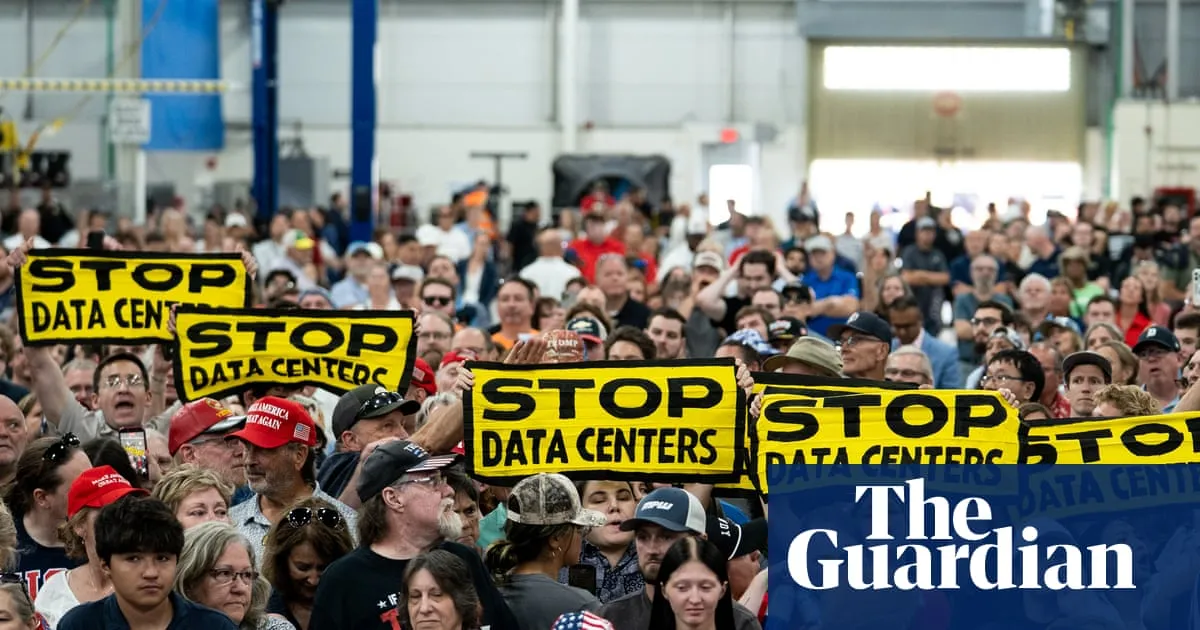
A new rule proposed by the Trump administration aims to kill public notification for datacenter air pollution, public health advocates warn, and allow emission permits to be issued behind closed doors.The datacenters are often sources of nitrogen oxide, which helps form ozone, carbon monoxide and heavy metals, among other pollutants.The Clean Air Act requires “minor” air polluters to disclose to the public via state agencies how much pollution their proposed project will release, but the proposed new rule from Donald Trump’s Environmental Protection Agency (EPA) would dismantle that protection for datacenter proposals. Instead, it would make disclosure voluntary at state and some local officials’ discretion.Many state political establishments support datacenters, and observers say it is unlikely most would voluntarily require Big Tech to disclose the information. The move is likely intended to curb criticism and public oversight of datacenters, said Joe Goffman, a former assistant administrator for the EPA’s office of air and radiation.Without this data, communities won’t know what they’re breathing once a datacenter is built, and will have less ability to fight back in court or in public relations battles. Goffman said the Clean Air Act is supposed to offer “an ironclad promise” to give the entire US public a voice on these issues.“The administration is basically saying: ‘You all may have thought this was an ironclad promise, but it no longer is,’” Goffman added. He co-authored comments on the proposed rule submitted by the Environmental Protection Network. The EPA just closed the public comment period, and the rule could face a legal challenge if finalized.The move comes amid a national surge in datacenters that are an essential part of the Artificial Intelligence boom. Many datacenter developers apply for minor pollution source permits for the up to dozens of diesel generators or gas turbines used to help power their facilities, or provide backup generation.The EPA delegates monitoring of “minor” pollution sources to state authorities, while it handles major polluters like gas plants. The “minor” designation means that a company is proposing to put in enough pollution controls that it will not release a level of emissions that requires immediate federal oversight.The minor pollution permits are meant to ensure facilities follow federal limits on six pollutants linked to asthma, heart disease and cancer.Big Tech often chops its datacenters pollution permit requests into individual pieces for each generator or turbine, so they fall under “minor” reviews conducted by states, and avoid a larger review by the EPA that would be more costly, time consuming and difficult to legally defend.This is already legally dubious, advocates say, and the Trump administration now appears to be trying to eliminate what little transparency exists. Though individual members of the public typically are not involved in the regulatory battles, environmental law clinics and public health advocacy groups that protect the public from exploitation by datacenter developers rely on this data, as do journalists.The Guardian last year detailed how environmental law groups have sued the state of Michigan and some polluters who appeared to be violating federal limits. Goffman said data shows that air pollution laws are more closely followed in areas in which the public and watchdog groups are more involved.Some of the largest polluting sources in the midwest, including datacenters, “emit harmful air pollutants under so-called ‘minor source’ permits”, said Jessica O’Donnell, senior attorney at the Environmental Law and Policy Center.“The public deserves to weigh in on such permits to ensure these industrial sources are given appropriate emissions limits and stick to them,” O’Donnell added.The EPA wrote that the change is “intended to reduce administrative burden and responsibly speed up permitting, supporting American economic development and energy dominance” by putting state agencies “most familiar with local issues in the driver’s seat”.A spokesperson for the EPA did not immediately send a comment.Goffman said the flexibility could also be wielded as an incentive for states competing for datacenter investment, and take the form of a “regulatory subsidy”. Datacenter developers often try to avoid scrutiny and regulation, so local and state governments eager to attract them could offer to waive the public notice.That concern is especially relevant as the Trump administration seeks to accelerate datacenter development by expanding opportunities for “islanded” power-generation facilities that provide their own power generation instead of connecting to the grid where their pollution is more closely scrutinized.“This proposal continues efforts by the current administration to turn its back on the fundamental EPA principle of transparency,” said Mike Koerber, a former deputy director of the EPA’s office of air quality planning and standards.
SRCThe Guardian - World News
LANGEN
LEANCenter-Left
WORDS750
ENT8
TUE · 2026-08-25 · 11:00 GMTBRIEF NSR-2026-0825-105699
NSR-2026-0825-105699News Report·EN·Public Health
Trump EPA aims to exempt datacenters from disclosing air pollution, advocates warn
The Trump administration's EPA has proposed a new rule that would eliminate the requirement for datacenters to publicly disclose their air pollution emissions. Previously, the Clean Air Act mandated that "minor" air polluters, including datacenters that often emit nitrogen oxide and other pollutants, report their emissions to state agencies.
Tom PerkinsThe Guardian - World NewsFiled 2026-08-25 · 11:00 GMTLean · Center-LeftRead · 3 min
The Guardian - World NewsFIG 01
Reading time
3min
Word count
750words
Sources cited
2cited
Entities identified
8entities
Quality score
100%
§ 01
Briefing Summary
AI-generatedNEWSAR · AI
The Trump administration's EPA has proposed a new rule that would eliminate the requirement for datacenters to publicly disclose their air pollution emissions. Previously, the Clean Air Act mandated that "minor" air polluters, including datacenters that often emit nitrogen oxide and other pollutants, report their emissions to state agencies. This proposed rule would make such disclosure voluntary at the discretion of state and local officials. Public health advocates warn this change will reduce transparency, preventing communities from knowing what they are breathing and limiting their ability to challenge polluters. The EPA states the change aims to reduce administrative burden and speed up permitting to support economic development, but critics argue it could incentivize states to waive public notice to attract datacenter investment.
Confidence 0.90Sources 2Claims 5Entities 8
§ 02
Article analysis
Model · rule-basedFraming
Public Health
Legal & Judicial
Tone
Mixed Tone
AI-assessed
CalmNeutralAlarmist
Factuality
0.60 / 1.00
Mixed
LowHigh
Sources cited
2
Limited
FewMany
§ 03
Key claims
5 extracted01
Without this data, communities won’t know what they’re breathing and will have less ability to fight back.
quoteJoe Goffman
Confidence
0.90
02
The Clean Air Act requires 'minor' air polluters to disclose pollution levels, but the proposed rule would make disclosure voluntary.
factualarticle
Confidence
0.90
03
Datacenters are often sources of nitrogen oxide, ozone, carbon monoxide, and heavy metals.
factualarticle
Confidence
0.90
04
A new EPA rule proposed by the Trump administration aims to exempt datacenters from disclosing air pollution.
factualTrump EPA
Confidence
0.90
05
Big tech often chops its datacenter pollution permit requests into individual pieces to avoid larger EPA review.
factualarticle
Confidence
0.80
§ 04
Full report
3 min read · 750 words§ 05
Entities
8 identifiedKey playerOppositionContextPositiveNeutralNegative
Organizations3
Locations1
§ 06
Keywords & salience
9 termsdatacenter air pollution
1.00
clean air act
0.90
public notification
0.80
environmental protection agency
0.70
pollution permits
0.70
artificial intelligence
0.60
minor pollution source
0.50
diesel generators
0.40
public oversight
0.40
§ 07
Topic connections
Interactive graph Network visualization showing 25 related topics
View Full Graph Person Organization Location Event|Click node to navigate|Edge numbers = shared articles