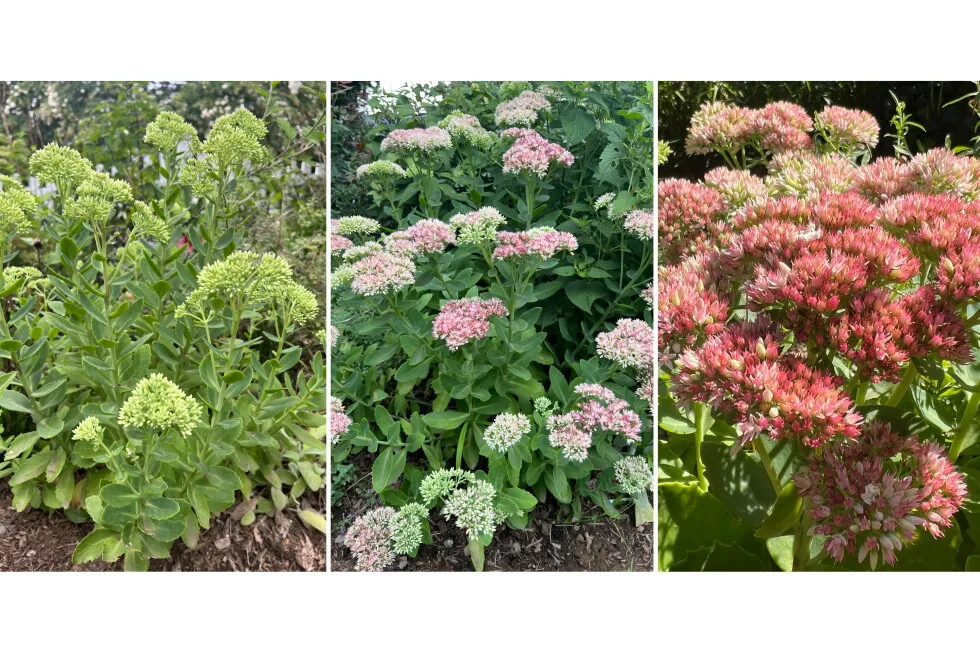
These plants add color to gardens and pots when summer flowers fade 1 of 3 | This combination of images show various Sedum Autumn Joy on Long Island, N.Y. The plant’s flowers emerge green in spring, gradually take on a pinkish hue that darkens as summer progresses, then turn a seasonally appropriate maroon in fall. (Jessica Damiano via AP) 2 of 3 | Copper Chrysanthemums are displayed in a hanging basket on Long Island, N.Y. on Sept. 27, 2024. (Jessica Damiano via AP) 3 of 3 | This combination of images show ornamental peppers in a fence planter, left, a fall-themed container planted with colorful Croton, yellow garden mums and Gomphrena, center, and Copper Chrysanthemums in a hanging basket. ( By Jessica Damiano Updated 4:12 PM MESZ, August 25, 2026 Add AP News on Google Add AP News as your preferred source to see more of our stories on Google. Share Share Facebook Copy Link copied Print Email X LinkedIn Bluesky Flipboard Pinterest Reddit The hanging planter on my porch has seen better days. And by better days, I mean the summer annuals have dried to a brown crisp that likely has the neighbors wondering if the Addams Family has moved in. I like to believe the extreme heat did them in, but I know neglect has also played a role. I dug up some impatiens from the garden and plopped them in the basket to save face, but with September approaching, it’s time to freshen it up for a new season. Pansies are my usual go-tos for fall. Their smiling faces of orange, purple and yellow brighten even the most faded of gardens. And fall-planted Pansies will return in spring, ready to bloom for another season. That’s because, unlike most garden annuals, they’re done in by the heat of summer, not the cold. I’ve bordered most of the front garden bed with Sedum Autumn Joy, a perennial in horticultural zones 3-9 that changes with the seasons. Its green early-season flowers gradually take on a pinkish hue that darkens as summer progresses, landing on a fall-appropriate maroon by mid-September. It’s the only flowering plant I can think of that meets the seasons where they are every step of the way. As summer annuals fade, consider replacing them with garden chrysanthemums, but don’t pull them out at the end of the season. Plant them at the front of beds, where their orange, rust, bronze, yellow, pink, purple or white flowers will obscure the fading plants behind them. Leave them be, and they’ll return year after year for effortless fall flair. Blossom of snow: A starry symbol of the Alps makes an unusual addition to rock gardens 4 MIN READ How one gardener’s neighbors shared their land to help her start a flower business 2 MIN READ The risks of waiting too long to harvest garden vegetables 2 MIN READ Firecracker plant (Cuphea) is an easy-care, heat-tolerant choice with striking, tubular orange flowers that attract hummingbirds. It’s hardy in zones 8-11 and used as an annual in cooler regions, where it blooms from spring through frost. But fall plantings work, too, and the plant makes a dramatic addition to containers alongside lantana, fountain grass (Pennisetum), coral bells (Heuchera), globe amaranth (Gomphrena) or calibrachoa. Croton, a foliage plant with yellow- and orange-veined, large green leaves, is typically treated as a houseplant outside of the tropics, but I wouldn’t discount it as a container or bedding plant, especially in fall arrangements. Don’t forget shrubs and vegetables, real or ornamental Reblooming azaleas like Encore and Perfecto Mundo bloom in spring, like their cousins, but make repeat performances straight through frost. Check specific varieties to ensure they are hardy in your zone. Firecracker bush (Russelia equisetiformis) is unrelated to the firecracker plant above, but boasts similar weeping, arching stems, covered in bright red tubular flowers on 3- to 5-foot-tall (.9- to 1.5-meter) shrubs that hummingbirds and butterflies love. It’s hardy in zones 9-11. Rainbow chard is an edible contender, its orange, red and green leaves perfectly suited to the season. After it has performed its aesthetic role, cut it down and sauté it with salt, pepper and garlic. Miniature red, orange and purple ornamental peppers make interesting focal points, too, but they should be considered only decorative because of the pesticides used in the ornamental trade. They would taste awful, anyway. Ornamental cabbages and kales are technically edible, but it’s best to limit their use to the garden for the same reasons. They’ll add texture and color, with their purple, green or cream leaves remaining fresh until temperatures below freezing collapse their cell walls. Then it’ll be time to start planning your spring garden. For more AP gardening stories, go to https://apnews.com/hub/gardening.
SRCAssociated Press (AP)
LANGEN
LEANCenter
WORDS786
ENT12
TUE · 2026-08-25 · 13:53 GMTBRIEF NSR-2026-0825-105756
NSR-2026-0825-105756News Report·EN·Human Interest
These plants add color to gardens and pots when summer flowers fade
As summer annuals fade, gardeners can introduce plants that provide fall color. Pansies offer vibrant hues and return in spring.
Associated Press (AP)Filed 2026-08-25 · 13:53 GMTLean · CenterRead · 4 min
Associated Press (AP)FIG 01
Reading time
4min
Word count
786words
Sources cited
1cited
Entities identified
12entities
Quality score
100%
§ 01
Briefing Summary
AI-generatedNEWSAR · AI
As summer annuals fade, gardeners can introduce plants that provide fall color. Pansies offer vibrant hues and return in spring. Sedum Autumn Joy, a perennial, changes color from green to maroon throughout the seasons. Garden chrysanthemums, planted at the front of beds, provide continuous fall blooms and can return annually. Other options include the heat-tolerant Firecracker plant, Croton foliage plants, reblooming azaleas, Firecracker bush, edible rainbow chard, ornamental peppers, and ornamental cabbages and kales, all offering visual appeal as the gardening season transitions.
Confidence 0.90Sources 1Claims 5Entities 12
§ 02
Article analysis
Model · rule-basedFraming
Human Interest
Environmental
Tone
Measured
AI-assessed
CalmNeutralAlarmist
Factuality
0.60 / 1.00
Mixed
LowHigh
Sources cited
1
Limited
FewMany
§ 03
Key claims
5 extracted01
Ornamental peppers, Croton, yellow garden mums, and Gomphrena can be used in fall-themed containers.
factual
Confidence
1.00
02
Firecracker plant (Cuphea) is an easy-care, heat-tolerant choice with tubular orange flowers that attract hummingbirds.
factual
Confidence
1.00
03
Garden chrysanthemums can be planted at the front of beds to obscure fading plants and will return year after year.
factual
Confidence
1.00
04
Pansies are suitable for fall planting and will return in spring, as they are tolerant of cold.
factual
Confidence
1.00
05
Sedum Autumn Joy changes color with the seasons, starting green in spring, turning pinkish, then maroon in fall.
factual
Confidence
1.00
§ 04
Full report
4 min read · 786 words§ 05
Entities
12 identifiedKey playerOppositionContextPositiveNeutralNegative
Organizations1
§ 06
Keywords & salience
10 termsfall flowers
1.00
garden color
0.90
seasonal plants
0.80
sedum autumn joy
0.70
garden mums
0.70
pansies
0.60
perennials
0.50
container gardening
0.50
summer annuals
0.40
horticultural zones
0.40
§ 07
Topic connections
Interactive graph Network visualization showing 4 related topics
View Full Graph Person Organization Location Event|Click node to navigate|Edge numbers = shared articles