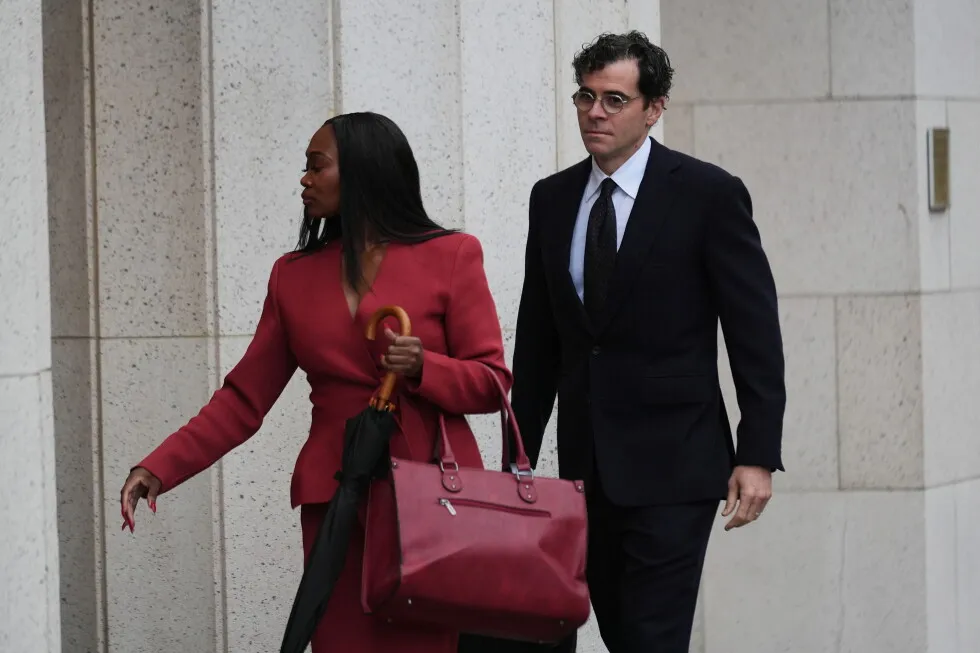
Instagram chief takes the stand in a trial pitting Meta against states over social media harms 1 of 2 | Adam Mosseri, CEO of Instagram, arrives in court to testify in a landmark social media case that seeks to hold tech companies responsible for harms to children, in Los Angeles, Feb. 11, 2026. (AP Photo/Damian Dovarganes, File) 2 of 2 | Olivia Konar holds a banner with names of young people who advocates say died as a result of social media outside the Ronald V. Dellums Federal Building and U.S. Courthouse on Tuesday, Aug. 18, 2026, in Oakland, Calif. Her sister Coco Konar died in 2022 when she was 17. (AP Photo/Noah Berger) By BARBARA ORTUTAY Updated 12:37 AM MESZ, August 26, 2026 Add AP News on Google Add AP News as your preferred source to see more of our stories on Google. Share Share Facebook Copy Link copied Print Email X LinkedIn Bluesky Flipboard Pinterest Reddit Oakland, Calif. (AP) — Adam Mosseri, the Meta executive at the helm of Instagram, defended the platform’s safety record in testimony Tuesday and took issue with a plaintiff attorney’s emphasis on low usage numbers for a feature designed to encourage young users to take breaks. Mosseri was appearing at a trial that pits Meta against the states of California, Colorado, Kentucky and New Jersey, which accuse the social media giant of contributing to the youth mental health crisis by knowingly and deliberately designing features that addict children to its platforms. Jason Slothouber, a senior prosecutor for the Colorado Attorney General’s Office, pressed Mosseri on the low adoption rate among teens for the “take a break” feature, which prompts users to step away if they’ve been scrolling a while. Very few teens used the feature when Instagram first introduced it, but since launching separate teen accounts in 2024, Meta has made it the default setting for teenage users. Mosseri appeared frustrated that Slothouber was focusing on a single Instagram safety feature when the Meta executive said, “There are many features we launch over many aspects of safety and well-being” that the company tries to improve over time. The trial began last week in federal court in Oakland, California, and is expected to last about six weeks. The four states were among 29 that sued the tech giant in 2023 over child safety and privacy — the other 25 will go to trial later. The company also faces lawsuits in state courts, including one underway in Tennessee. Trial for Meta begins with states arguing its platforms preyed on vulnerability of young brains 4 MIN READ 42 In Meta’s trial, families of social media victims see a pivotal moment for online safety 4 MIN READ 15 States take Meta to trial in California in the biggest fight yet over social media harms to children 4 MIN READ 15 Mosseri, who has led Instagram since 2018, testified for about an hour and is due back on the stand Wednesday. He also testified earlier this year in the Los Angeles state court trial that pitted Meta and YouTube against a 20-year-old plaintiff identified only by the initials “KGM,” who said she became addicted to social media as a child. Meta and Google were found liable for harms caused by their platforms, and KGM was awarded a total of $6 million. In earlier testimony at the Oakland trial, Francesco Fogu, Instagram’s director of product design, had contentious exchanges with the plaintiffs’ lawyer over internal chats and documents shown to the jury. In one instance, jurors were shown a passage from a document saying, “As a company, we make different choices when it comes to regulatory response. Sometimes we don’t comply and accept a fine. Sometimes we comply in the most minimal or literal way possible.” Fogu said several times he did not remember whether he wrote those words. As Slothouber kept pressing, Judge Yvonne Gonzalez Rogers stepped in to say, “We get the point.” Jurors also heard from former Meta employee George Volichenko, who worked in marketing analytics and as a data scientist from 2016 to 2018 and from 2022 to 2023. During his second stint at the company, when he worked on Instagram’s mental well-being team, Volichenko said he was told the team exists primarily to protect the company in upcoming lawsuits. In his experience, Volichenko said, “Everything I saw was kind of supporting that” — from having limited agency to feedback and guidance from leadership. Discussing Instagram’s “take a break” feature, Volichenko said his team had argued it should be automatically turned on for younger teens who use Instagram. That’s because people are far more likely to use a feature if it is “opt-out” — that is, they need to manually turn it off if they don’t want to use it — rather than “opt-in,” which means they have to manually turn it on. “The tradeoff to core metrics was not desirable,” Volichenko said, referring to Meta’s metrics for how long and how often people use its products. “I didn’t feel like the company at large was aligned with my values,” he said. BARBARA ORTUTAY Ortutay writes about social media and the internet for The Associated Press. mailto
SRCAssociated Press (AP)
LANGEN
LEANCenter
WORDS861
ENT12
TUE · 2026-08-25 · 22:53 GMTBRIEF NSR-2026-0826-105921
NSR-2026-0826-105921News Report·EN·Legal & Judicial
Instagram chief takes the stand in a trial pitting Meta against states over social media harms
Adam Mosseri, CEO of Instagram, testified in a federal trial where Meta faces accusations from California, Colorado, Kentucky, and New Jersey. The states allege Meta knowingly designed addictive features that contribute to the youth mental health crisis.
Associated Press (AP)Filed 2026-08-25 · 22:53 GMTLean · CenterRead · 4 min
Associated Press (AP)FIG 01
Reading time
4min
Word count
861words
Sources cited
2cited
Entities identified
12entities
Quality score
100%
§ 01
Briefing Summary
AI-generatedNEWSAR · AI
Adam Mosseri, CEO of Instagram, testified in a federal trial where Meta faces accusations from California, Colorado, Kentucky, and New Jersey. The states allege Meta knowingly designed addictive features that contribute to the youth mental health crisis. Mosseri defended Instagram's safety measures, including the "take a break" feature, which he stated has been made the default for teenage users. During his testimony, Mosseri expressed frustration with the focus on a single feature, highlighting the company's broader safety efforts. The trial, which began last week in Oakland, California, is part of a larger lawsuit filed by 29 states in 2023. Former Meta employee George Volichenko also testified, stating his team's efforts to make the "take a break" feature opt-out were rejected due to concerns about core engagement metrics.
Confidence 0.90Sources 2Claims 5Entities 12
§ 02
Article analysis
Model · rule-basedFraming
Legal & Judicial
Public Health
Tone
Measured
AI-assessed
CalmNeutralAlarmist
Factuality
0.80 / 1.00
Factual
LowHigh
Sources cited
2
Limited
FewMany
§ 03
Key claims
5 extracted01
Twenty-nine states sued Meta in 2023 over child safety and privacy.
factualAP News
Confidence
1.00
02
Mosseri stated that Instagram has many safety and well-being features that the company continuously tries to improve.
quoteAdam Mosseri
Confidence
1.00
03
Jason Slothouber, a prosecutor, questioned Mosseri on the low adoption rate of Instagram's 'take a break' feature among teens.
factualAP News
Confidence
1.00
04
States accuse Meta of knowingly designing features that addict children to its platforms.
factualCalifornia, Colorado, Kentucky, New Jersey
Confidence
1.00
05
Adam Mosseri, CEO of Instagram, testified in a trial where Meta is accused by states of contributing to the youth mental health crisis.
factualAP News
Confidence
1.00
§ 04
Full report
4 min read · 861 words§ 05
Entities
12 identifiedKey playerOppositionContextPositiveNeutralNegative
People4
Organizations2
§ 06
Keywords & salience
10 termssocial media harms
1.00
youth mental health crisis
0.90
meta
0.80
instagram
0.80
child safety
0.70
addiction
0.60
legal trial
0.50
platform design
0.50
adam mosseri
0.40
take a break feature
0.40
§ 07
Topic connections
Interactive graph Network visualization showing 51 related topics
View Full Graph Person Organization Location Event|Click node to navigate|Edge numbers = shared articles