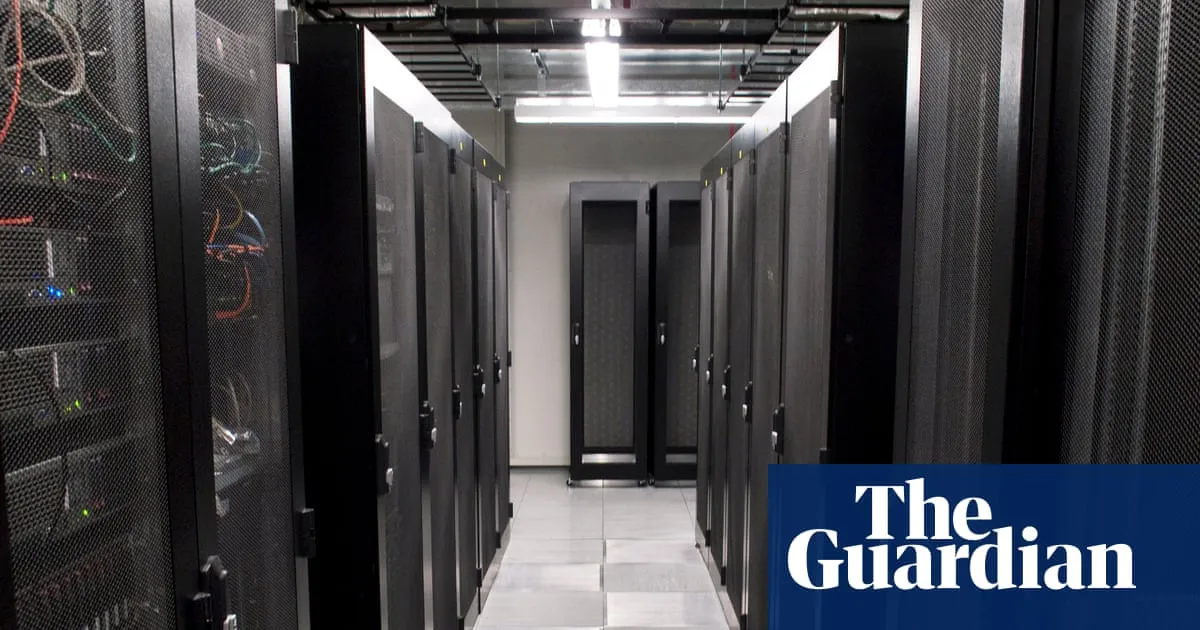
The construction of datacentres has become a hot political issue around Australia in the face of grassroots opposition. Photograph: Construction Photography/Avalon/Getty Images View image in fullscreen The construction of datacentres has become a hot political issue around Australia in the face of grassroots opposition. Photograph: Construction Photography/Avalon/Getty Images ‘Reluctant’ approval for Tasmanian datacentre sets marker for national battle Concerns over planning process as George Town council gives go-ahead for 288MW AI factory despite opposition from locals Get our breaking news email, free app or daily news podcast The day before Anthony Albanese secured agreement with states and territories to develop national datacentre standards, a small council in Tasmania was grappling with the existing regulations in the face of strong community opposition to a new AI factory planned for its town. The George Town council voted 6-1 to approve the plans of Australian developer Firmus to build a 288 megawatt (MW) datacentre at Long Reach, north of Launceston, but said it did so reluctantly. The AI factory is planned on the former Gunns Pulp Mill site near the Tamar River, and has faced strong opposition from locals. A petition calling to stop the centre going ahead had nearly 6,000 signatures. More than 300 people wrote submissions on the application to the council. Many of the submissions raised concerns about energy use, concerns about AI, or pointed to “commonwealth regulation”, according to the council’s agenda document, which said those concerns were “outside the scope” of the council’s role in deciding the application. At the heated meeting to decide the centre’s fate on Tuesday, speakers lined up to express their objections to the proposal, with many saying the council should be waiting until new federal rules are in place. Lorraine, one local who spoke at the meeting, pointed to the prime minister’s plans and said the council’s approval should wait. “Last week on national TV, prime minister Anthony Albanese announced a landmark policy setting out new mandatory standards for large-scale AI datacentres to be built,” she said. “Tasmania is part of Australia, and we deserve to be protected too,” she said. On Wednesday, Albanese announced after national cabinet that the government would legislate from early next year a nationally consistent regulatory framework setting minimum requirements for large datacentres. The federal government plans to work with states and territories on consistent mandatory standards on energy, water and land use, but the communique out of national cabinet stated that the legislation “will be designed to complement, not duplicate” state and territory planning and approval processes. In George Town, councillors said they had to apply the law as it is today, not waiting for the future rules to come into effect. “This is probably one of my hardest decisions while I’ve been on council in the last four years,” councillor Heather Ashley said. “We’ve talked about this a lot … but as a planning authority, we have guidelines and we can’t go over those guidelines.” Anthony Albanese says he wants to do AI 'the Australian way' – video Each councillor had been “very reluctant” to make the decision on Tuesday, councillor Winston Mason said. “But as has been said a hundred times, it’s a decision that we have to make under planning rules and regulations. So that’s it.” People who raised objections to the proposal will have 14 days from Tuesday to appeal against the decision. Anne-Marie Bastian, who began the Change.org petition against the datacentre, said it was likely to be appealed by multiple residents. “There’s plenty in the community that are pissed off right now,” she told Guardian Australia. “Their concerns were totally dismissed.” A spokesperson for Firmus welcomed the council’s decision, and said the project would now progress through design, procurement and construction planning. The Firmus co-founder Oliver Curtis said the company supported the national expectations for datacentres and the standards behind them. “Operators should be able to demonstrate how they are supporting the energy system, using water responsibly, choosing appropriate locations and delivering real benefits to the communities that host them,” he said. “Our AI factories are purpose-built and holistically designed to improve energy efficiency and minimise water use.” Ahead of the new rules being legislated, there is a steady stream of datacentre plans coming in to state and territory authorities for review. The Australian Energy Market Operator said in its report this week that there were 225 datacentres in development across the country. The Greens senator and chair of the federal parliament’s datacentres inquiry, Sarah Hanson-Young, said there should be a moratorium on new AI datacentres until the rules are in place. “These companies are already bulls at a gate, pushing state governments to give them approval,” she said. “They’re already railroading communities across the country … [We need] either a moratorium or the laws are going to have to be retrospective.” While the rules may be tighter under the federal plan, some are running into hurdles under the existing regime. Victoria’s Environment Protection Authority this week issued its first ever objection to a datacentre in the state, in opposing the application by Zerra DC to turn the former Ford factory at Campbellfield in Melbourne’s north into a $1.1bn, 366MW datacentre campus. A spokesperson for the EPA noted it was ultimately for the minister for planning to make a decision, but EPA Victoria objected over “concerns over potential noise risks and the cumulative impacts associated with the overall site layout and development”. The EPA said if an amended or new application is lodged, then it would be reassessed. A Zerra DC spokesperson said the company welcomed the feedback and was working through it with specialist acoustic consultants. Explore more on these topics Datacentres - Australia Business Australian politics Tasmania news Share Reuse this content
SRCThe Guardian - World News
LANGEN
LEANCenter-Left
WORDS953
ENT10
WED · 2026-08-26 · 15:00 GMTBRIEF NSR-2026-0826-106161
NSR-2026-0826-106161News Report·EN·Political Strategy
‘Reluctant’ approval for Tasmanian datacentre sets marker for national battle
The George Town council in Tasmania reluctantly approved Firmus's plans for a 288MW AI datacentre, despite significant local opposition and nearly 6,000 petition signatures. Councillors stated they were bound by current planning regulations and could not wait for new national datacentre standards, which Prime Minister Anthony Albanese announced would be legislated from early next year.
Josh Taylor Technology reporterThe Guardian - World NewsFiled 2026-08-26 · 15:00 GMTLean · Center-LeftRead · 4 min
The Guardian - World NewsFIG 01
Reading time
4min
Word count
953words
Sources cited
3cited
Entities identified
10entities
Quality score
100%
§ 01
Briefing Summary
AI-generatedNEWSAR · AI
The George Town council in Tasmania reluctantly approved Firmus's plans for a 288MW AI datacentre, despite significant local opposition and nearly 6,000 petition signatures. Councillors stated they were bound by current planning regulations and could not wait for new national datacentre standards, which Prime Minister Anthony Albanese announced would be legislated from early next year. The proposed datacentre, planned for the former Gunns Pulp Mill site, faced objections concerning energy use and AI, with many locals urging the council to delay the decision until federal rules were established. Opponents are expected to appeal the council's 6-1 vote within 14 days.
Confidence 0.90Sources 3Claims 5Entities 10
§ 02
Article analysis
Model · rule-basedFraming
Political Strategy
Legal & Judicial
Tone
Mixed Tone
AI-assessed
CalmNeutralAlarmist
Factuality
0.70 / 1.00
Factual
LowHigh
Sources cited
3
Well sourced
FewMany
§ 03
Key claims
5 extracted01
The federal government will legislate a national regulatory framework for large datacentres from early next year.
factualAnthony Albanese
Confidence
1.00
02
George Town council voted 6-1 to approve Firmus's 288MW datacentre plans.
factualGeorge Town council
Confidence
1.00
03
Concerns raised by locals about energy use and AI were outside the scope of the council's decision.
factualGeorge Town council's agenda document
Confidence
0.90
04
A petition against the datacentre had nearly 6,000 signatures.
statisticArticle
Confidence
0.90
05
The datacentre approval was given reluctantly by the council.
factualGeorge Town council
Confidence
0.90
§ 04
Full report
4 min read · 953 words§ 05
Entities
10 identifiedKey playerOppositionContextPositiveNeutralNegative
Locations6
§ 06
Keywords & salience
10 termsdatacentre approval
1.00
grassroots opposition
0.90
ai factory
0.80
national datacentre standards
0.80
community opposition
0.70
regulatory framework
0.60
energy use
0.60
anthony albanese
0.50
george town council
0.50
tasmania
0.40
§ 07
Topic connections
Interactive graph Network visualization showing 51 related topics
View Full Graph Person Organization Location Event|Click node to navigate|Edge numbers = shared articles