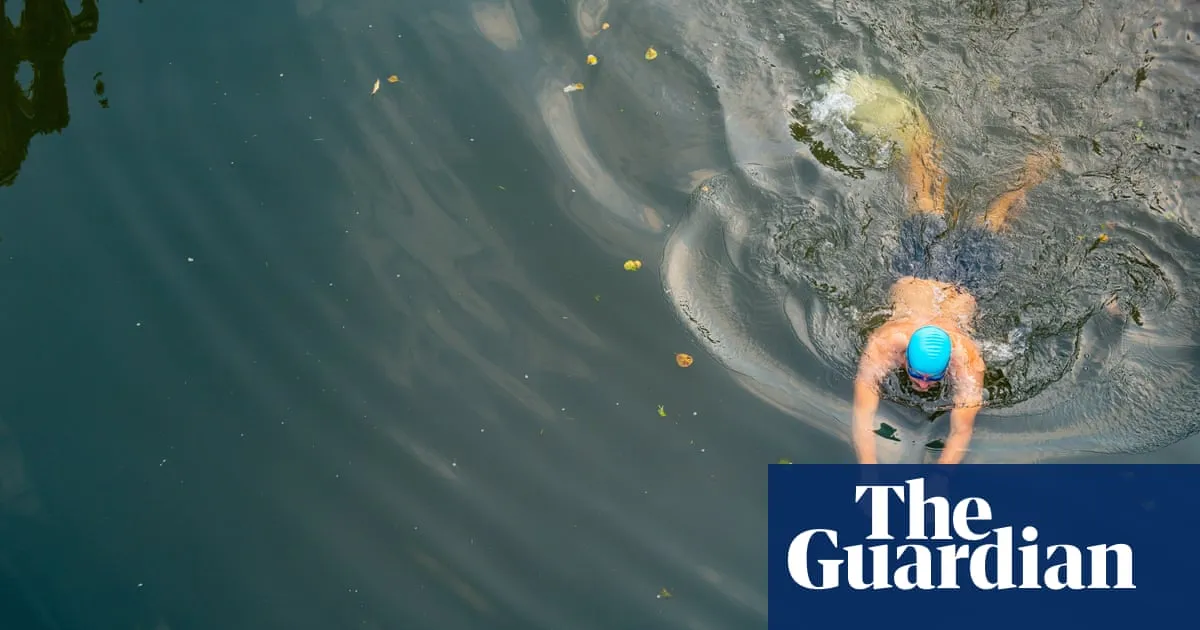
Wild swimming has been linked to a higher risk of stomach bugs and skin rashes, according to the largest ever controlled study of illnesses associated with bathing in rivers and lakes.The research found that swimmers at locations in Hungary were more than twice as likely to develop skin problems, while the risk of contracting a stomach bug rose significantly in water with higher concentrations of E coli and other bacteria linked to faecal pollution.The findings raise questions about the World Health Organization’s decision to drop E coli as a recommended indicator of pollution in freshwater bathing sites, amid growing public concern over water quality and a boom in outdoor swimming.Paul Hunter, a professor of medicine at the University of East Anglia, who led the study, said: “The original guidelines, which were published in about 2003 – and I was part of the group that developed those – recommended [monitoring of] both E coli and enterococci for marine and fresh waters.“WHO produced new guidelines, and they basically said: ‘Don’t worry about E coli, just focus on enterococci.’ Rather embarrassingly, what we found is that enterococci aren’t associated with increased risk, but E coli is.”The study involved 2,368 people at two river and two lake-like bathing sites in Hungary. Participants were randomly allocated either to spend 10 minutes in the water, immersing their face at least three times, or to remain on the shore without entering it.Water was sampled throughout the trials, allowing researchers to estimate each swimmer’s exposure to E coli, intestinal enterococci and somatic coliphages – viruses that infect bacteria and can indicate faecal contamination. Participants were questioned about symptoms a week later.About 2.1% of swimmers reported gastrointestinal illness, including diarrhoea, vomiting or nausea accompanied by fever, compared with 1.9% of non-swimmers.Although bathing alone was not statistically linked to stomach illness, the risk increased significantly among swimmers exposed to higher concentrations of E coli and coliphages.Skin complaints, defined as a rash, ulcer or itching, were reported by 2.7% of swimmers and 1.3% of people who stayed out of the water, making bathers more than twice as likely to develop a skin ailment.Hunter said he was “fairly confident” that the findings would be applicable to the UK despite the research being conducted in Hungary. A separate German study in 2006 produced similar results.He added: “We have two different countries with essentially the same findings, Germany and Hungary, and climatically they are not that different to us in many ways.”The skin problems reported were not associated with any of the three measures of faecal contamination, suggesting other organisms or pollutants may have been responsible.“People going into fresh waters do have an increased risk of skin irritation,” Hunter said. “We don’t know what is causing that. One explanation is something called cercarial dermatitis, where avian parasites burrow into human skin and cause a reaction. Irritation from algae in rivers and lakes might also be causing it.“But that is speculation: what we do know is that the skin irritation is not related to markers of faecal pollution.”Cases of respiratory, ear and eye infections were also more frequent among swimmers, but the numbers were too small for researchers to draw any reliable conclusions.All four sites complied with EU bathing-water standards that were in force when the trials took place. The researchers said the randomised design provided stronger evidence than observational studies.However, they cautioned that the results were based on a single trial day at each site and that some participants reported swimming elsewhere during the study period.Hunter said the results supported retaining E coli in freshwater monitoring and suggested somatic coliphages could also help identify unsafe conditions. “I think there is a very strong argument that E coli, particularly for fresh waters rather than marine waters, should be part of the standards and should be part of the guidelines,” he added.
SRCThe Guardian - World News
LANGEN
LEANCenter-Left
WORDS636
ENT11
THU · 2026-08-27 · 05:00 GMTBRIEF NSR-2026-0827-106344
NSR-2026-0827-106344News Report·EN·Public Health
Wild swimming linked to higher risk of stomach bugs and skin rashes
A large controlled study conducted in Hungary has linked wild swimming in lakes and rivers to an increased risk of stomach bugs and skin rashes. Researchers found that swimmers were more than twice as likely to develop skin problems, and the risk of stomach illness rose significantly with higher concentrations of E.
Matthew PearceThe Guardian - World NewsFiled 2026-08-27 · 05:00 GMTLean · Center-LeftRead · 3 min
The Guardian - World NewsFIG 01
Reading time
3min
Word count
636words
Sources cited
2cited
Entities identified
11entities
Quality score
100%
§ 01
Briefing Summary
AI-generatedNEWSAR · AI
A large controlled study conducted in Hungary has linked wild swimming in lakes and rivers to an increased risk of stomach bugs and skin rashes. Researchers found that swimmers were more than twice as likely to develop skin problems, and the risk of stomach illness rose significantly with higher concentrations of E. coli and other bacteria linked to faecal pollution. The study, which involved 2,368 participants, questioned the World Health Organization's recent decision to drop E. coli as a recommended indicator for freshwater pollution, as the research found E. coli, not enterococci, to be associated with increased illness risk. While skin irritation was not linked to faecal markers, other potential causes like avian parasites or algae were suggested. The findings, led by Professor Paul Hunter, are considered applicable to the UK and support retaining E. coli in freshwater monitoring.
Confidence 0.90Sources 2Claims 5Entities 11
§ 02
Article analysis
Model · rule-basedFraming
Public Health
Environmental
Tone
Mixed Tone
AI-assessed
CalmNeutralAlarmist
Factuality
0.90 / 1.00
Factual
LowHigh
Sources cited
2
Limited
FewMany
§ 03
Key claims
5 extracted01
Enterococci are not associated with increased risk of illness from wild swimming, but E coli is.
quotePaul Hunter
Confidence
0.90
02
Wild swimming is linked to a higher risk of stomach bugs and skin rashes.
factual
Confidence
0.90
03
The risk of contracting a stomach bug rose significantly in water with higher concentrations of E coli and other bacteria linked to faecal pollution.
factual
Confidence
0.85
04
Swimmers at locations in Hungary were more than twice as likely to develop skin problems.
statistic
Confidence
0.85
05
The findings are likely applicable to the UK, despite being conducted in Hungary.
predictionPaul Hunter
Confidence
0.75
§ 04
Full report
3 min read · 636 words§ 05
Entities
11 identifiedKey playerOppositionContextPositiveNeutralNegative
Organizations2
Events1
§ 06
Keywords & salience
8 termswild swimming
1.00
stomach bugs
0.90
skin rashes
0.90
e coli
0.80
faecal pollution
0.70
water quality
0.60
who guidelines
0.50
controlled study
0.40
§ 07
Topic connections
Interactive graph Network visualization showing 3 related topics
View Full Graph Person Organization Location Event|Click node to navigate|Edge numbers = shared articles