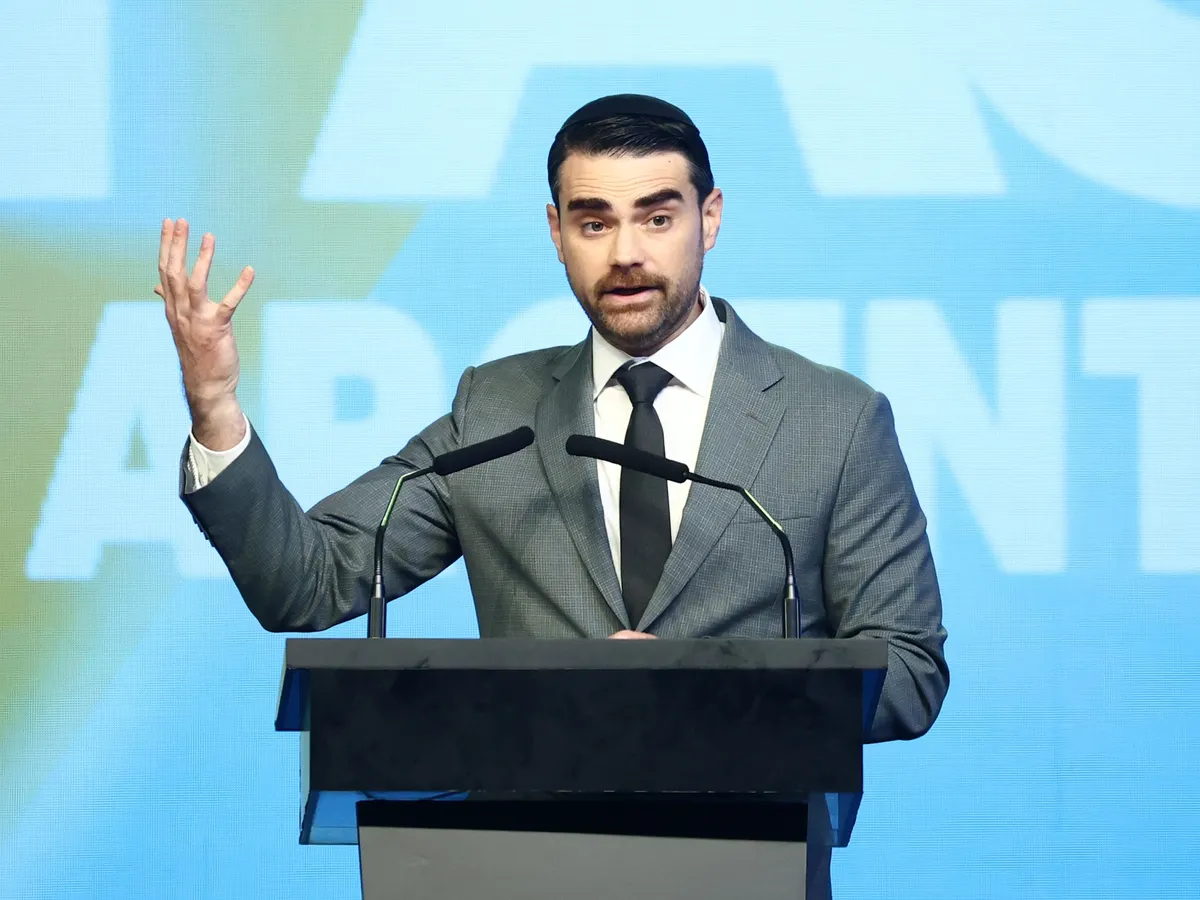
Hollywood has spent decades portraying Muslims as terrorists and extremists. Shapiro’s new film simply repackages those stereotypes for the present moment.Communications Manager, CAIR-LA.Published On 27 Aug 2026Ben Shapiro, prominent pro-Israel blogger and co-founder of the far-right news site The Daily Wire, claims Hollywood has spent the last three decades refusing to tell the story of “the threat of radical Islam”.As an American Muslim woman, an avid movie-goer, and a human with eyes, I must say that statement’s pretty delusional – even for a known bigot like Shapiro, who once declared, “Arabs like to bomb crap and live in open sewage.”While announcing the trailer for his Islamophobic new film, Run Hide Fight: Infidels, Shapiro posted on X that “the threat of radical Islam is real” and that Hollywood has “refused to tell that story for three decades”. He described his film as the “biggest, most audacious, funniest and most kickass film” The Daily Wire has ever released.I’m not sure what’s supposed to be audacious about making Muslims the bad guys; Hollywood has been doing that since before I was born.In 2003, American writer and educator Jack Shaheen published Reel Bad Arabs based on his review of more than 900 films featuring Arab characters. He found that Hollywood routinely blurred Arab and Muslim identities and overwhelmingly portrayed them as violent, barbaric, greedy, sexually threatening, or otherwise dangerous.And you don’t have to take Shaheen’s word for it. Just take a look at a few of the movies.In True Lies (1994), Arab terrorists plot to detonate a nuclear weapon in the United States. Executive Decision (1996) features Muslim terrorists hijacking a plane and associates Islamic prayer and Quranic imagery with terrorism. The Siege (1998) envisions terrorist attacks in New York that lead to the arrests of Arab Americans. Rules of Engagement (2000) portrays US Marines killing Yemeni civilians, then proceeds to justify it.
SRCAl Jazeera
LANGEN
LEANCenter
WORDS309
ENT12
THU · 2026-08-27 · 07:43 GMTBRIEF NSR-2026-0827-106437
NSR-2026-0827-106437Opinion·EN·Social Justice
Ben Shapiro’s anti-Muslim film is nothing new
Ben Shapiro's new film, "Run Hide Fight: Infidels," is criticized for perpetuating decades-old anti-Muslim stereotypes. Shapiro claims Hollywood has ignored the "threat of radical Islam," but the article argues this narrative is a repackaging of existing tropes.
Enjy El-KadiAl JazeeraFiled 2026-08-27 · 07:43 GMTLean · CenterRead · 2 min
Al JazeeraFIG 01
Reading time
2min
Word count
309words
Sources cited
2cited
Entities identified
12entities
Quality score
100%
§ 01
Briefing Summary
AI-generatedNEWSAR · AI
Ben Shapiro's new film, "Run Hide Fight: Infidels," is criticized for perpetuating decades-old anti-Muslim stereotypes. Shapiro claims Hollywood has ignored the "threat of radical Islam," but the article argues this narrative is a repackaging of existing tropes. Research by Jack Shaheen in his book "Reel Bad Arabs" (2003) found that Hollywood has historically portrayed Arab and Muslim characters as violent, barbaric, or dangerous, citing films like "True Lies" (1994) and "Executive Decision" (1996) as examples. The article suggests Shapiro's film continues this trend by making Muslims the antagonists, a practice the author states has been prevalent in Hollywood for a long time.
Confidence 0.90Sources 2Claims 4Entities 12
§ 02
Article analysis
Model · rule-basedFraming
Social Justice
Conflict
Tone
Sensational
AI-assessed
CalmNeutralAlarmist
Factuality
0.30 / 1.00
Opinion-Heavy
LowHigh
Sources cited
2
Limited
FewMany
§ 03
Key claims
4 extracted01
Ben Shapiro claims Hollywood has spent the last three decades refusing to tell the story of 'the threat of radical Islam'.
quoteBen Shapiro
Confidence
1.00
02
Jack Shaheen's 2003 book 'Reel Bad Arabs' reviewed over 900 films and found overwhelming portrayal of Arabs as violent, barbaric, greedy, sexually threatening, or dangerous.
factualJack Shaheen
Confidence
0.90
03
Hollywood has routinely portrayed Muslims as terrorists and extremists for decades.
factual
Confidence
0.90
04
Ben Shapiro's new film 'Run Hide Fight: Infidels' repackages existing stereotypes of Muslims as the bad guys.
factual
Confidence
0.80
§ 04
Full report
2 min read · 309 words§ 05
Entities
12 identifiedKey playerOppositionContextPositiveNeutralNegative
Organizations2
Locations1
Events6
§ 06
Keywords & salience
10 termsanti-muslim stereotypes
1.00
hollywood portrayal
0.90
ben shapiro
0.80
islamophobia
0.70
radical islam
0.70
muslim representation
0.60
film analysis
0.60
the daily wire
0.50
jack shaheen
0.40
reel bad arabs
0.40
§ 07
Topic connections
Interactive graph No topic relationship data available yet. This graph will appear once topic relationships have been computed.