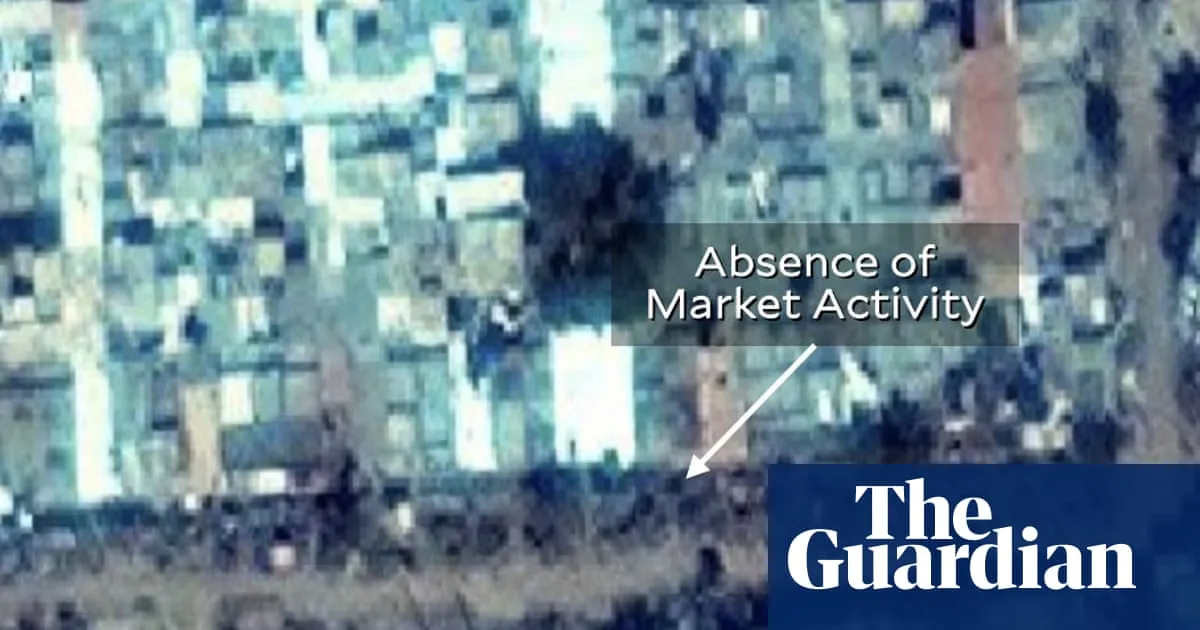
The Sudanese city of El Fasher resembles a “massive crime scene”, with large piles of bodies heaped throughout its streets as the paramilitary Rapid Support Forces (RSF) work to destroy evidence of the scale of their massacre.Six weeks after the RSF seized the city, corpses have been gathered together in scores of piles to await burial in mass graves or cremated in huge pits, analysis indicates.With the capital of North Darfur state still sealed off to outsiders, including UN war crimes investigators, satellite evidence has revealed a network of newly dug incineration and burial pits thought to be for the disposal of large numbers of bodies.While the final death toll of the massacre remains unclear, British MPs have been briefed that at least 60,000 have been murdered in El Fasher.Sarah Champion, chair of the Commons international development select committee, said: “Members received a private briefing on Sudan, at which one of the academics stated: ‘Our low estimate is 60,000 people have been killed there in the last three weeks.’”As many as 150,000 residents of El Fasher remain unaccounted for since the city fell to the RSF. They are not thought to have left the city, and this grisly development comes amid increasingly gloomy speculation about their fate.Nathaniel Raymond, director of the Yale Humanitarian Research Lab, which has been closely analysing satellite images of El Fasher, said the city was eerily empty, with once-bustling markets now desolate.Yale’s latest analysis suggests marketplaces are now so unused that they are becoming overgrown and that all the livestock appears to have been moved out of the city,which had 1.5 million inhabitants before the war began in April 2023.“It’s beginning to look a lot like a slaughterhouse,” said Raymond.No expert or agency has been able to explain the whereabouts of the tens of thousands of residents who have been missing since El Fasher – the army’s last major stronghold in the region – was overrun on 26 October after the RSF’s brutal 500-day starvation siege.The Guardian has spoken to sources who describe El Fasher residents being held in detention centres in the city, though the numbers still detained are small.Satellite imagery from August 2025, left, shows evidence of market activity and vehicles around El Fasher, while an image taken on 17 November 2025, right, shows no signs of life in the city. Photograph: Courtesy of Humanitarian Research Lab/Yale School of Public HealthRSF officials had pledged to allow the UN into El Fasher to deliver aid and investigate atrocities, but to date the city remains out of bounds for humanitarian organisations as well as UN officials.Aid convoys are understood to be on standby in nearby towns and cities as negotiations for the RSF to give safety guarantees continue. So far the paramilitary group, now in its third year of civil war with Sudan’s armed forces, has refused.A UN source said: “There needs to be a security assessment before we can plan on sending assistance. Right now, there is no guarantee of safe passage or protection of civilians, aid workers or humanitarian assets.”Despite the uncertainty over how many residents might be alive inside El Fasher, the need for help to reach the city is deemed critical, with “staggering” levels of malnutrition reported among those who had escaped. International experts have declared the city to be in famine.Raymond said some residents, with whom his team had now lost touch, had contacted them within the first two days of the attack alleging that up to 10,000 people had been killed.Human rights experts now believe El Fasher is likely to be the worst war crime of the Sudanese civil war, which is already characterised by mass atrocities and ethnic cleansing.Over 32 months of ruinous war, the country has been torn apart, with as many as 400,000 people killed and almost 13 million displaced. The conflict has caused the world’s biggest humanitarian crisis.Meanwhile, there have been renewed calls for a thorough investigation into an RSF attack on the Zamzam displacement camp seven miles (12km) south of El Fasher six months earlier.A new report by Amnesty International documents how the RSF targeted civilians, took hostages, and destroyed mosques and schools during a large-scale attack on Zamzam camp. It has called for the RSF to be “investigated for war crimes”.
SRCThe Guardian - World News
LANGEN
LEANCenter-Left
WORDS707
ENT5
FRI · 2025-12-05 · 08:00 GMTBRIEF NSR-2025-1205-1066
NSR-2025-1205-1066News Report·EN·Human Rights
RSF massacres left Sudanese city ‘a slaughterhouse’, satellite images show
Satellite imagery suggests the Sudanese city of El Fasher has become a "slaughterhouse" following its capture by the Rapid Support Forces (RSF) in late October. Analysis indicates mass graves and incineration pits are being used to dispose of large numbers of bodies, potentially to conceal the scale of the killings.
Mark TownsendThe Guardian - World NewsFiled 2025-12-05 · 08:00 GMTLean · Center-LeftRead · 3 min
The Guardian - World NewsFIG 01
Reading time
3min
Word count
707words
Sources cited
4cited
Entities identified
5entities
Quality score
100%
§ 01
Briefing Summary
AI-generatedNEWSAR · AI
Satellite imagery suggests the Sudanese city of El Fasher has become a "slaughterhouse" following its capture by the Rapid Support Forces (RSF) in late October. Analysis indicates mass graves and incineration pits are being used to dispose of large numbers of bodies, potentially to conceal the scale of the killings. While the exact death toll remains unclear, reports suggest at least 60,000 people have been murdered. Approximately 150,000 residents remain unaccounted for, and the city is largely deserted, with markets overgrown and livestock gone. The RSF seized El Fasher after a brutal siege, and the city remains sealed off to outside investigators.
Confidence 0.90Sources 4Claims 5Entities 5
§ 02
Article analysis
Model · rule-basedFraming
Human Rights
Conflict
Tone
Mixed Tone
AI-assessed
CalmNeutralAlarmist
Factuality
0.70 / 1.00
Factual
LowHigh
Sources cited
4
Well sourced
FewMany
§ 03
Key claims
5 extracted01
RSF officials had pledged to allow the UN into El Fasher to deliver aid and investigate atrocities, but to date the city remains out of bounds.
factualArticle's own claim
Confidence
0.90
02
It’s beginning to look a lot like a slaughterhouse.
quoteNathaniel Raymond, director of the Yale Humanitarian Research Lab
Confidence
0.90
03
The Sudanese city of El Fasher resembles a “massive crime scene”.
factualArticle's own claim, based on analysis
Confidence
0.80
04
As many as 150,000 residents of El Fasher remain unaccounted for since the city fell to the RSF.
statisticArticle's own claim
Confidence
0.70
05
At least 60,000 have been murdered in El Fasher in the last three weeks.
statisticBritish MPs briefed by academics
Confidence
0.60
§ 04
Full report
3 min read · 707 words§ 05
Entities
5 identifiedKey playerOppositionContextPositiveNeutralNegative
Locations1
§ 06
Keywords & salience
10 termsel fasher
0.90
rsf massacres
0.90
sudan
0.80
rapid support forces
0.80
mass graves
0.70
satellite images
0.60
war crimes
0.60
humanitarian crisis
0.50
death toll
0.50
starvation siege
0.40
§ 07
Topic connections
Interactive graph Network visualization showing 51 related topics
View Full Graph Person Organization Location Event|Click node to navigate|Edge numbers = shared articles