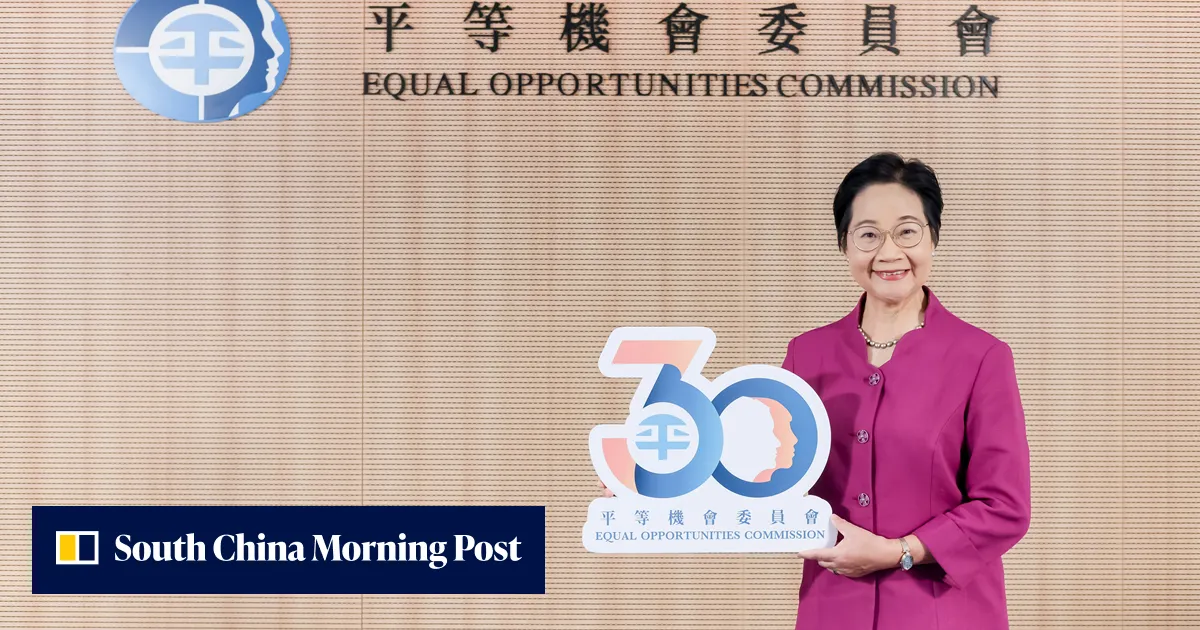
[The content of this article has been produced by our advertising partner.]Thirty years after Hong Kong established a statutory body to combat discrimination, equal opportunity has become increasingly embedded in laws, workplaces and community. As the Equal Opportunities Commission (EOC) marks its 30th anniversary this year, its record offers much to reflect on, but the work is far from finished considering the challenges brought by changing social needs. Following the enactment of the Sex Discrimination Ordinance in 1995, the EOC was established in May 1996. Over the past three decades, it has implemented and enforced four anti-discrimination ordinances covering sex, marital status, pregnancy, breastfeeding, disability, family status and race, while carrying out policy advocacy, public education and community engagement. Linda Lam Mei-sau EOC Chairperson said, “The anniversary offers us a moment to reflect on the EOC’s sustained efforts and achievements, and consolidate our experience to respond to increasingly complex social needs.” The figures give some indication of the reach of that work. As of end-2025, the EOC had handled 22,548 complaints and secured more than HK$134mn for complainants through conciliation or legal assistance. Some of the most important changes are harder to capture in numbers, says Lam. Years of law enforcement, education and advocacy have raised public awareness and more importantly helped equal opportunity values gradually take root across the community and translate into tangible social change. A case in point is gender-specific recruitment advertising. When the EOC was established, job s explicitly stating a preference for male or female applicants were common. Through education and reminders to publishers and advertisers about their legal responsibilities, such adverts fell to below 1 per cent within a relatively short period and have remained rare to this day. Legal safeguards have also been strengthened over the years. Amendments to the anti-discrimination ordinances have introduced protection against breastfeeding discrimination and harassment, sexual harassment of service providers by customers, and sexual, disability and racial harassment among workplace participants without a direct employment relationship. Putting accessibility into practice Accessibility provides another good example of how advocacy and research can lead to concrete action. Between 2007 and 2008, the EOC inspected 60 publicly accessible premises to identify barriers faced by people with disabilities and gather responses from premise owners and managers. The work led to the 2010 “Formal Investigation on Accessibility in Publicly Accessible Premises”, which put forward policy and operational recommendations to the Government. A HK$1.3bn retrofitting programme covering 3,500 government premises and facilities followed, while accessibility was improved at around 240 Housing Authority properties. Accessibility coordinators and officers were also appointed, and the Universal Accessibility Programme was further introduced in 2012 to improve access to public walkways. With Hong Kong’s population ageing, the EOC is continuing to promote universal design (UD) through policy advocacy, public education, stakeholder engagement and initiatives such as the Universal Design Award Scheme, with a view to promoting the benefits of adopting UD in buildings and infrastructure to create an inclusive and enabling environment for people with different needs.The EOC organises the Universal Design Award Scheme to recognise companies and organisations that excel in implementing universal design principles, contributing to greater accessibility across the community.Bringing inclusion into the workplace While some discriminatory practices are outright and easy to spot, dismantling subtle biases embedded in routine working practices demands true cultural change. According to Lam, family-friendly employment is an area where further effort is needed. Many organisations, she notes, still lack formal policies supporting employees with family responsibilities and may regard such arrangements as optional staff benefits. Traditional gender roles and bias towards working mothers can also affect career opportunities. Such barriers require workplace culture and practice to change in conjunction with legal protection. The EOC has been working with organisations from various sectors to promote the importance and benefits of fostering inclusive and respectful workplace cultures. The EOC’s Racial Diversity and Inclusion Charter for Employers encourages businesses to promote racial diversity and inclusion in the workplace, while the “Safe Spaces for All: Anti-Sexual Harassment Community Partner Programme” provides structured training on legal protections and prevention strategies. Participants from 17 organisations are encouraged to bring anti-sexual-harassment awareness back into their own organisations. Education remains vital to driving cultural change and shifting societal perspectives. Since 2001, more than 480,000 participants from companies and organisations have attended EOC training programmes on equal opportunities. “Enforcement and redress remain essential, but earlier intervention can reduce the risk of exclusion,” Lam said.The EOC’s Racial Diversity and Inclusion Charter for Employers aims to work with signatories to foster a culture of racial equality, diversity and inclusion in the workplace.Working together for what comes next As the EOC enters its fourth decade, Lam sees greater value in working closely with different sectors across the region. In May 2026, the EOC signed a Memorandum of Understanding with the Guangdong Disabled Persons’ Federation to establish regular collaboration on referral mechanisms, information sharing and promotion of barrier-free environments across the region.The EOC and the Guangdong Disabled Persons’ Federation have signed a Memorandum of Understanding to further deepen collaboration on disability affairs and strengthen the protection of the rights of people with disabilities in Guangdong and Hong Kong.“We now have a stronger foundation to work from, but the social challenges we face are becoming more complex. We want to keep working closely with our partners, corporates and the public to make Hong Kong more equitable, inclusive and diverse,” says Lam. That forward-looking vision guides the EOC’s 30th anniversary campaign, “30 Years of Building a Vibrant City Through Equality”. Key initiatives range from the “EO Journal” microfilm series to free experiential activities for public to gain a deeper understanding of the diverse communities that make up our society. The activities include exercising with athletes with disabilities, navigating neighbourhoods in a wheelchair and joining multicultural community tours.Members of the public are welcome to participate in the free experiential activities organised under the EOC’s 30th anniversary public education and publicity campaign.
SRCSouth China Morning Post
LANGEN
LEANCenter-Right
WORDS985
ENT10
FRI · 2026-08-28 · 02:00 GMTBRIEF NSR-2026-0828-106713
NSR-2026-0828-106713News Report·EN·Social Justice
Thirty years of advancing equal opportunity
The Equal Opportunities Commission (EOC) in Hong Kong is marking its 30th anniversary, reflecting on its role in advancing equal opportunity since its establishment in May 1996. The EOC enforces four anti-discrimination ordinances covering sex, disability, family status, and race, and engages in policy advocacy, public education, and community outreach.
Advertising partnerSouth China Morning PostFiled 2026-08-28 · 02:00 GMTLean · Center-RightRead · 4 min
South China Morning PostFIG 01
Reading time
4min
Word count
985words
Sources cited
1cited
Entities identified
10entities
Quality score
100%
§ 01
Briefing Summary
AI-generatedNEWSAR · AI
The Equal Opportunities Commission (EOC) in Hong Kong is marking its 30th anniversary, reflecting on its role in advancing equal opportunity since its establishment in May 1996. The EOC enforces four anti-discrimination ordinances covering sex, disability, family status, and race, and engages in policy advocacy, public education, and community outreach. Over three decades, it has handled over 22,500 complaints, securing significant funds for complainants, and has contributed to tangible social changes like the near elimination of gender-specific recruitment advertising. The EOC has also driven improvements in accessibility for people with disabilities through investigations and advocacy, leading to government retrofitting programs and the promotion of universal design. While progress has been made, the EOC acknowledges ongoing challenges, particularly in fostering family-friendly workplaces and dismantling subtle biases, emphasizing the continued need for cultural change alongside legal safeguards.
Confidence 0.90Sources 1Claims 5Entities 10
§ 02
Article analysis
Model · rule-basedFraming
Social Justice
Legal & Judicial
Tone
Measured
AI-assessed
CalmNeutralAlarmist
Factuality
0.70 / 1.00
Factual
LowHigh
Sources cited
1
Limited
FewMany
§ 03
Key claims
5 extracted01
As of end-2025, the EOC had handled 22,548 complaints and secured over HK$134 million for complainants.
statisticEOC Chairperson Linda Lam Mei-sau
Confidence
1.00
02
Over three decades, the EOC has enforced four anti-discrimination ordinances covering sex, disability, race, and family status.
factual
Confidence
1.00
03
The Equal Opportunities Commission (EOC) was established in May 1996 to combat discrimination.
factual
Confidence
1.00
04
A HK$1.3 billion retrofitting program was implemented to improve accessibility in government premises and Housing Authority properties.
factual
Confidence
0.90
05
Gender-specific recruitment advertising, once common, fell to below 1% after EOC's education and reminders to publishers.
factual
Confidence
0.90
§ 04
Full report
4 min read · 985 words§ 05
Entities
10 identifiedKey playerOppositionContextPositiveNeutralNegative
Organizations1
Locations1
Topics7
SD
Sex Discrimination Ordinance
PolicyContext
60
AD
anti-discrimination ordinances
PolicyContext
2x
60
EO
equal opportunity
PolicyContext
4x
50
DD
disability discrimination
PolicyContext
40
RD
racial discrimination
PolicyContext
40
GS
gender-specific recruitment advertising
PolicyContext
40
BD
breastfeeding discrimination
PolicyContext
40
§ 06
Keywords & salience
10 termsequal opportunity
1.00
anti-discrimination ordinances
0.90
equal opportunities commission
0.90
public awareness
0.70
policy advocacy
0.60
community engagement
0.60
social change
0.50
legal safeguards
0.50
accessibility
0.40
public education
0.40
§ 07
Topic connections
Interactive graph No topic relationship data available yet. This graph will appear once topic relationships have been computed.