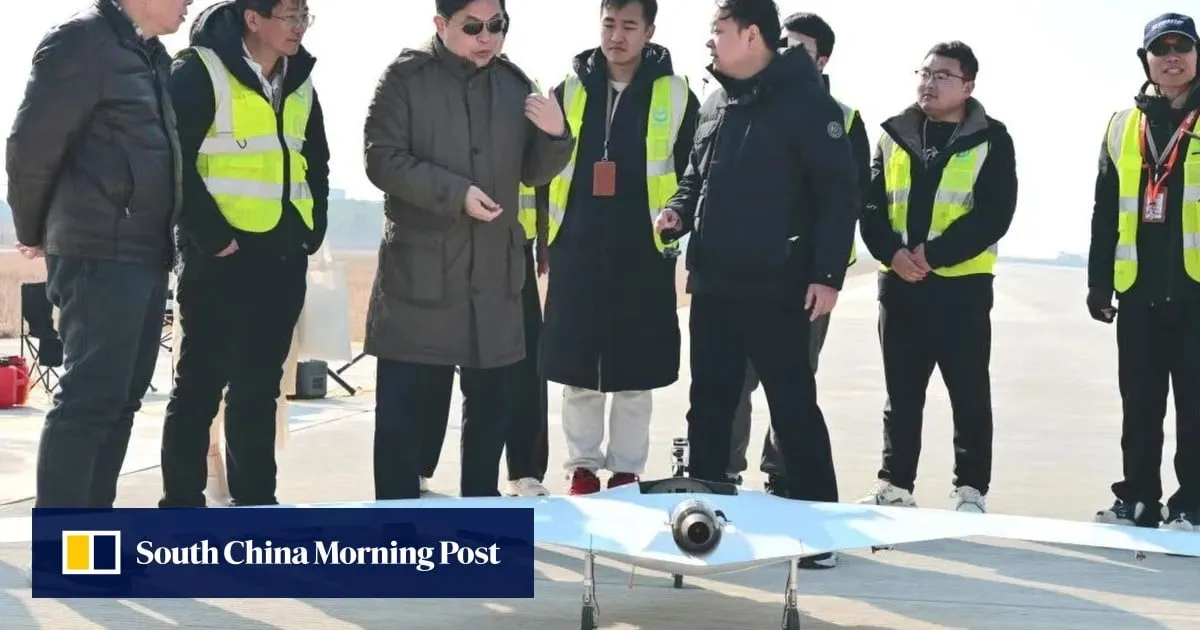
The old rules said you had to choose: stealth or speed. The US picked stealth. Russia went fast. China is trying to throw away the rule book.Chinese researchers unveiled a development in aircraft design last month that could propel the nation’s next-generation stealth bombers into supersonic flight, ending the trade-off between speed and stealth that has troubled the American and Russian air forces for decades.Since the 1930s, scientists have been studying a type of aircraft called the flying wing. Unlike conventional aircraft, this configuration integrates the fuselage and wings into a single large side wing, which reduces air resistance, improves aerodynamic efficiency and range, and enhances stealth capabilities. The most iconic example of this design is the US B-2 Spirit bomber.However, this design comes with a trade-off. By eliminating the traditional tail, the plane responds quickly when pitching, but its long, thin wings can bend and shake in high-speed airflow, sometimes causing severe vibration across the entire aircraft.This vibration is known as “rigid-elastic coupled flutter”. Once it occurs, it can lead to flight instability in mild cases, or even cause instant mid-air disintegration in severe scenarios.To avoid flutter risks, earlier flying-wing aircraft, including the B-2, have been limited to subsonic speeds. This inevitably compromises a bomber’s rapid response and penetration capability, making it difficult to evade modern air defence systems once detected.
SRCSouth China Morning Post
LANGEN
LEANCenter-Right
WORDS222
ENT4
MON · 2026-01-26 · 13:14 GMTBRIEF NSR-2026-0126-10677
NSR-2026-0126-10677News Report·EN·Technology
Can this new tech help China’s stealth bomber break the sound barrier?
Chinese researchers have announced a potential breakthrough in aircraft design that could allow China's next-generation stealth bombers to achieve supersonic speeds. The development focuses on overcoming the "rigid-elastic coupled flutter" issue that has historically limited flying-wing aircraft, like the US B-2 Spirit bomber, to subsonic speeds.
Zhang TongSouth China Morning PostFiled 2026-01-26 · 13:14 GMTLean · Center-RightRead · 1 min
South China Morning PostFIG 01
Reading time
1min
Word count
222words
Sources cited
0cited
Entities identified
4entities
Quality score
100%
§ 01
Briefing Summary
AI-generatedNEWSAR · AI
Chinese researchers have announced a potential breakthrough in aircraft design that could allow China's next-generation stealth bombers to achieve supersonic speeds. The development focuses on overcoming the "rigid-elastic coupled flutter" issue that has historically limited flying-wing aircraft, like the US B-2 Spirit bomber, to subsonic speeds. This vibration phenomenon can cause instability or disintegration at high speeds. By addressing this issue, China aims to eliminate the traditional trade-off between stealth and speed in bomber design, potentially improving rapid response and penetration capabilities against modern air defenses. The research could allow China to develop a stealth bomber that can break the sound barrier, a feat neither the US nor Russia has yet achieved.
Confidence 0.90Claims 5Entities 4
§ 02
Article analysis
Model · rule-basedFraming
Technology
National Security
Tone
Mixed Tone
AI-assessed
CalmNeutralAlarmist
Factuality
0.70 / 1.00
Factual
LowHigh
Sources cited
0
No named sources
FewMany
§ 03
Key claims
5 extracted01
Earlier flying-wing aircraft, including the B-2, have been limited to subsonic speeds to avoid flutter risks.
factual
Confidence
1.00
02
Flying wing aircraft integrate the fuselage and wings into a single large side wing.
factual
Confidence
1.00
03
Eliminating the traditional tail causes the plane to respond quickly when pitching.
factual
Confidence
0.90
04
Flying wing designs reduce air resistance, improve aerodynamic efficiency and range, and enhance stealth capabilities.
factual
Confidence
0.90
05
Chinese researchers unveiled a development in aircraft design that could propel stealth bombers into supersonic flight.
factual
Confidence
0.80
§ 04
Full report
1 min read · 222 words§ 05
Entities
4 identifiedKey playerOppositionContextPositiveNeutralNegative
Organizations1
§ 06
Keywords & salience
10 termsstealth bomber
1.00
supersonic flight
0.90
flying wing
0.80
stealth
0.70
aircraft design
0.70
rigid-elastic coupled flutter
0.60
speed
0.60
b-2 spirit bomber
0.50
aerodynamic efficiency
0.50
air defence systems
0.40
§ 07
Topic connections
Interactive graph Network visualization showing 51 related topics
View Full Graph Person Organization Location Event|Click node to navigate|Edge numbers = shared articles