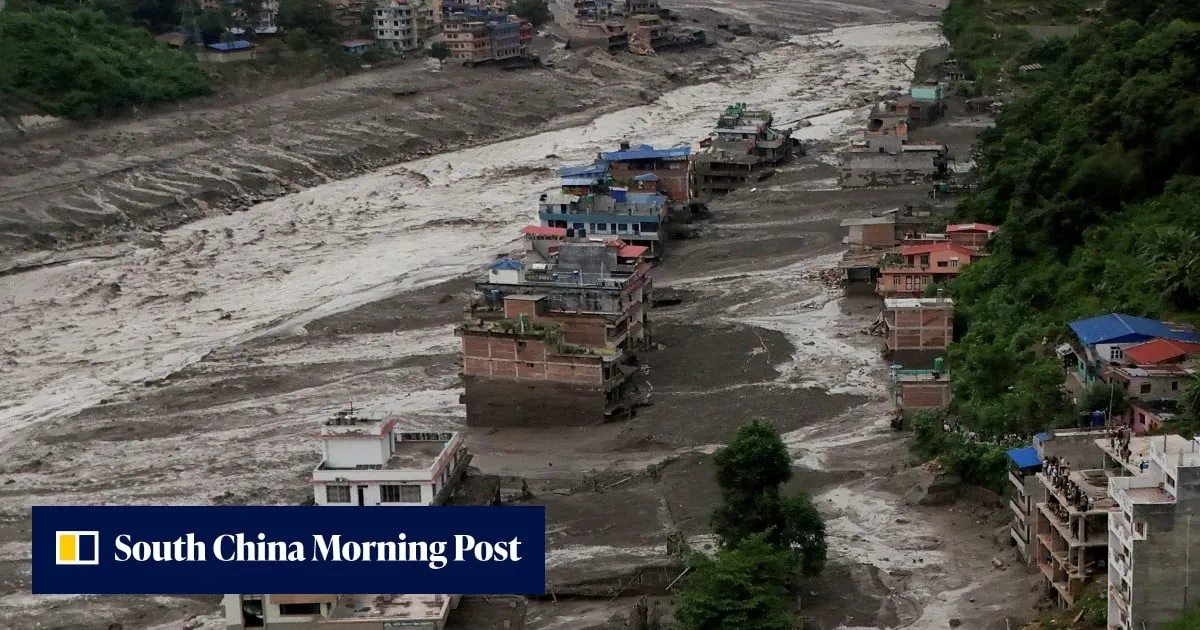
“Asia’s water tower” is heading towards a more unpredictable and unstable future, according to a new study measuring the Tibetan Plateau’s stability.The study, published on August 21 in Nature Communications, examined the entropy of the region to gauge how much chaos or disorder was building up in a complex system.The results were released just days before a catastrophic flash flood struck the Nepal-China border, killing hundreds and leaving a trail of devastation along the way.Chen Xiaosong, a physicist at the school of systems science at Beijing Normal University and lead author of the study, said on Thursday that from now to the end of this century, “the increase of soil water and the intensification of glacier melting [in the Tibetan Plateau] will constantly trigger such geological disasters”.Countries along the Himalayas could also face greater risks. “India will definitely be affected, but the specific impacts still require further analysis and research,” he added.Chen’s team examined the plateau’s soil moisture system from 2000 to 2024, which is closely linked to the water and climate patterns affecting nearly two billion people across South and East Asia.
SRCSouth China Morning Post
LANGEN
LEANCenter-Right
WORDS183
ENT12
FRI · 2026-08-28 · 14:00 GMTBRIEF NSR-2026-0828-106920
NSR-2026-0828-106920News Report·EN·Environmental
The ‘Asian water tower’ is starting to wobble, computer simulations show
A new study published in Nature Communications on August 21 reveals that the Tibetan Plateau, referred to as "Asia's water tower," is becoming more unstable. Researchers measured the region's entropy to assess the buildup of disorder in this complex system.
Chao KongSouth China Morning PostFiled 2026-08-28 · 14:00 GMTLean · Center-RightRead · 1 min
South China Morning PostFIG 01
Reading time
1min
Word count
183words
Sources cited
1cited
Entities identified
12entities
Quality score
100%
§ 01
Briefing Summary
AI-generatedNEWSAR · AI
A new study published in Nature Communications on August 21 reveals that the Tibetan Plateau, referred to as "Asia's water tower," is becoming more unstable. Researchers measured the region's entropy to assess the buildup of disorder in this complex system. The study, which examined soil moisture from 2000 to 2024, found that increased soil water and intensified glacier melting are expected to trigger more geological disasters. Lead author Chen Xiaosong stated that this instability could affect countries along the Himalayas, including India, with specific impacts requiring further research. These findings were released shortly before a devastating flash flood occurred on the Nepal-China border.
Confidence 0.90Sources 1Claims 5Entities 12
§ 02
Article analysis
Model · rule-basedFraming
Environmental
Human Interest
Tone
Mixed Tone
AI-assessed
CalmNeutralAlarmist
Factuality
0.70 / 1.00
Factual
LowHigh
Sources cited
1
Limited
FewMany
§ 03
Key claims
5 extracted01
The study examined the plateau’s soil moisture system from 2000 to 2024.
factualarticle
Confidence
1.00
02
Asia's water tower (Tibetan Plateau) is heading towards a more unpredictable and unstable future.
factualnew study
Confidence
0.80
03
Countries along the Himalayas could face greater risks from Tibetan Plateau instability.
predictionChen Xiaosong
Confidence
0.70
04
The increase of soil water and intensification of glacier melting will constantly trigger geological disasters.
predictionChen Xiaosong
Confidence
0.70
05
India will definitely be affected by the instability of the Tibetan Plateau.
predictionChen Xiaosong
Confidence
0.60
§ 04
Full report
1 min read · 183 words§ 05
Entities
12 identifiedKey playerOppositionContextPositiveNeutralNegative
Organizations2
Locations7
§ 06
Keywords & salience
8 termsasian water tower
1.00
tibetan plateau
1.00
glacier melting
0.90
geological disasters
0.80
soil water
0.70
climate patterns
0.60
entropy
0.50
flash flood
0.40
§ 07
Topic connections
Interactive graph No topic relationship data available yet. This graph will appear once topic relationships have been computed.