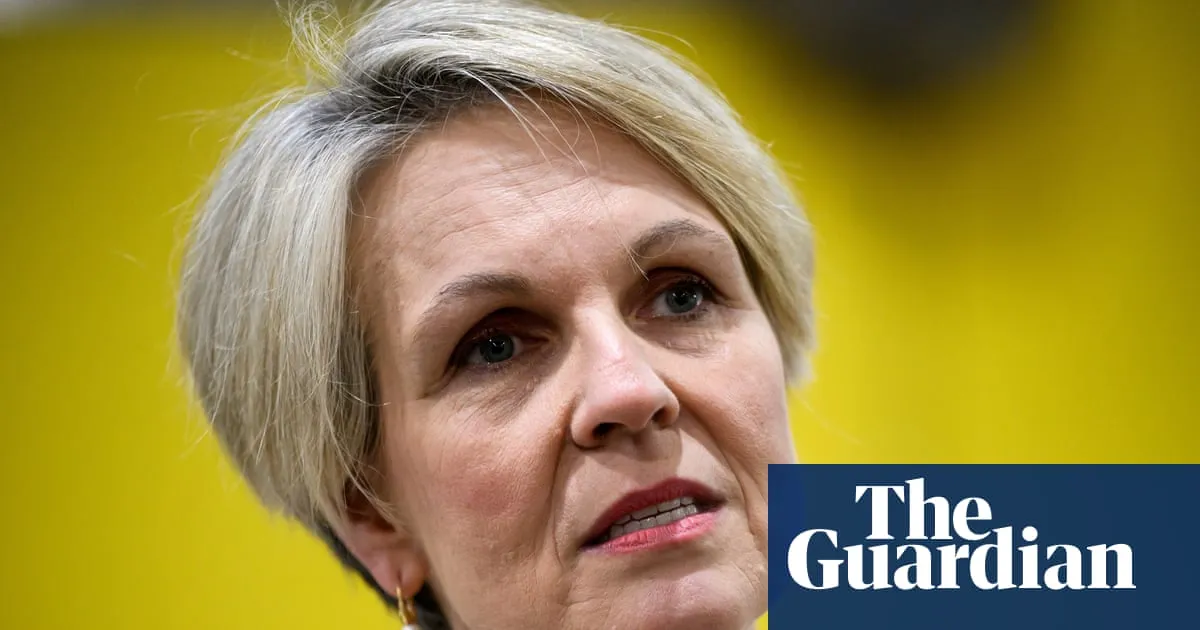
The social services minister, Tanya Plibersek, has told ABC’s Insiders that social media algorithms are deliberately feeding boys and men violent content. Photograph: Bianca de Marchi/AAP View image in fullscreen The social services minister, Tanya Plibersek, has told ABC’s Insiders that social media algorithms are deliberately feeding boys and men violent content. Photograph: Bianca de Marchi/AAP Australia could make social media algorithms optional and follow UK ban on pornography depicting strangulation Social services minister says social media was playing a role in the increase of sexual violence among teenagers Follow our Australia news live blog for latest updates Get our breaking news email, free app or daily news podcast The Australian government is considering allowing users to opt in or opt out of social media algorithms, and is looking at a recent UK ban on depictions of strangulation and suffocation in pornography. The social services minister, Tanya Plibersek, said social media was “playing a huge role” in the increase in sexual violence among teenagers and choking, and confirmed the options were being considered as the government develops its second action plan to end family and domestic violence against women and children. It follows the death of a 16-year-old girl in Sydney after a suspected sexual strangulation act. Guardian Australia reported on Thursday that a source informed about the case said the teenager was believed to have become unconscious as a result of asphyxiation during sexual intercourse, often referred to as “choking”. No arrests have been made. Plibersek told the ABC’s Insiders program on Sunday that social media algorithms are deliberately feeding boys and men violent content and normalising strangulation during sex. “If you set up a social media account as a young boy in Australia today, it takes an average of 23 minutes for you to be fed misogynistic, violent misogynistic content online. That is a deliberate decision of the social media companies that is wrecking our young boys, giving them all of the wrong ideas about what healthy relationships look like,” Plibersek said. “It is no coincidence that 60% of young people now report that they’ve experienced strangulation during a sexual encounter … It is pervasive and widespread and deadly, and it’s being fed to our young people and normalised.” Chanel Contos’s Teach Us Consent has campaigned for algorithms to be opt-in only on social media. Plibersek said the government was working with the group and considering how to potentially design an opt-in or opt-out system for algorithms. “We’re absolutely up for work on algorithms. Opting in to those recommender algorithms that are causing so much harm, opting in or opting out,” she said. “We’re also, of course, looking very closely at the recent Meta case in the US [and] the moves that the UK government have introduced to prevent the depiction of strangulation and suffocation in pornography. These are all really important considerations as we develop our next action plan on family domestic and sexual violence, so that work’s going on right now.” The government legislated a ban on social media for under-16s which took effect in December, and has also introduced age-verification for pornography. But Plibersek has previously conceded children were easily able to dodge the new rules. Labor will also soon begin consultation on a digital duty of care bill that will put the onus on tech companies, including AI companies, to make online spaces safer for all users. Plibersek said the digital duty of care legislation, as well as a second round of privacy reforms, could also help tackle camera-equipped smartglasses, which she said she had serious concerns about. “Tech companies should know that their products are safe and make them safe before they release them on to an unsuspecting public. I know the Attorney-General has asked the privacy commissioner to look specifically at these glasses,” Plibersek said. “We’ve got a second tranche of privacy legislation coming up soon as well … things like this that can be used to furtively film, including during sexual encounters, for that filming then to be made public or used against someone who is being filmed as a way of blackmailing them, I am very concerned about the potential uses of these glasses.” Explore more on these topics Australia news Labor party Tanya Plibersek Social media Social media ban Online abuse news Share Reuse this content
SRCThe Guardian - World News
LANGEN
LEANCenter-Left
WORDS717
ENT11
SUN · 2026-08-30 · 01:49 GMTBRIEF NSR-2026-0830-107290
NSR-2026-0830-107290News Report·EN·Public Health
Australia could make social media algorithms optional and follow UK ban on pornography depicting strangulation
The Australian government is considering making social media algorithms optional for users and is examining a UK ban on pornography depicting strangulation. Social Services Minister Tanya Plibersek stated that social media plays a significant role in the rise of sexual violence and choking among teenagers, and these measures are part of the government's plan to end domestic and family violence.
Krishani DhanjiThe Guardian - World NewsFiled 2026-08-30 · 01:49 GMTLean · Center-LeftRead · 3 min
The Guardian - World NewsFIG 01
Reading time
3min
Word count
717words
Sources cited
3cited
Entities identified
11entities
Quality score
100%
§ 01
Briefing Summary
AI-generatedNEWSAR · AI
The Australian government is considering making social media algorithms optional for users and is examining a UK ban on pornography depicting strangulation. Social Services Minister Tanya Plibersek stated that social media plays a significant role in the rise of sexual violence and choking among teenagers, and these measures are part of the government's plan to end domestic and family violence. Plibersek believes social media algorithms deliberately expose young boys and men to violent and misogynistic content, normalizing harmful behaviors. The government is also developing a digital duty of care bill to hold tech companies accountable for online safety and is concerned about the potential misuse of camera-equipped smartglasses.
Confidence 0.90Sources 3Claims 5Entities 11
§ 02
Article analysis
Model · rule-basedFraming
Public Health
Social Justice
Tone
Mixed Tone
AI-assessed
CalmNeutralAlarmist
Factuality
0.70 / 1.00
Factual
LowHigh
Sources cited
3
Well sourced
FewMany
§ 03
Key claims
5 extracted01
The Australian government is looking at a recent UK ban on depictions of strangulation and suffocation in pornography.
factualAustralian government
Confidence
0.90
02
Social media algorithms are deliberately feeding boys and men violent content and normalizing strangulation during sex.
quoteTanya Plibersek
Confidence
0.90
03
Australian government is considering allowing users to opt in or out of social media algorithms.
factualAustralian government
Confidence
0.90
04
60% of young people now report that they’ve experienced strangulation during a sexual encounter.
statisticTanya Plibersek
Confidence
0.80
05
It takes an average of 23 minutes for a young boy to be fed misogynistic, violent misogynistic content online after setting up a social media account.
statisticTanya Plibersek
Confidence
0.80
§ 04
Full report
3 min read · 717 words§ 05
Entities
11 identifiedKey playerOppositionContextPositiveNeutralNegative
Organizations2
§ 06
Keywords & salience
10 termssocial media algorithms
1.00
sexual violence
0.90
domestic violence
0.80
online content
0.70
teenagers
0.60
misogynistic content
0.50
pornography ban
0.50
australia
0.40
uk
0.40
tanya plibersek
0.40
§ 07
Topic connections
Interactive graph Network visualization showing 51 related topics
View Full Graph Person Organization Location Event|Click node to navigate|Edge numbers = shared articles