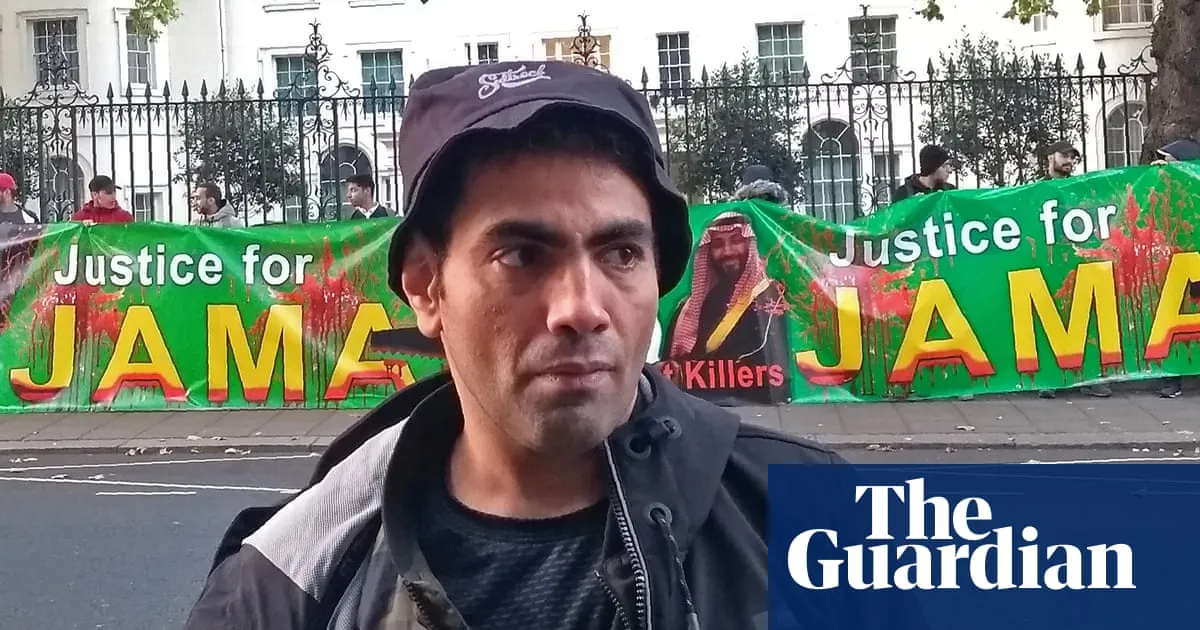
A judge has ordered Saudi Arabia to pay more than £3m in damages to a London-based dissident whose phones were targeted with Pegasus spyware.In a judgment handed down on Monday, Judge Pushpinder Saini ruled that Ghanem al-Masarir was entitled to compensation for psychiatric harm sustained after discovering that his iPhones had been hacked, as well as a physical attack on him outside Harrods in central London.Saini said there was “a compelling basis for concluding that the claimant’s iPhones were hacked by Pegasus spyware, which resulted in the exfiltration of data from those mobile phones, and that this conduct was directed or authorised by the KSA [kingdom of Saudi Arabia] or agents acting on its behalf”.The judge also found, on the balance of probabilities, that Saudi Arabia was responsible for the 2018 physical attack on al-Masarir, a 45-year-old satirist also known as Ghanem al-Dosari, whose YouTube channels have garnered more than 300m views.“The KSA had a clear interest in and motivation to shut down the claimant’s public criticism of the Saudi government,” Saini said.Al-Masarir said the ruling “brings a long and painful chapter to a close. It affirms that standing up for the truth, no matter how powerful the opponent, is worth the struggle. No amount of money can undo what I have suffered, but I hope the Kingdom of Saudi Arabia will now do the right thing and comply with this judgment, without the need for further enforcement action.”Saudi Arabia had sought to have the case dismissed on grounds of state immunity but that argument was rejected by the high court in 2022. After losing an appeal, the kingdom took no further part in the proceedings.The ruling marks a rare legal setback for Saudi Arabia. A US lawsuit accusing the crown prince Mohammed bin Salman of conspiring to kill the journalist Jamal Khashoggi was dismissed on the basis that he was entitled to sovereign immunity, despite the judge finding “credible allegations” that he was involved in the murder.Saini described Saudi Arabia’s actions towards al-Masarir, who has lived in England since 2003, as “grossly intrusive” and unjustified.It was established that his mobile devices had been infected with Pegasus spyware, manufactured by the Israeli company NSO Group, after analysis by the Citizen Lab in 2018. He began legal action the following year.The judge said there had been “exceptionally grave invasions of his privacy. It effectively converted these smartphones into ‘bugging’ devices which secretly transmitted huge amounts of his data and information on every aspect of his life to a hostile state.”The court heard that seven years after being targeted, al-Masarir continues to experience severe depression, is unable to work or perform many basic day-to-day activities and rarely leaves his home.Sapna Malik, a partner at Leigh Day law firm, which represented al-Masarir, said the judgment “vindicates our client for seeking to hold the KSA to account. The grossly intrusive conduct, by which huge amounts of our client’s data and information on every aspect of his life were secretly transmitted to it, has had a profound and long lasting impact on him.”Ron Deibert, the founder and a director of the Citizen Lab, said: “For years, victims of targeted espionage and transnational repression have lacked an avenue for justice. Thankfully, the United Kingdom’s courts have provided just such an avenue. We applaud the judgment wholeheartedly. “Ghanem’s experiences mirror those experienced by citizens the world over – being targeted by autocratic governments armed with sophisticated mercenary spyware tools whose aim is to hack, track and ultimately silence their voices.”
SRCThe Guardian - World News
LANGEN
LEANCenter-Left
WORDS583
ENT8
MON · 2026-01-26 · 14:48 GMTBRIEF NSR-2026-0126-10730
NSR-2026-0126-10730News Report·EN·Legal & Judicial
Saudi Arabia ordered to pay £3m to London dissident over Pegasus spying
A London judge ordered Saudi Arabia to pay over £3 million in damages to Ghanem al-Masarir, a London-based Saudi dissident, after ruling the kingdom was responsible for hacking his iPhones with Pegasus spyware and for a 2018 physical attack. Judge Pushpinder Saini determined the hacking led to psychiatric harm and that Saudi Arabia sought to silence al-Masarir's criticism of the Saudi government.
Haroon Siddique and Stephanie KirchgaessnerThe Guardian - World NewsFiled 2026-01-26 · 14:48 GMTLean · Center-LeftRead · 3 min
The Guardian - World NewsFIG 01
Reading time
3min
Word count
583words
Sources cited
4cited
Entities identified
8entities
Quality score
100%
§ 01
Briefing Summary
AI-generatedNEWSAR · AI
A London judge ordered Saudi Arabia to pay over £3 million in damages to Ghanem al-Masarir, a London-based Saudi dissident, after ruling the kingdom was responsible for hacking his iPhones with Pegasus spyware and for a 2018 physical attack. Judge Pushpinder Saini determined the hacking led to psychiatric harm and that Saudi Arabia sought to silence al-Masarir's criticism of the Saudi government. Al-Masarir, who has lived in England since 2003, filed the lawsuit in 2019 after Citizen Lab analysis confirmed the spyware infection in 2018. Saudi Arabia's claim of state immunity was previously rejected, and they ceased participation in the proceedings after losing an appeal. The judge described Saudi Arabia’s actions as "grossly intrusive" and unjustified.
Confidence 0.90Sources 4Claims 5Entities 8
§ 02
Article analysis
Model · rule-basedFraming
Legal & Judicial
Human Rights
Tone
Measured
AI-assessed
CalmNeutralAlarmist
Factuality
0.80 / 1.00
Factual
LowHigh
Sources cited
4
Well sourced
FewMany
§ 03
Key claims
5 extracted01
Al-Masarir's mobile devices were infected with Pegasus spyware, manufactured by NSO Group.
factualCitizen Lab
Confidence
1.00
02
Judge Saini ruled Ghanem al-Masarir entitled to compensation for psychiatric harm after his iPhones were hacked with Pegasus.
factualJudge Pushpinder Saini
Confidence
1.00
03
Saudi Arabia ordered to pay £3m to London dissident Ghanem al-Masarir over Pegasus spying.
factual
Confidence
1.00
04
The ruling marks a rare legal setback for Saudi Arabia.
factual
Confidence
0.90
05
Saudi Arabia was responsible for the 2018 physical attack on al-Masarir.
factualJudge Pushpinder Saini
Confidence
0.80
§ 04
Full report
3 min read · 583 words§ 05
Entities
8 identifiedKey playerOppositionContextPositiveNeutralNegative
Organizations4
§ 06
Keywords & salience
6 termspegasus spyware
0.90
saudi arabia
0.80
state immunity
0.70
psychiatric harm
0.60
cyber attack
0.50
nso group
0.50
§ 07
Topic connections
Interactive graph Network visualization showing 51 related topics
View Full Graph Person Organization Location Event|Click node to navigate|Edge numbers = shared articles