New York lawmakers are now trying to better protect residents from the deadly legionnaires’ disease by increasing regulations and inspections of cooling towers after two outbreaks of the infection over the last two summers and a raft of new lawsuits.Legionnaires’ disease is a serious pneumonia caused by a bacterium called legionella. It often comes from large air-conditioning systems, like those used in hotels, hospitals and high-rise buildings, because the cooling towers contain water to remove heat. If not well maintained, the liquid can foster the bacteria, which can then be swept into fans and circulated through the air.“The thing about a cooling tower is that it’s not just the people in your building that are affected,” said Amy Pruden, a professor of civil and environmental engineering at Virginia Tech University. “You can just be walking by this hotel or hospital or apartment building and happen to linger having a conversation or something and then you get exposed.”Scientists argue that deaths from legionnaires’ are preventable if people dedicate enough time and money to conduct routine maintenance of cooling towers and if government officials conduct regular inspections and penalize negligent building owners.The upkeep to stop legionnaires’ could become especially important as global temperatures rise due to the climate crisis, causing greater reliance on air conditioning, experts say.“We can all do better in preventing legionnaires’ disease,” said Dr William Schaffner, an infectious diseases expert at the Vanderbilt University School of Medicine. “We have the tools in hand. They have to be done rigorously all the time. Will it be perfect? No. Can you substantially reduce the risk of outbreaks and even individual disease illnesses? Yes.”In August 2025 in New York’s Harlem neighborhood, seven people died and more than 100 became ill during a legionnaires’ outbreak. This summer, the Upper East Side saw 94 cases of legionnaires’ disease, at least 79 hospitalizations and 11 deaths, according to the city’s health department and an update on social media Friday from its health commissioner, Dr Alister Martin.The city’s health department staff collected samples from more than 180 cooling towers and found that 59 tested positive for the bacterium, according to the city. Sites included the Guggenheim Museum, apartment buildings, a Whole Foods market and a private school.Toronto and central Ohio also recently experienced legionnaires’ outbreaks.Victims of the 2025 Harlem outbreak and their family members recently filed four lawsuits against the city, NYC Health + hospitals and contractors responsible for maintaining the cooling towers.“We love New York City,” attorney Jared Scotto said at a press conference alongside plaintiffs; his co-counsel, the civil rights attorney Ben Crump; and the Rev Al Sharpton. “We love being close to our neighbors, but that presents an inherent risk that companies and building owners need to take into account, and they didn’t do that here.”To prevent legionnaires, workers must regularly clean and disinfect cooling towers, test the water for the bacteria, and if it produces a positive result, report it to the local health department, Pruden said.In New York City, the health department’s testing for legionella in water in cooling towers decreased dramatically before the 2025 outbreak, according to the Gothamist.During the first six months of 2017, the first year of inspections, the agency inspected 3,190 towers; during the same period in 2025, the city inspected 1,167 towers.A health department spokesperson told the Gothamist that the decrease happened because of a staffing shortage.In May, the city announced it would allocate an additional $13m in fiscal year 2027 for cooling tower inspections – which includes funding to hire 23 water ecologists – and require building owners to test for the bacterium every 31 days in which the cooling towers are operating, the strictest requirement in the country, according to the city.After the latest outbreak, New York’s governor, Kathy Hochul, approved legislation that requires biannual cooling tower certifications and increased penalties from $10,000 to $12,500 for any violations that result in a serious illness or death. Virginia Maloney, a city council member, also introduced legislation to require building owners to clean their cooling towers at least three times annually, rather than just two.“With any regulation, there is a carrot and a stick,” Pruden said. “The carrot is we hope that building owners and operators understand that they are saving lives by maintaining these systems as they should be. The stick is there are penalties if they don’t.“I don’t know if that [additional penalty] is high enough,” Pruden added.Dedicating additional funding to inspections could also be difficult for a city that is projected to face an $8.8bn budget gap in fiscal year 2028, according to the city comptroller.The effort to increase vigilance against legionella comes as global temperatures are increasing and people turn on air conditioning more, which could lead to increased risk of the disease.As people use the machines more, they become less efficient, and as temperatures rise outside, the harder they must work to reject heat, said Jeffrey Siegel, a professor of civil and mineral engineering at University of Toronto.The bacterium thrives in warm water.“The more heat it’s trying to reject, the warmer that water gets and the greater likelihood you have of legionella,” Siegel said.Despite the budget constraints, Siegel sees legionella prevention measures as a wise public investment.“It’s easy to say: ‘Well, that’s a lot of money,’” Siegel said. “But if it stops outbreaks, I’m all for it.”
SRCThe Guardian - World News
LANGEN
LEANCenter-Left
WORDS886
ENT12
SUN · 2026-08-30 · 12:00 GMTBRIEF NSR-2026-0830-107392
NSR-2026-0830-107392News Report·EN·Public Health
New York City to increase cooling tower inspections after legionnaires’ outbreaks
New York City is increasing regulations and inspections of cooling towers following two Legionnaires' disease outbreaks over the past two summers, which caused multiple deaths and illnesses. Legionnaires' disease, a severe pneumonia, is caused by bacteria that can grow in poorly maintained cooling towers found in large buildings.
Eric Berger in New YorkThe Guardian - World NewsFiled 2026-08-30 · 12:00 GMTLean · Center-LeftRead · 4 min
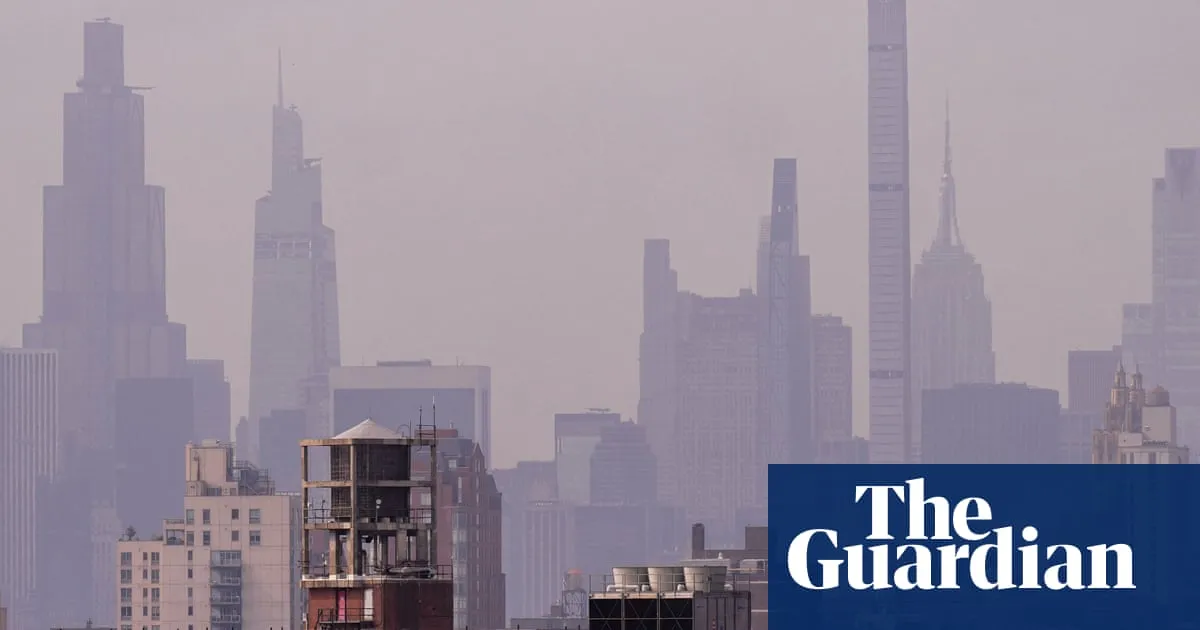
The Guardian - World NewsFIG 01
Reading time
4min
Word count
886words
Sources cited
4cited
Entities identified
12entities
Quality score
100%
§ 01
Briefing Summary
AI-generatedNEWSAR · AI
New York City is increasing regulations and inspections of cooling towers following two Legionnaires' disease outbreaks over the past two summers, which caused multiple deaths and illnesses. Legionnaires' disease, a severe pneumonia, is caused by bacteria that can grow in poorly maintained cooling towers found in large buildings. State and city lawmakers are pushing for these changes, with new legislation requiring biannual cooling tower certifications and increased penalties for violations. The city is also allocating additional funding for inspections and hiring new staff. Building owners will now be required to test cooling towers for the bacteria more frequently. These measures aim to prevent future outbreaks, which experts note are preventable with routine maintenance and inspections.
Confidence 0.90Sources 4Claims 5Entities 12
§ 02
Article analysis
Model · rule-basedFraming
Public Health
Legal & Judicial
Tone
Measured
AI-assessed
CalmNeutralAlarmist
Factuality
0.80 / 1.00
Factual
LowHigh
Sources cited
4
Well sourced
FewMany
§ 03
Key claims
5 extracted01
This summer, the Upper East Side experienced 94 cases, 79 hospitalizations, and 11 deaths from Legionnaires' disease.
statisticcity's health department
Confidence
1.00
02
In August 2025, seven people died and over 100 became ill from a Legionnaires' outbreak in Harlem.
statisticcity's health department
Confidence
1.00
03
Legionnaires' disease is a serious pneumonia caused by legionella bacteria, often originating from poorly maintained cooling towers.
factual
Confidence
1.00
04
New York City is increasing cooling tower inspections and regulations following Legionnaires' disease outbreaks.
factual
Confidence
1.00
05
Deaths from Legionnaires' are preventable with routine cooling tower maintenance and regular government inspections.
factualScientists
Confidence
0.90
§ 04
Full report
4 min read · 886 words§ 05
Entities
12 identifiedKey playerOppositionContextPositiveNeutralNegative
Organizations3
Locations5
§ 06
Keywords & salience
10 termscooling towers
1.00
legionnaires' disease
1.00
inspections
0.90
regulations
0.80
outbreaks
0.80
bacteria
0.70
maintenance
0.60
climate crisis
0.50
new york city
0.50
public health
0.40
§ 07
Topic connections
Interactive graph Network visualization showing 5 related topics
View Full Graph Person Organization Location Event|Click node to navigate|Edge numbers = shared articles