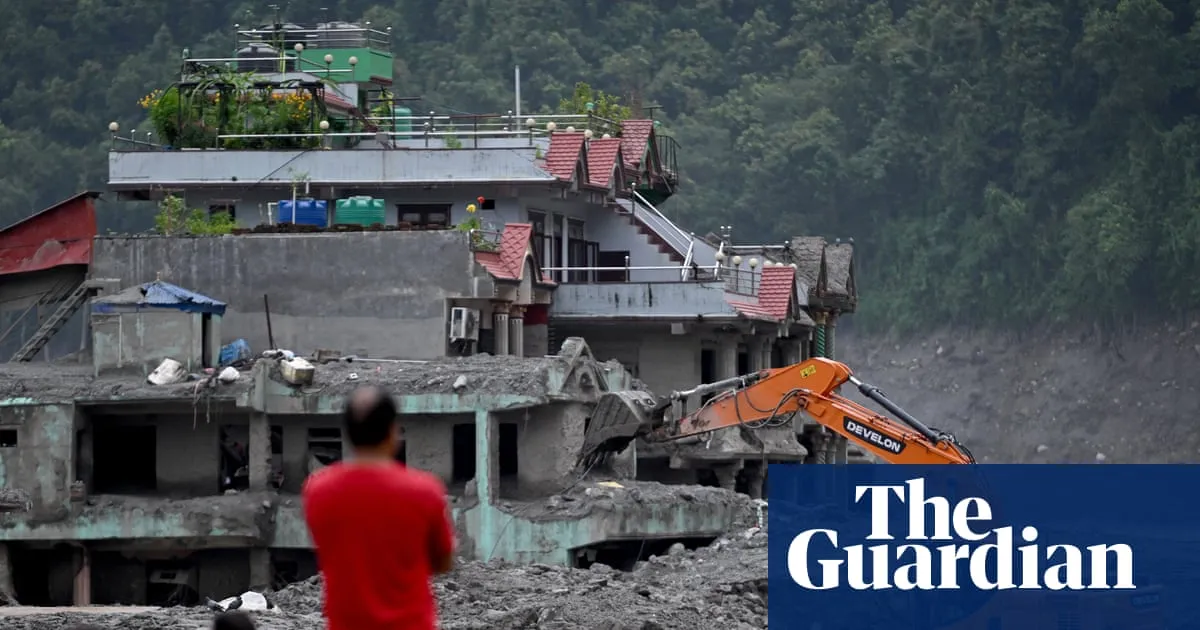
Rescue work continues in the aftermath of catastrophic flooding in Nepal and Tibet. News sites have been hit by racist comments about missing Australians. Photograph: Arun Sankar/AFP/Getty Images View image in fullscreen Rescue work continues in the aftermath of catastrophic flooding in Nepal and Tibet. News sites have been hit by racist comments about missing Australians. Photograph: Arun Sankar/AFP/Getty Images Australians missing in Nepal targeted by ‘heartbreaking’ and ‘abhorrent’ racist slurs As families await news after the catastrophe, community members appeal for compassion in the face of hateful rhetoric Follow our Australia news live blog for latest updates Get our breaking news email, free app or daily news podcast A slew of racist social media comments have been made towards Australians missing in the catastrophic Nepal-Tibet floods, prompting calls for greater accountability of major platforms to remove hateful rhetoric. On Monday, the total number of Australians missing after flash floods triggered by a massive glacier collapse in the Himalayas rose to 43, and the overall death toll was at least 810 people. Most of the missing Australians were on pilgrimages, including to Mount Kailash in Tibet, which is a sacred site for Hindus, Buddhists, Jains and followers of the Bon faith. Fourteen are Sydney-based members of the Australia Bharatha Brahmin Samaj community. As families and friends face an agonising wait to learn the fate of their loved ones, mainstream media outlets including News Corp, Channel 7, Channel 10 and Nine have been hit with highly offensive and discriminatory comments on Facebook articles identifying the missing Australians in Nepal. Some outlets, including Australia" class="entity-link entity-organization" data-entity-id="329" data-entity-type="organization">Guardian Australia, have limited who can comment on posts about the missing tourists after receiving strings of racist replies on social media. One Daily Telegraph article received dozens of comments on Facebook from people claiming that missing citizens who were not white weren’t Australian, which were later deleted. One said: “Hoping we have new vacancies in Australia that Aussies can fill.” The outlet’s editor, Ben English, said the comments on the post were “abhorrent” and “have no place on our platforms”. “We are responsible for the comment threads on our pages and we take that responsibility seriously … But no automated filter reliably catches racism expressed in coded language,” he said. Rescue efforts continue as 43 Australians remain missing in Nepal – video “Where we cannot actively moderate a thread on a sensitive story, we will close it – and we have moved to do that here.” The comments have also proliferated on X. One post by conservative commentator Kobie Thatcher, who wrote “Aussie family” in quotation marks alongside an image of an identified missing couple, was viewed 3.2m times. Associate Prof at QUT’s Digital Media Research Centre, Tim Graham, said hateful rhetoric had been increasing on social media platforms for the past decade. “The design architecture of these websites, the algorithms that they use to curate content and put it into feeds, rewards this kind of stuff,” he said. “It brings out the worst in people, but it also plays into the political economy of these platforms where rage bait, extreme content or borderline content … attracts so much attention.” He said platforms had the technical infrastructure and the resources to push back against harmful content, including generative AI models that could detect “nuanced content at scale”, but weren’t using it for moderation. “I really don’t understand why that can’t be applied in special circumstances to a really terrible humanitarian catastrophe like this,” he said. “It’s a bit mind-boggling.” The race discrimination commissioner, Giridharan Sivaraman, said he wasn’t surprised by the comments, which he connected to Australia’s current debate on migrants. “They’re saying, you don’t deserve to … be seen as Australian. And that’s amplified by the rhetoric of far-right populist parties,” he said. “We should be very concerned because it’s indicative of a real rise in white supremacy ideology … Words have consequences … It’s heartbreaking.” Sivaraman said racism was “profitable” for social media companies, and the notion they were attempting to stop hate speech on their platforms was “fanciful”. “This is just more evidence as to why we need a digital duty of care for all social media platforms that operate in Australia,” he said. Hindu Council of Australia vice-president Surinder Jain said it was “saddening” to see people making use of a tragedy to “express their displeasure with the government”. “I … ask them to show some dignity to those who have perished and the families of those who are mourning their loss: give them a fair go,” he told Australia" class="entity-link entity-organization" data-entity-id="329" data-entity-type="organization">Guardian Australia. Australia’s Indian diaspora, which includes Hindus, has been the target of racist comments from far-right movements including March for Australia as immigration has emerged as a hot-button issue. Nepalese Australian Welfare Society president, Chiran Tiwari, said Australians needed to look past nationalities and have humanity. “It is very hurtful and the families who are impacted feel really, really bad,” he told Australia" class="entity-link entity-organization" data-entity-id="329" data-entity-type="organization">Guardian Australia. “All of us are human.” Explore more on these topics Nepal-Tibet flood disaster Social media Australian media Digital media news Share Reuse this content
SRCThe Guardian - World News
LANGEN
LEANCenter-Left
WORDS844
ENT12
MON · 2026-08-31 · 06:32 GMTBRIEF NSR-2026-0831-107596
NSR-2026-0831-107596News Report·EN·Social Justice
Australians missing in Nepal targeted by ‘heartbreaking’ and ‘abhorrent’ racist slurs
Australians missing in Nepal following catastrophic floods triggered by a glacier collapse have become the target of racist social media comments. As of Monday, 43 Australians were missing, and the overall death toll in Nepal and Tibet was at least 810.
Caitlin Cassidy and Kat WongThe Guardian - World NewsFiled 2026-08-31 · 06:32 GMTLean · Center-LeftRead · 4 min
The Guardian - World NewsFIG 01
Reading time
4min
Word count
844words
Sources cited
2cited
Entities identified
12entities
Quality score
100%
§ 01
Briefing Summary
AI-generatedNEWSAR · AI
Australians missing in Nepal following catastrophic floods triggered by a glacier collapse have become the target of racist social media comments. As of Monday, 43 Australians were missing, and the overall death toll in Nepal and Tibet was at least 810. Mainstream media outlets reporting on the missing individuals have faced highly offensive and discriminatory comments on Facebook, with some outlets limiting comments or deleting racist replies. Experts and community members have condemned the hateful rhetoric, linking it to an increase in white supremacy ideology and calling for greater platform accountability. The race discrimination commissioner highlighted the issue as indicative of a rise in such ideologies, while the Hindu Council of Australia urged compassion for those affected by the tragedy.
Confidence 0.90Sources 2Claims 5Entities 12
§ 02
Article analysis
Model · rule-basedFraming
Social Justice
Human Interest
Tone
Mixed Tone
AI-assessed
CalmNeutralAlarmist
Factuality
0.70 / 1.00
Factual
LowHigh
Sources cited
2
Limited
FewMany
§ 03
Key claims
5 extracted01
Hateful rhetoric has been increasing on social media platforms for the past decade.
quoteTim Graham
Confidence
1.00
02
The Daily Telegraph's editor, Ben English, described the comments as 'abhorrent' and stated they have no place on their platforms.
quoteBen English
Confidence
1.00
03
Mainstream media outlets have received highly offensive and discriminatory comments on Facebook articles about missing Australians.
factual
Confidence
1.00
04
The number of Australians missing after flash floods in Nepal rose to 43.
statistic
Confidence
1.00
05
Australians missing in Nepal have been targeted by racist social media comments.
factual
Confidence
1.00
§ 04
Full report
4 min read · 844 words§ 05
Entities
12 identifiedKey playerOppositionContextPositiveNeutralNegative
People1
Organizations6
§ 06
Keywords & salience
10 termsracist slurs
1.00
nepal floods
0.90
missing australians
0.90
hateful rhetoric
0.80
social media comments
0.70
compassion
0.60
glacier collapse
0.50
accountability
0.50
mount kailash
0.40
discriminatory comments
0.40
§ 07
Topic connections
Interactive graph Network visualization showing 51 related topics
View Full Graph Person Organization Location Event|Click node to navigate|Edge numbers = shared articles