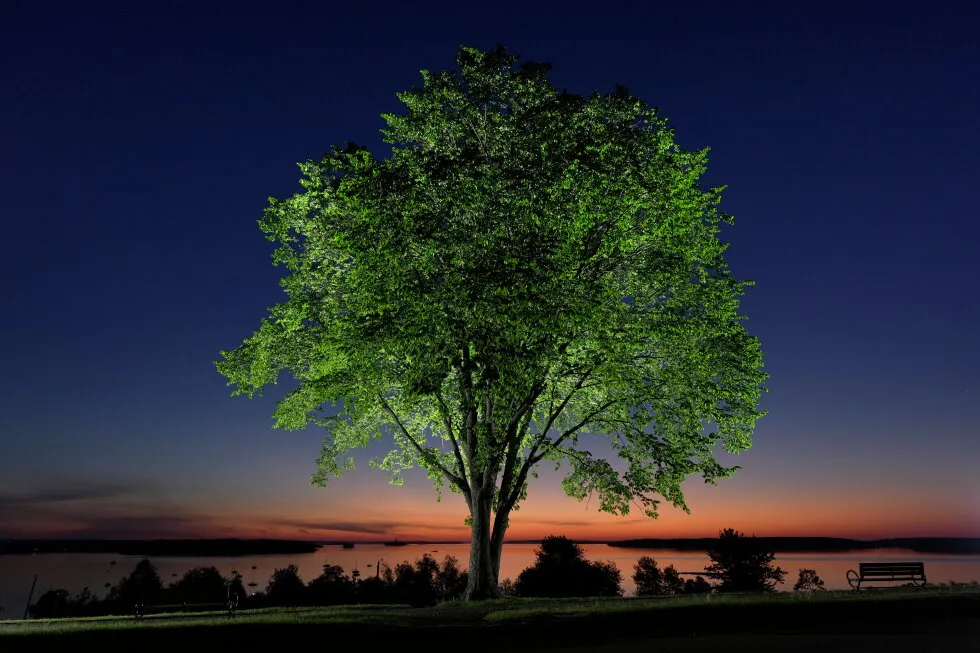
A new generation of elm trees could be equipped to beat the disease that killed the parents 1 of 6 | Scientists in Vermont are leading an effort to beat Dutch elm disease and restore the iconic elm, while in North Carolina, the Appalachian Trail Conservancy is protecting ash trees against an invasive beetle. (AP video by: Amanda Swinhart and Erik Verduzco) 2 of 6 | An American elm tree stands on the Eastern Promenade overlooking Casco Bay at dawn in Portland, Maine., June 4, 2026. (AP Photo/Robert F. Bukaty) 3 of 6 | Alex Stephenson, conservation information manager at Vermont" class="entity-link entity-organization" data-entity-id="197188" data-entity-type="organization">The Nature Conservancy Vermont, injects a young elm tree with Dutch elm disease spores on May 19, 2026, in Benson, Vt. (AP Photo/Amanda Swinhart) 4 of 6 | Emily Powell, with the Appalachian Trail Conservancy, inoculates an ash tree with triennial booster shots, June 12, 2026, in Hot Springs, N.C. (AP Photo/Erik Verduzco) 5 of 6 | An American elm tree spreads its limbs in Portland, Maine, June 3, 2026. (AP Photo/Robert F. Bukaty) 6 of 6 | Leaves of an American elm, which can be identified by their serrated edges, is seen in Castine, Maine, June 9, 2026. (AP Photo/Robert F. Bukaty) 1 of 6 Scientists in Vermont are leading an effort to beat Dutch elm disease and restore the iconic elm, while in North Carolina, the Appalachian Trail Conservancy is protecting ash trees against an invasive beetle. (AP video by: Amanda Swinhart and Erik Verduzco) Add AP News on Google Add AP News as your preferred source to see more of our stories on Google. Share 2 of 6 | An American elm tree stands on the Eastern Promenade overlooking Casco Bay at dawn in Portland, Maine., June 4, 2026. (AP Photo/Robert F. Bukaty) 2 of 6 An American elm tree stands on the Eastern Promenade overlooking Casco Bay at dawn in Portland, Maine., June 4, 2026. (AP Photo/Robert F. Bukaty) Add AP News on Google Add AP News as your preferred source to see more of our stories on Google. Share 3 of 6 | Alex Stephenson, conservation information manager at Vermont" class="entity-link entity-organization" data-entity-id="197188" data-entity-type="organization">The Nature Conservancy Vermont, injects a young elm tree with Dutch elm disease spores on May 19, 2026, in Benson, Vt. (AP Photo/Amanda Swinhart) 3 of 6 Alex Stephenson, conservation information manager at Vermont" class="entity-link entity-organization" data-entity-id="197188" data-entity-type="organization">The Nature Conservancy Vermont, injects a young elm tree with Dutch elm disease spores on May 19, 2026, in Benson, Vt. (AP Photo/Amanda Swinhart) Add AP News on Google Add AP News as your preferred source to see more of our stories on Google. Share 4 of 6 | Emily Powell, with the Appalachian Trail Conservancy, inoculates an ash tree with triennial booster shots, June 12, 2026, in Hot Springs, N.C. (AP Photo/Erik Verduzco) 4 of 6 Emily Powell, with the Appalachian Trail Conservancy, inoculates an ash tree with triennial booster shots, June 12, 2026, in Hot Springs, N.C. (AP Photo/Erik Verduzco) Add AP News on Google Add AP News as your preferred source to see more of our stories on Google. Share 5 of 6 | An American elm tree spreads its limbs in Portland, Maine, June 3, 2026. (AP Photo/Robert F. Bukaty) 5 of 6 An American elm tree spreads its limbs in Portland, Maine, June 3, 2026. (AP Photo/Robert F. Bukaty) Add AP News on Google Add AP News as your preferred source to see more of our stories on Google. Share 6 of 6 | Leaves of an American elm, which can be identified by their serrated edges, is seen in Castine, Maine, June 9, 2026. (AP Photo/Robert F. Bukaty) 6 of 6 Leaves of an American elm, which can be identified by their serrated edges, is seen in Castine, Maine, June 9, 2026. (AP Photo/Robert F. Bukaty) Add AP News on Google Add AP News as your preferred source to see more of our stories on Google. Share Updated [hour]:[minute] [AMPM] [timezone], [monthFull] [day], [year] MONTPELIER, Vt. (AP) — The very disease that has decimated millions of American elms in the U.S. is now being used to bring the iconic trees back.In Vermont, Leila Wilson, a research ecologist with the U.S. Forest Service, is one of the scientists leading an effort to beat Dutch elm disease, which has killed tens of millions of elm trees over the last century. Scientists with the Forest Service and Vermont" class="entity-link entity-organization" data-entity-id="197188" data-entity-type="organization">The Nature Conservancy Vermont spent the summer injecting 6,000 young elm trees with Dutch elm disease spores to test their resistance to the disease.The survivors will be sent to a breeding program with a goal of growing the genetic diversity of disease-tolerant elm trees. They will one day be used for restoration in forests, riverbanks and backyards.“We will put those newly propagated trees into a seed orchard, basically just a big fenced area, will grow and love those trees for about 15 or so years, at which point they should produce seeds, and that seed can be used for restoration,” Wilson said.The young elms were bred from a group of a few dozen trees in the Northeast that have survived Dutch elm disease, which is a fungus that arrived in the U.S. a little less than a century ago. The fungus, spread by bark beetles, stops trees from being able to drink water, which makes them starve. The disease is a key reason towering elm trees of more than 70 feet (21 meters) are less common in New England today than they were generations ago.The drive to save elm trees is part of a broader fight in the U.S. to try to beat back forest pests and diseases, which threaten longstanding industries such as logging and damage some of the nation’s most fragile ecosystems. Saving elm trees is critical to fighting climate changeOne of the reasons protecting American elm trees is so important is because they have a huge impact on the hydrology of their surrounding ecosystems, said Kathleen Knight, a research ecologist with the Forest Service based in Ohio. That is especially important in the era of climate change, when unpredictable weather and periods of flooding and drought can impact forests. 4 MIN READ 1 MIN READ The trees are especially important in wet forest areas, Knight said. They tolerate flooding, they can live through the cold winters of the north, and they have the ability to act like a sponge after rainfall and help prevent flooding that can be catastrophic to river systems, she said. “And these invasive pests and pathogens have been having a huge impact on these tree species. And we’re just trying to get those species back to the role they previously played in these systems,” Knight said.The elm is also culturally important to the Northeast, said Gus Goodwin, a senior conservation planner for The Nature Conservancy. Though elm trees live in many parts of the U.S., they are a “ubiquitous part of the landscape” in New England towns, and the loss of the trees over the years has been devastating in those communities, he said.“And what’s missing is the big trees,” Goodwin said. “A lot of people remember losing the elm. From their childhood home, their school yard. There’s this kind of gravitational pull toward the elm and its loss.” A different kind of injection is being used to save another beloved treeAsh trees are another species that has succumbed to a devastating infestation — emerald ash borer, a beetle that has killed millions of the trees since arriving in the U.S. in the early 2000s.But the Appalachian Trail Conservancy is fighting back by injecting some ash trees with an insecticide to give them a chance at survival. The group said it has treated about 1,400 ash trees along the trail in North Carolina, Tennessee, Georgia and Massachusetts since 2016. “Being able to see where there are ash trees that are still standing and they are healthy, and they are a major component of the forest, supporting the biodiversity that’s here, is really awesome,” said Emily Powell, southern non-native invasive species coordinator for the conservancy.The ash campaign differs from the push to save elm trees because the elm drive is a breeding program rather than an inoculation effort.In Montpelier, Vermont, a city that has experienced significant flooding through the years, arborist Joseph Ferris stands next to a giant elm tree that has stood in the state’s capital since the late 1800s.“It’s a really lovely reminder of what’s possible for urban trees,” he said.As someone who spends his professional life focused on the challenges forests are facing, Ferris is excited about the prospect of a new generation of Dutch elm resistant trees.“It’s a ray of hope that is hard to feel when we’re walking through a forest and seeing all these infestations and damage,” he said. “I would love to see American elm resistant, available not for just our urban plantings but restoring plantings along our streets and along our riverbanks, and just boosting the regional genetic resistance.”Whittle reported from Portland, Maine. Swinhart is a video journalist for The Associated Press based in Vermont. Whittle is an Associated Press reporter based in Portland, Maine. He focuses on the environment and oceans.
SRCAssociated Press (AP)
LANGEN
LEANCenter
WORDS1 523
ENT12
MON · 2026-08-31 · 11:23 GMTBRIEF NSR-2026-0831-107678
NSR-2026-0831-107678News Report·EN·Environmental
A new generation of elm trees could be equipped to beat the disease that killed the parents
Scientists in Vermont are employing a novel approach to combat Dutch elm disease, the fungus that has killed millions of American elms. Researchers from the U.S.
By
AMANDA SWINHART and PATRICK WHITTLEAssociated Press (AP)Filed 2026-08-31 · 11:23 GMTLean · CenterRead · 7 min
Associated Press (AP)FIG 01
Reading time
7min
Word count
1 523words
Sources cited
2cited
Entities identified
12entities
Quality score
100%
§ 01
Briefing Summary
AI-generatedNEWSAR · AI
Scientists in Vermont are employing a novel approach to combat Dutch elm disease, the fungus that has killed millions of American elms. Researchers from the U.S. Forest Service and The Nature Conservancy are injecting young elm trees with disease spores to identify and breed for natural resistance. Survivors will be part of a breeding program to develop a genetically diverse population of disease-tolerant elms for future restoration efforts in forests, riverbanks, and urban areas. This initiative aims to re-establish the iconic elm trees, which play a crucial role in ecosystems, particularly in managing hydrology and preventing flooding, especially in the context of climate change. The effort is part of a broader U.S. strategy to protect tree species from pests and diseases threatening forests and related industries.
Confidence 0.90Sources 2Claims 4Entities 12
§ 02
Article analysis
Model · rule-basedFraming
Environmental
Human Interest
Tone
Measured
AI-assessed
CalmNeutralAlarmist
Factuality
0.80 / 1.00
Factual
LowHigh
Sources cited
2
Limited
FewMany
§ 03
Key claims
4 extracted01
Emily Powell, with the Appalachian Trail Conservancy, inoculates ash trees with triennial booster shots.
factualEmily Powell
Confidence
1.00
02
Alex Stephenson, conservation information manager at The Nature Conservancy Vermont, is involved in injecting young elm trees with Dutch elm disease spores.
factualAlex Stephenson
Confidence
1.00
03
The Appalachian Trail Conservancy is protecting ash trees against an invasive beetle in North Carolina.
factual
Confidence
1.00
04
Scientists in Vermont are leading an effort to beat Dutch elm disease and restore the iconic elm tree.
factual
Confidence
1.00
§ 04
Full report
7 min read · 1 523 words§ 05
Entities
12 identifiedKey playerOppositionContextPositiveNeutralNegative
Organizations2
Locations6
§ 06
Keywords & salience
8 termsdutch elm disease
1.00
elm trees
0.90
tree restoration
0.80
ash trees
0.70
invasive beetle
0.60
conservation
0.50
appalachian trail conservancy
0.40
the nature conservancy vermont
0.40
§ 07
Topic connections
Interactive graph No topic relationship data available yet. This graph will appear once topic relationships have been computed.