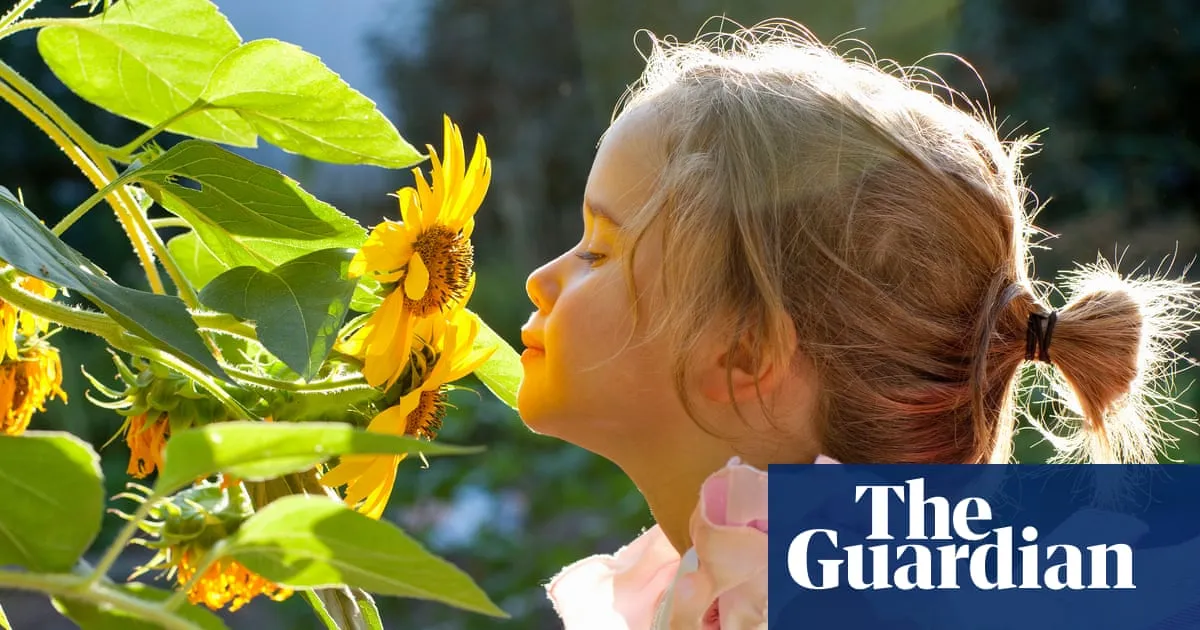
Children need a better education in sniffing aromas, a leading historian of smells has said, noting it may improve their wellbeing and help them understand the world around them.Dr Will Tullett, of the University of York, said pollution had been found to impair people’s olfactory abilities, while many objects and substances today – from margarines to car interiors and even our own homes – were stripped of their original smells and “reodourised” with synthetic scents.“There is an open question about what the proliferation of those kinds of synthetic scents in our daily lives does to our ability to discriminate between different smells,” he said.As a result, Tullett said, there was a need for olfactory education. “I would love a world where at primary and secondary school people are taught to engage their noses,” he said, adding that training could also be done at home.He said one approach would be to encourage people to smell more items. “The more we smell, the more we enlarge the vocabulary through which we can describe other things,” he said, noting that sommeliers took a similar approach.“They’ll go to marketplaces and they’ll walk around and they’ll smell everything. And then what they’re doing is expanding their range of reference points. And then I think it’s being able to compare and contrast and think about what are the similarities between different smells.”Tullett said thinking about smells could also help us to understand ourselves, such as why we find some odours comforting, and could provide useful information about the world.“A classic example here is food safety and food sustainability – smelling as to whether something is fresh or not and whether you need to bin it, rather than relying solely on a use by date, for example,” he said.And there could be other benefits. “Lots of studies have shown that smells and our ability to enjoy them are crucially linked to our sense of wellbeing and that those who suffer from forms of smell loss, often the result of that is depression and anxiety and various other kinds of symptoms.”But while people may benefit from a greater olfactory education, Tullett pushed back against the idea that people’s sense of smell was underappreciated, noting that when asked, people often recounted vivid memories associated with particular aromas.“You get this sense from people that actually they want to tell you about the role that smell played in their lives, and that they do know that smell is important. It’s just that they’re not necessarily given the opportunity, or equipped with the language, or even given a sense of confidence that they can talk about it,” he said.Tullett, whose book Sniff: A History of Smells is to be published on 8 September, said a common misconception was that the past was a smellier place.“The past didn’t stink any more or less than the present. It just smelled different,” he said. “And I think that’s important. Because it gets the heart of one of the key problems with how we all approach smell, which is smell is so often used to mark difference.”Tullett said smells were still used to discriminate, from landlords refusing to let properties to people of particular ethnicities because of a belief about food aromas, to a proposed bill in the Commons that could have criminalised rough sleepers for “excessive” smells.Tullett said it was important to question why we considered a smell pleasant or not, how those associations may have arisen, and what others may make of it.“We should be both more self-aware of our attitudes to odours, but also more empathetic towards other people’s olfactory preferences,” he said. “Rather [than] instinctively using smell to build divides, a thoughtful sniff can help us get to know ourselves and others better.”He said smells were often particular to certain times, contexts and places, and he suggested 21st-century Britain would be associated with the aromas of hand sanitiser, wildfires and water pollution.“A wood fire is a nostalgic smell for many people,” he said. “But the smell of burning vegetation and wood will increasingly become not a nostalgic smell, I think, but a fearful smell.”
SRCThe Guardian - World News
LANGEN
LEANCenter-Left
WORDS682
ENT12
MON · 2026-08-31 · 13:00 GMTBRIEF NSR-2026-0831-107701
NSR-2026-0831-107701News Report·EN·Human Interest
Smelling test: children need education in sniffing aromas, scientist says
Dr. Will Tullett, a historian of smells at the University of York, argues that children need better education in understanding aromas to improve their wellbeing and perception of the world.
Nicola Davis Science correspondentThe Guardian - World NewsFiled 2026-08-31 · 13:00 GMTLean · Center-LeftRead · 3 min
The Guardian - World NewsFIG 01
Reading time
3min
Word count
682words
Sources cited
1cited
Entities identified
12entities
Quality score
100%
§ 01
Briefing Summary
AI-generatedNEWSAR · AI
Dr. Will Tullett, a historian of smells at the University of York, argues that children need better education in understanding aromas to improve their wellbeing and perception of the world. He notes that pollution can impair olfactory abilities, and the widespread use of synthetic scents in modern products may hinder our ability to discriminate between smells. Tullett suggests that olfactory education, similar to sommelier training, could involve encouraging people to smell more items to expand their descriptive vocabulary and reference points. He believes this could also help us understand ourselves and gain useful information about the world, such as food safety. Furthermore, Tullett highlights the link between enjoying smells and wellbeing, noting that smell loss can lead to depression and anxiety. He also points out that smells are often used to mark difference and discriminate, advocating for greater self-awareness and empathy regarding olfactory preferences.
Confidence 0.90Sources 1Claims 5Entities 12
§ 02
Article analysis
Model · rule-basedFraming
Human Interest
Public Health
Tone
Measured
AI-assessed
CalmNeutralAlarmist
Factuality
0.70 / 1.00
Factual
LowHigh
Sources cited
1
Limited
FewMany
§ 03
Key claims
5 extracted01
Smelling can help with food safety and sustainability by indicating freshness, complementing use-by dates.
factualDr Will Tullett
Confidence
0.90
02
Children need better education in sniffing aromas to improve wellbeing and understanding of the world.
quoteDr Will Tullett
Confidence
0.90
03
Smell loss is linked to depression and anxiety, while enjoying smells is crucial for wellbeing.
factualDr Will Tullett
Confidence
0.85
04
Olfactory education can expand vocabulary for describing smells, similar to sommeliers expanding their reference points.
quoteDr Will Tullett
Confidence
0.85
05
Pollution impairs olfactory abilities, and synthetic scents in daily life may affect our ability to discriminate between smells.
factualDr Will Tullett
Confidence
0.80
§ 04
Full report
3 min read · 682 words§ 05
Entities
12 identifiedKey playerOppositionContextPositiveNeutralNegative
Organizations1
§ 06
Keywords & salience
8 termsolfactory education
1.00
sense of smell
0.90
aromas
0.80
synthetic scents
0.70
wellbeing
0.60
pollution
0.50
food safety
0.40
memory
0.40
§ 07
Topic connections
Interactive graph No topic relationship data available yet. This graph will appear once topic relationships have been computed.