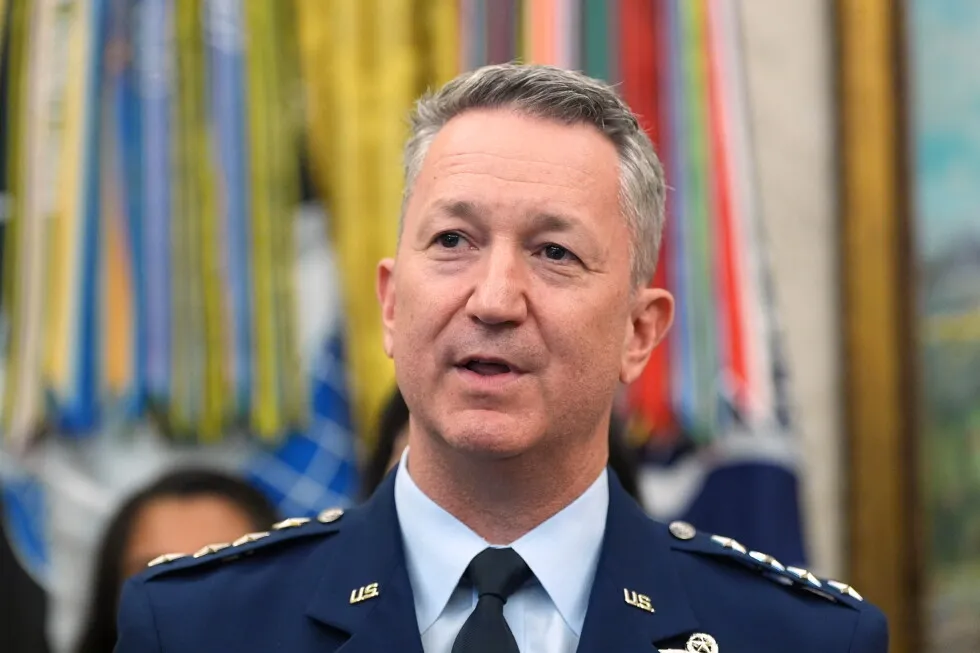
US military has no plans to send troops to the polls in November, top general says 1 of 2 | Gen. Dan Caine, chairman of the Joint Chiefs of Staff, speaks during a meeting about military families with President Donald Trump, in the Oval Office of the White House, Monday, Aug. 3, 2026, in Washington. (AP Photo/Alex Brandon) 2 of 2 | Sen. Elissa Slotkin, D-Mich., speaks during a hearing at the Capitol in Washington, Jan. 14, 2025. (AP Photo/Ben Curtis, File) By BEN FINLEY Updated 7:19 PM MESZ, August 31, 2026 Add AP News on Google Add AP News as your preferred source to see more of our stories on Google. Share Share Facebook Copy Link copied Print Email X LinkedIn Bluesky Flipboard Pinterest Reddit Washington (AP) — The highest-ranking officer in the U.S. military says there are no plans to send troops to polling places during November’s midterm congressional elections, addressing concerns among Democrats that the Trump administration could use the military to interfere with the vote. Gen. Dan Caine, chairman of the Joint Chiefs of Staff, made the statement in a letter to Michigan Democratic Sen. Elissa Slotkin, who recently asked Caine and Defense Secretary Pete Hegseth to confirm they won’t send troops to the polls. “The Joint Force has no plans to send Federal military personnel or Federalized members of the National Guard to polling places during the 2026 elections,” Caine said in the letter to Slotkin, which was obtained Monday by The Associated Press. “Likewise, the Joint Force has no plans to use such personnel to seize ballots, voting machines, or other election-related material.” Caine, who advises Hegseth and President Donald Trump on military matters, also wrote: “I have neither received nor anticipate receiving any unlawful order concerning the role of the Joint Force in the upcoming November 2026 midterm elections.” Anxiety among Democrats that the Trump administration could try to meddle in the midterm elections has grown, particularly after the president deployed federal agents in Democratic-led states over the objections of local leaders. Senator presses Hegseth, Caine for commitment to keep US military out of the midterm elections 4 MIN READ 1066 US aircraft carrier arrives in Middle East, relieving long-deployed USS Lincoln 2 MIN READ 149 After killing hundreds in boat strikes, US military expands campaign on land in Latin America 2 MIN READ 149 Slotkin told the AP earlier in August that Trump has been laying the groundwork to claim the elections were stolen. She noted that Trump contemplated using the military to seize voting machines after his loss in 2020 and has deployed the National Guard to cities against the wishes of Democratic leaders. He also deployed active duty Marines to Los Angeles during his immigration crackdown in 2025. Federal law prohibits the deployment of armed federal forces to election locations unless “necessary to repel armed enemies of the United States.” If any element of the military were to get involved, it would likely be the National Guard under state control. This site is protected by reCAPTCHA and the Google and Terms of Service apply. White House chief of staff Susie Wiles denied in a Vanity Fair interview last year that Trump would use the military to suppress voting in the midterms. Sonja Thrasher, Slotkin’s press secretary, said Hegseth has not replied to the letter asking him to confirm troops won’t be deployed to the polls in November. Slotkin had asked for a response by last Thursday. The Pentagon did not immediately respond to an email from the AP asking for the status of Hegseth’s response to Slotkin. The Pentagon previously said it would respond directly to the senator. Slotkin asked Hegseth during an April congressional hearing if he would follow orders to seize ballots. Hegseth called the question a “gotcha hypothetical,” but said, “I’ve never been ordered to do anything illegal, and I won’t.” In 2020, Gen. Mark Milley, then-chairman of the Joint Chiefs of Staff, responded to a similar letter from Slotkin, then a congresswoman. “I believe deeply in the principle of an apolitical U.S. military,” Milley wrote. “In the event of a dispute over some aspect of the elections, by law U.S. courts and the U.S. Congress are required to resolve any disputes, not the U.S. military.”
SRCAssociated Press (AP)
LANGEN
LEANCenter
WORDS709
ENT10
MON · 2026-08-31 · 17:23 GMTBRIEF NSR-2026-0831-107783
NSR-2026-0831-107783News Report·EN·Political Strategy
US military has no plans to send troops to the polls in November, top general says
Gen. Dan Caine, chairman of the Joint Chiefs of Staff, has stated that the U.S.
Associated Press (AP)Filed 2026-08-31 · 17:23 GMTLean · CenterRead · 3 min
Associated Press (AP)FIG 01
Reading time
3min
Word count
709words
Sources cited
3cited
Entities identified
10entities
Quality score
100%
§ 01
Briefing Summary
AI-generatedNEWSAR · AI
Gen. Dan Caine, chairman of the Joint Chiefs of Staff, has stated that the U.S. military has no plans to deploy troops to polling places or to seize election materials during the upcoming November midterm elections. This assurance was provided in a letter to Michigan Democratic Sen. Elissa Slotkin, who had sought confirmation to address concerns about potential interference by the Trump administration. Caine also affirmed that he has not received and does not anticipate receiving any unlawful orders regarding the military's role in the elections. Slotkin had previously expressed anxiety about the administration's actions, citing past deployments of federal agents and National Guard units. Defense Secretary Pete Hegseth has not yet responded to Slotkin's request for a similar commitment.
Confidence 0.90Sources 3Claims 5Entities 10
§ 02
Article analysis
Model · rule-basedFraming
Political Strategy
Legal & Judicial
Tone
Measured
AI-assessed
CalmNeutralAlarmist
Factuality
0.80 / 1.00
Factual
LowHigh
Sources cited
3
Well sourced
FewMany
§ 03
Key claims
5 extracted01
Federal law prohibits the deployment of armed federal forces to election locations unless necessary to repel armed enemies of the United States.
factual
Confidence
1.00
02
Gen. Dan Caine has neither received nor anticipates receiving any unlawful order concerning the role of the Joint Force in the upcoming November 2026 midterm elections.
quoteGen. Dan Caine
Confidence
1.00
03
The Joint Force has no plans to use such personnel to seize ballots, voting machines, or other election-related material.
quoteGen. Dan Caine
Confidence
1.00
04
The Joint Force has no plans to send Federal military personnel or Federalized members of the National Guard to polling places during the 2026 elections.
quoteGen. Dan Caine
Confidence
1.00
05
Anxiety among Democrats that the Trump administration could try to meddle in the midterm elections has grown.
factual
Confidence
0.90
§ 04
Full report
3 min read · 709 words§ 05
Entities
10 identifiedKey playerOppositionContextPositiveNeutralNegative
People4
§ 06
Keywords & salience
10 termsus military
1.00
midterm elections
1.00
polling places
0.90
election interference
0.80
gen. dan caine
0.70
president donald trump
0.70
joint chiefs of staff
0.60
sen. elissa slotkin
0.60
national guard
0.50
election integrity
0.40
§ 07
Topic connections
Interactive graph Network visualization showing 11 related topics
View Full Graph Person Organization Location Event|Click node to navigate|Edge numbers = shared articles