Nepal’s paramilitary force personnel carry the body of a flash flood victim for burial at a mass burial site in Chitwan, Nepal, Monday, Aug. 31, 2026. (AP Photo/Dar Yasin) Updated [hour]:[minute] [AMPM] [timezone], [monthFull] [day], [year] NEW YORK (AP) — For those stranded by a flood, survival depends on many factors including access to oxygen, food and water.Catastrophic flooding along the Nepal-China border has killed hundreds and left thousands more missing. On Monday, rescuers in Nepal raced to free hundreds of workers thought to be trapped in hydropower site tunnels that were buried in mud.Experts say the first 72 hours are critical as the chances of survival drop without access to clean water.One important aspect is whether the tunnels had emergency protocols in case of an outage or natural disaster, said disaster epidemiologist Jennifer Horney with the University of Delaware. If so, workers could have been trained on the location of exits. But the force of the flooding could mean mud may be caked over such exits, rendering rescue plans difficult, Horney said. For the hundreds trapped, access to clean drinking water is critical and it’s unclear whether any emergency supplies were already stocked in the tunnels. “There just really wouldn’t be a way to to go much further than the three days without safe, drinkable water,” Horney said.Access to breathable air is another key to survival. At least one expert said that some workers could have access to oxygen — but six days after the floods, suffocation worries grow. 4 MIN READ 2 MIN READ 4 MIN READ “These tunnels are big enough to drive trucks through,” said Jakob Steiner, a geoscientist at the University of Graz in Austria based in Dhaka, Bangladesh. “And from what we understand, they have managed to get oxygen to some of those stuck inside and are trying to rescue them now. It’s a race for time, though, as people need food and water.”Beyond that, the mental effects of such isolation can also take a toll. Other important considerations include “whether there are indications of serious injuries” and whether there’s a safe way to deliver water and essential supplies while rescue operations proceed, according to Thomas Chandler, director of Columbia University’s National Center for Disaster Preparedness. He cited a Himalayan tunnel collapse from 2023 caused by a landslide, where 41 Indian workers were rescued after being trapped for 17 days. They were provided food, water and oxygen through pipes. The climate inside the tunnels may also play a role. If it’s hot and humid, people could get dehydrated faster. Those who are rescued may be very weak, so supportive care is important for both physical and mental impacts, according to disaster experts. ___Associated Press journalists Shristi Kafle in Kathmandu and Huizhong Wu in Bangkok contributed to this report.___The Associated Press Health and Science Department receives support from the Howard Hughes Medical Institute’s Science and Educational Media Group and the Robert Wood Johnson Foundation. The AP is solely responsible for all content. Ramakrishnan is a science reporter for The Associated Press, based in New York. She covers research and new developments related to space, early human history and more.
SRCAssociated Press (AP)
LANGEN
LEANCenter
WORDS524
ENT12
MON · 2026-08-31 · 19:23 GMTBRIEF NSR-2026-0831-107822
NSR-2026-0831-107822News Report·EN·Human Interest
The odds of survival for those trapped after Nepal flood
Hundreds of workers are trapped in hydropower site tunnels buried by mud following catastrophic flooding along the Nepal-China border. Experts emphasize that survival hinges on access to oxygen, food, and clean water, with the first 72 hours being critical.
By
ADITHI RAMAKRISHNANAssociated Press (AP)Filed 2026-08-31 · 19:23 GMTLean · CenterRead · 3 min
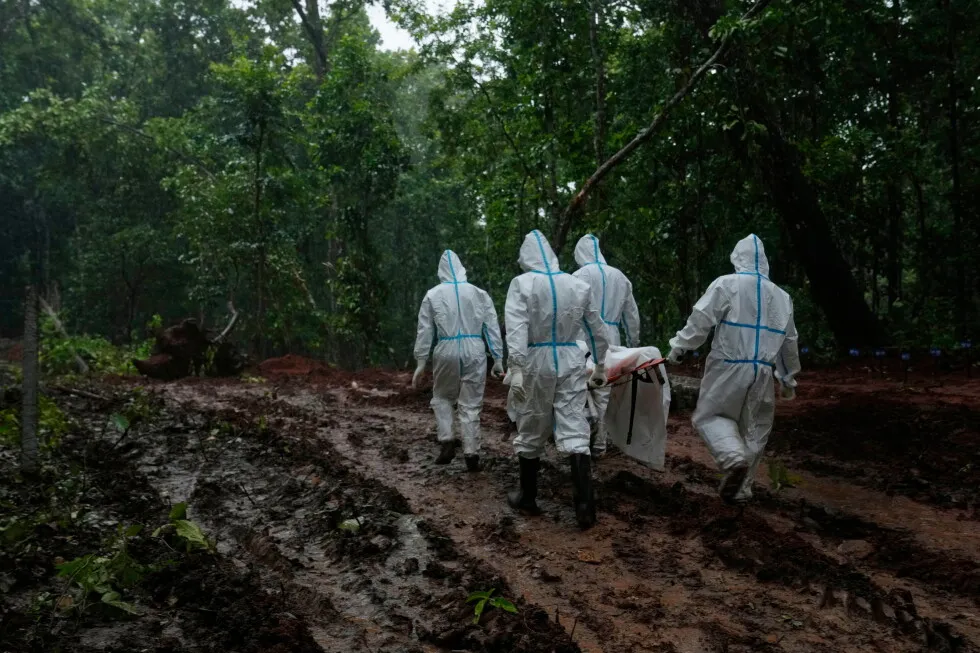
Associated Press (AP)FIG 01
Reading time
3min
Word count
524words
Sources cited
3cited
Entities identified
12entities
Quality score
100%
§ 01
Briefing Summary
AI-generatedNEWSAR · AI
Hundreds of workers are trapped in hydropower site tunnels buried by mud following catastrophic flooding along the Nepal-China border. Experts emphasize that survival hinges on access to oxygen, food, and clean water, with the first 72 hours being critical. The presence of emergency protocols and the ability to deliver supplies are key factors, as demonstrated by a past tunnel collapse where trapped workers were sustained for 17 days. Rescue efforts are ongoing, but concerns about suffocation are growing six days after the floods. The mental toll of isolation and the tunnel's climate also impact survival chances.
Confidence 0.90Sources 3Claims 5Entities 12
§ 02
Article analysis
Model · rule-basedFraming
Human Interest
Public Health
Tone
Measured
AI-assessed
CalmNeutralAlarmist
Factuality
0.70 / 1.00
Factual
LowHigh
Sources cited
3
Well sourced
FewMany
§ 03
Key claims
5 extracted01
A Himalayan tunnel collapse in 2023 trapped 41 Indian workers for 17 days, who were later rescued with supplies.
factualThomas Chandler
Confidence
0.95
02
The first 72 hours are critical for survival for those trapped, with chances dropping without access to clean water.
factualExperts
Confidence
0.95
03
Access to breathable air is critical for survival, and suffocation worries grow six days after the floods.
factual
Confidence
0.90
04
Catastrophic flooding along the Nepal-China border has killed hundreds and left thousands more missing.
factual
Confidence
0.90
05
If the tunnel climate is hot and humid, people could get dehydrated faster.
factualdisaster experts
Confidence
0.85
§ 04
Full report
3 min read · 524 words§ 05
Entities
12 identifiedKey playerOppositionContextPositiveNeutralNegative
People3
Organizations3
§ 06
Keywords & salience
10 termsflood survival
1.00
nepal flood
0.90
rescue operations
0.80
trapped workers
0.70
access to water
0.70
access to oxygen
0.60
disaster preparedness
0.50
hydropower site
0.50
critical 72 hours
0.40
mental effects
0.40
§ 07
Topic connections
Interactive graph Network visualization showing 51 related topics
View Full Graph Person Organization Location Event|Click node to navigate|Edge numbers = shared articles