As India prepares for the Brics summit less than two weeks away, relations with China are warming up. On July 22, Indian External Affairs Minister Subrahmanyam Jaishankar met his Chinese counterpart Wang Yi during the East Asia Summit; five days later, Foreign Secretary Vikram Misri visited China. Last week, Indian National Security Adviser Ajit Doval also visited Beijing, for border talks.But India remains deeply ambivalent when it comes to economic engagement with China: it seeks Chinese capital, technology and expertise while fearing the shocks they may bring. Justifying the latest economic engagement with China, Jaishankar said India’s long-term objective was to compete with China in manufacturing.After six years of sweeping curbs on Chinese investment, bilateral trade rose to US$151.1 billion in the financial year ended March 31. China remains India’s largest import source and has, after four years, displaced the United States as its top trading partner. India’s approach to engaging with China has evolved: from welcoming participation to containment after 2020 and, more recently, a calibrated reopening.During Indian Prime Minister Narendra Modi’s first term and the early years of his second, India maintained a broadly open stance. Launched in 2014, the “Make in India” campaign sought to slash bureaucratic hurdles and attract foreign investment. During Chinese President Xi Jinping’s visit that September, both sides signed a five-year economic cooperation plan. Modi’s 2015 China visit yielded a further US$22 billion in commercial deals.economic engagement remained robust even after the 2017 Doklam stand-off. Both sides maintained senior economic dialogue, pursued the “China India Plus One” approach to projects in third countries and planned connectivity projects. Chinese investment in Indian start-ups grew twelvefold between 2016 and 2019, backing at least 18 of India’s 30 unicorns. In 2019, China proposed a manufacturing partnership. By early 2020, the stock of Chinese investment in India was estimated to exceed US$26 billion.But that was also the year the turning point came. In April, India introduced a requirement of prior government approval for foreign direct investment (FDI) from countries it shared a land border with, ostensibly to block “opportunistic takeovers”. After the deadly Galwan Valley border clash, restrictions against Chinese businesses expanded. India banned Chinese apps on national security grounds, tightened public procurement rules for bidders and required security clearance for directors from border countries. Visa delays, regulatory raids and other pressures suffocated Chinese business.
SRCSouth China Morning Post
LANGEN
LEANCenter-Right
WORDS388
ENT12
MON · 2026-08-31 · 21:30 GMTBRIEF NSR-2026-0831-107843
NSR-2026-0831-107843Analysis·EN·Diplomatic
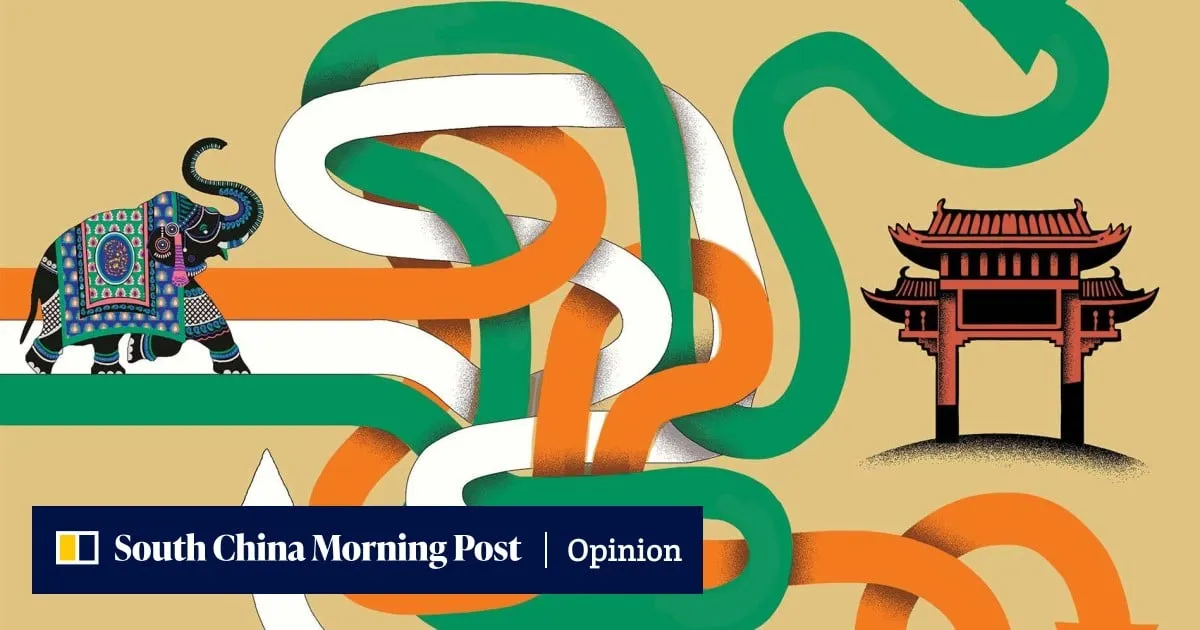
India needs to make up its mind about economic ties with China
India's economic relationship with China is characterized by ambivalence, seeking Chinese capital and technology while fearing potential disruptions. Despite recent high-level diplomatic meetings and border talks ahead of the BRICS summit, India's approach has shifted.
Keji Mao,Yaxin MaoSouth China Morning PostFiled 2026-08-31 · 21:30 GMTLean · Center-RightRead · 2 min
South China Morning PostFIG 01
Reading time
2min
Word count
388words
Sources cited
0cited
Entities identified
12entities
Quality score
100%
§ 01
Briefing Summary
AI-generatedNEWSAR · AI
India's economic relationship with China is characterized by ambivalence, seeking Chinese capital and technology while fearing potential disruptions. Despite recent high-level diplomatic meetings and border talks ahead of the BRICS summit, India's approach has shifted. After a period of openness and significant trade growth, India implemented curbs on Chinese investment and banned Chinese apps following border clashes in 2020, citing national security. Bilateral trade has since rebounded, with China becoming India's largest import source and top trading partner. India's stated long-term objective is to compete with China in manufacturing, indicating a calibrated reopening of economic engagement.
Confidence 0.90Claims 5Entities 12
§ 02
Article analysis
Model · rule-basedFraming
Diplomatic
Economic Impact
Tone
Measured
AI-assessed
CalmNeutralAlarmist
Factuality
0.70 / 1.00
Factual
LowHigh
Sources cited
0
No named sources
FewMany
§ 03
Key claims
5 extracted01
Chinese investment in Indian start-ups grew twelvefold between 2016 and 2019.
statistic
Confidence
1.00
02
India introduced a requirement of prior government approval for FDI from countries it shared a land border with in April 2020.
factual
Confidence
1.00
03
China has displaced the United States as India's top trading partner after four years.
factual
Confidence
1.00
04
Bilateral trade between India and China rose to US$151.1 billion in the financial year ended March 31.
statistic
Confidence
1.00
05
By early 2020, the stock of Chinese investment in India was estimated to exceed US$26 billion.
statistic
Confidence
0.90
§ 04
Full report
2 min read · 388 words§ 05
Entities
12 identifiedKey playerOppositionContextPositiveNeutralNegative
People6
Organizations1
§ 06
Keywords & salience
10 termseconomic ties
1.00
china india relations
0.90
brics summit
0.80
bilateral trade
0.70
chinese investment
0.70
manufacturing
0.60
national security
0.50
foreign direct investment
0.50
make in india
0.40
galwan valley
0.40
§ 07
Topic connections
Interactive graph Network visualization showing 51 related topics
View Full Graph Person Organization Location Event|Click node to navigate|Edge numbers = shared articles