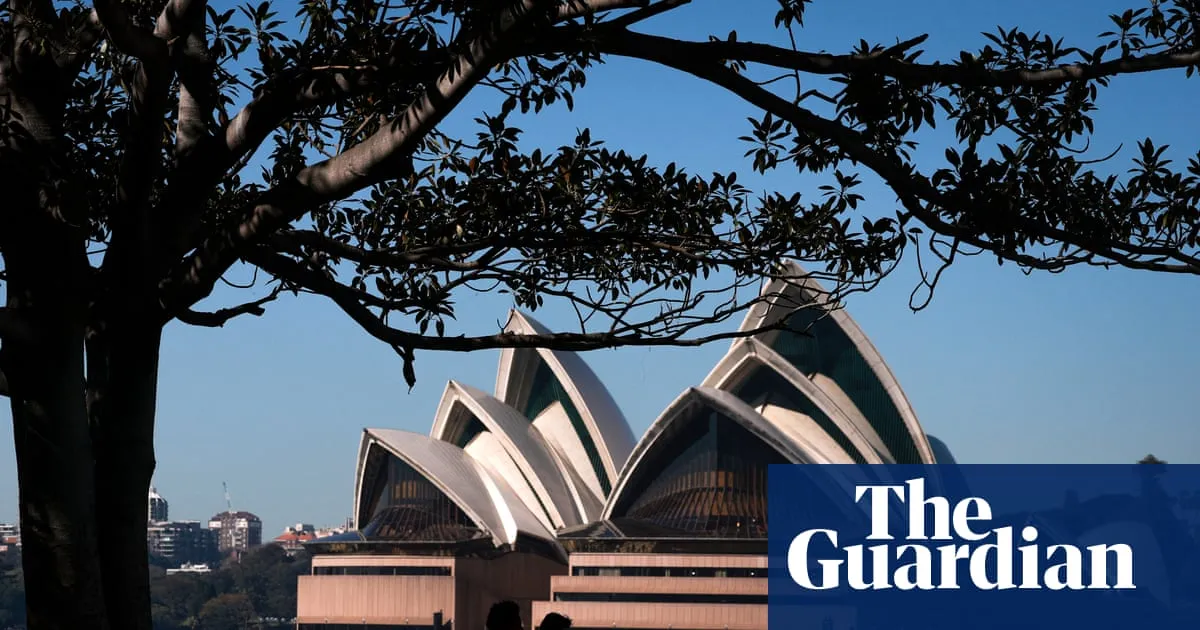
Sydney had its warmest winter on record, with the mean temperature of 15.3C at Observatory Hill breaking the previous record of 15.0C set in 2013, the the Bureau of Meteorology said. Photograph: David Gray/AFP/Getty Images View image in fullscreen Sydney had its warmest winter on record, with the mean temperature of 15.3C at Observatory Hill breaking the previous record of 15.0C set in 2013, the the Bureau of Meteorology said. Photograph: David Gray/AFP/Getty Images Sydney records warmest winter on record as Melbourne equals previous hottest temperatures New South Wales, Victoria and Tasmania just experienced their warmest-ever winters – and BoM says above-average temperatures expected to continue Get our breaking news email, free app or daily news podcast Australia’s two biggest cities had their hottest and equal hottest winters on record, with three eastern states also breaking temperature records. The Bureau of Meteorology’s (BoM) spring outlook shows above average daytime and night-time temperatures are expected to continue for much of the country, with an increased chance of unusually high maximums. Dr Simon Grainger, a senior climatologist at the bureau, said Sydney had its warmest winter on record, with the mean temperature of 15.3C at Observatory Hill breaking the previous record of 15.0C set in 2013. Average maximum and minimum temperatures at the same site were also the warmest on record. Melbourne equalled its 2005 record for winter mean temperature of 12.2C, while Canberra recorded its warmest winter maximum, with an average maximum temperature of 14.7C. New South Wales, Victoria and Tasmania had their warmest winters on record, and all other states and territories except the Northern Territory were in their top 10 warmest winters on record since 1910. How the most recent winter compares with previous years. Australia’s mean temperature was 1.45C above the 1961–1990 average for winter, the equal third-highest on record since national observations began in 1910. Grainger said much of the south-east’s experience was driven by “relatively warm nights and a lot fewer cold nights”, with several factors at play. “The local weather patterns certainly assisted. For large parts of this winter we had high pressure systems sitting in the Tasman Sea,” he said. “That allowed a lot of warmer air to come down from the tropics over eastern Australia – places like Sydney, Canberra, Melbourne – with fewer outbreaks of cold air getting in.” Grainger said the developing strong El Niño had also set up weather patterns that tended to be favourable for high daytime temperatures across southeastern Australia. “Finally of course, all of this is occurring against the background of a globally warmer climate,” he said. “Daily [global] land temperatures and daily ocean temperatures during August have been close to or above the historical records that were set only in 2024.” Graphic showing the difference between the mean temperature of the period specified and the long-term average. Australia’s national annual average temperature is about 1.5C higher than in 1910, according to the BoM, and the climate crisis, driven by the burning of fossil fuels, has increased the frequency and severity of extreme weather events. The record-breaking winter data was released as federal resources minister Madeleine King and Northern Territory chief minister Lia Finocchiaro celebrated turning on the tap that will feed the first fracked gas from the Beetaloo Basin into the territory’s power grid. It follows a horror northern hemisphere summer of record-breaking heatwaves, drought and wildfires in Europe and North America, and intense rain and typhoons in Asia. The national average rainfall for winter was 8% above the 1961–1990 average, driven by high rainfall in southern inland Australia. Grainger said parts of inland NSW, Victoria, South Australia and parts of the Northern Territory had above average rainfall, with parts of far-western NSW near the SA border experiencing their wettest winter on record. SA recorded its sixth wettest winter on record. In contrast, rainfall was below average in parts of the east coast and south-western Australia. The BoM’s long-range forecast shows below average rainfall is expected to continue through parts of southern and eastern Australia through spring, while above average rainfall is expected in large parts of the west from October. Grainger said a continuation of above average daytime and night-time temperatures was likely for much of the country “and with that there’s [a] chance of unusually high maximum and minimum temperatures”. He said the BoM’s models showed the El Niño in the Pacific Ocean would continue to strengthen through spring, likely peaking in late spring or in summer. Prof Sarah Perkins-Kirkpatrick, a climate scientist from the Australian National University, said while some people might enjoy the idea of a warmer winter, it had negative consequences for the environment. “We need to consider what’s happening to our natural ecosystems,” she said. “A lot of our ecosystems need cooler temperatures, a lot of our animals are used to it, and if we start taking that out of the picture, then things aren’t looking so healthy.” She pointed to the recent snow season, where low falls had also affected the tourism industry, with resorts in Victoria and NSW forced to close early. “Snowfall in Australia is pretty rare, and just notching the temperature up to a couple of degrees during winter basically puts us above freezing point most of the time,” she said. Explore more on these topics New South Wales Sydney Melbourne Victoria Tasmania news Share Reuse this content
SRCThe Guardian - World News
LANGEN
LEANCenter-Left
WORDS892
ENT12
TUE · 2026-09-01 · 08:41 GMTBRIEF NSR-2026-0901-108012
NSR-2026-0901-108012News Report·EN·Environmental
Sydney records warmest winter on record as Melbourne equals previous hottest temperatures
Sydney has recorded its warmest winter on record, with a mean temperature of 15.3°C at Observatory Hill. Melbourne equaled its previous hottest winter mean temperature of 12.2°C.
Lisa Cox and Jack LarkinThe Guardian - World NewsFiled 2026-09-01 · 08:41 GMTLean · Center-LeftRead · 4 min
The Guardian - World NewsFIG 01
Reading time
4min
Word count
892words
Sources cited
1cited
Entities identified
12entities
Quality score
100%
§ 01
Briefing Summary
AI-generatedNEWSAR · AI
Sydney has recorded its warmest winter on record, with a mean temperature of 15.3°C at Observatory Hill. Melbourne equaled its previous hottest winter mean temperature of 12.2°C. New South Wales, Victoria, and Tasmania also experienced their warmest winters ever. The Bureau of Meteorology (BoM) attributes these record temperatures to a combination of local weather patterns, including high pressure systems bringing warmer tropical air, a developing strong El Niño, and the background of a globally warmer climate. Above-average daytime and night-time temperatures are expected to continue across much of Australia through spring, with an increased chance of unusually high maximums.
Confidence 0.90Sources 1Claims 5Entities 12
§ 02
Article analysis
Model · rule-basedFraming
Environmental
Human Interest
Tone
Measured
AI-assessed
CalmNeutralAlarmist
Factuality
0.90 / 1.00
Factual
LowHigh
Sources cited
1
Limited
FewMany
§ 03
Key claims
5 extracted01
Australia's mean temperature for winter was 1.45C above the 1961–1990 average, the equal third-highest on record.
statisticBureau of Meteorology
Confidence
1.00
02
New South Wales, Victoria, and Tasmania experienced their warmest winters on record.
statisticBureau of Meteorology
Confidence
1.00
03
Melbourne equalled its 2005 record for winter mean temperature of 12.2C.
statisticBureau of Meteorology
Confidence
1.00
04
Sydney recorded its warmest winter on record with a mean temperature of 15.3C at Observatory Hill.
statisticBureau of Meteorology
Confidence
1.00
05
Above-average temperatures are expected to continue for much of the country this spring.
predictionBureau of Meteorology
Confidence
0.90
§ 04
Full report
4 min read · 892 words§ 05
Entities
12 identifiedKey playerOppositionContextPositiveNeutralNegative
Organizations1
Locations9
§ 06
Keywords & salience
10 termswarmest winter
1.00
temperature records
0.90
bureau of meteorology
0.80
climate
0.70
sydney
0.60
melbourne
0.60
victoria
0.50
tasmania
0.50
new south wales
0.50
above-average temperatures
0.40
§ 07
Topic connections
Interactive graph Network visualization showing 51 related topics
View Full Graph Person Organization Location Event|Click node to navigate|Edge numbers = shared articles