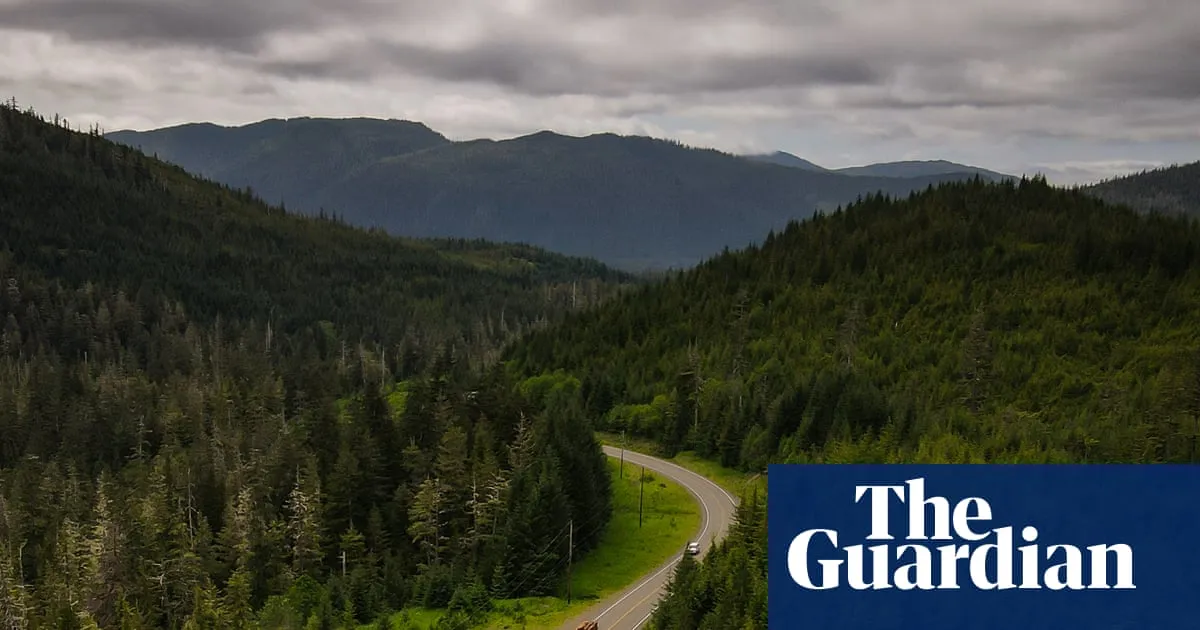
Donald Trump this month announced plans to rescind a landmark rule that has protected old-growth forests in the US for 25 years. If finalized, the rollback is expected to benefit the companies that Tom Schultz, chief of the US Forest Service, represented in his previous roles as a timber industry lobbyist and executive, according to research by consumer advocacy non-profit Public Citizen.The Roadless Area Conservation Rule, more commonly known as the “roadless rule”, was adopted in 2001 to limit development in roughly 45m acres of national forest. Industry interests and Republican representatives have long lobbied for the rule’s rescission, which would open up those swaths of untouched land to road construction, drilling and logging.In a statement, Schultz described the move as “the best way to restore the balance, reduce wildfire risk, and secure the long-term health of our forests and neighboring communities”. But studies suggest it could put 400 threatened and endangered species at risk and imperil ecosystems.Industry interests will be the main beneficiaries of the change, advocates fear.In an emailed statement, a Forest Service spokesperson, who did not provide their name, noted that Schultz had also held positions in Idaho and Montana government.“Chief Schultz’s appointment reflects the administration’s recognition that the Forest Service’s current challenges require leadership with broad federal land management experience, not just internal tenure,” the person said.Schultz is the first-ever Forest Service chief who did not previously work within the agency itself. Before Trump tapped him for the job, he served as president of the Federal Forest Resource Coalition, a trade association representing companies that purchase timber from the federal government, and was also vice-president of resources and government affairs at Idaho-forest-group" class="entity-link entity-organization" data-entity-id="197897" data-entity-type="organization">Idaho Forest Group, a major lumber manufacturer.Tom Schultz, chief of the US Forest Service, in Washington DC on 13 May. Photograph: Bloomberg/Getty ImagesHe is one of dozens of former extractive industry insiders Trump has placed in key environmental positions. Energy secretary Chris Wright was CEO of fracking company Liberty Energy, while interior official Tyler Hassen was an oil executive. Forty-three former fossil-fuel employees and 29 former corporate executives held administration positions, an October analysis from Public Citizen and corporate watchdog Revolving Door Project found.Schultz has long been critical of the roadless rule. As it was being considered in 2000, he said: “It’s going to be very difficult to actually generate revenue from state trust lands that could be encompassed within a roadless designation.”The American Forest Resource Council (AFRC), a timber industry trade association on the west coast that includes the Idaho-forest-group" class="entity-link entity-organization" data-entity-id="197897" data-entity-type="organization">Idaho Forest Group, has recently directly advocated for the rescission of the roadless rule. In comments to the federal government last year, the lobbying group said the “one-size-fits-all” policy unnecessarily prevents “active forest management” – intentionally thinning forests through practices including logging – which it says is the best way to mitigate wildfire risk.Since his appointment, Schultz has echoed these calls. “Active forest management is not an option. It’s essential,” he said in the announcement of the proposal to rescind the roadless rule, which also referred to the policy as “one-size-fits-all”.“Active forest management is central to the Forest Service’s multi-use mission – not an industry agenda,” the Forest Service spokesperson said.In a statement, Nick Smith, spokesperson for the AFRC, said: “There is broad bipartisan support for increasing forest health treatments – thinning, prescribed fire, and even logging – to reduce the size and severity of wildfires and make forests more resilient to climate change.”A recent analysis of the Forest Service’s own data found that wildfires were nearly three times as likely to start near roads, raising questions about the administration’s claim that expanding road access will reduce wildfire risk, said Lois Parshley, climate research director at Public Citizen.“But from the industry’s perspective, it will also open up new possibilities for logging,” she said.Asked about Parshley’s concern, the Forest Service spokesperson said that repealing the roadless rule “allows safer use and maintenance of existing roads that first responders have long said they need to reach fires quickly”.“Forest‑treatment science is clear: thinning plus prescribed fire reduces wildfire severity by more than 60% – and up to 72% compared to untreated areas,” they said. “Access enables treatment; without access, prevention and response suffer. Gates and seasonal closures can be used to manage public traffic while preserving routes that firefighters and forest managers may need.”The AFRC’s comments say that “strategically placed and maintained roads are essential for safe and effective wildfire response”, and that in “nearly every major wildfire over the past 15–20 years”, the Forest Service has identified a lack of road access as a key barrier to effective response, Parshley said. That argument also appears in Schultz’s rationale for repealing the rule, she noted. In the administration’s announcement, he said the roadless rule “has frustrated land managers and served as a barrier to action – prohibiting road construction, which has limited wildfire suppression and active forest management”.Smith of the AFRC said that “millions of roadless acres have burned across the west since the rule’s adoption in 2001.”“Federal lands are far more likely to burn than private lands, which typically have far more roads,” he said. “According to the congressional budget office, a wildfire on federal land is on average five times the size of one on nonfederal land nearby.”Critics dispute the logic that the roadless rule is good for wildfire management, arguing that roads can increase the risk of human-caused fires.Since Schultz came into the Forest Service in February 2025, the American Forest Resource Council has spent more than $210,000 advocating to expand harvesting in national forests, lobbying records show. Meanwhile, the Idaho-forest-group" class="entity-link entity-organization" data-entity-id="197897" data-entity-type="organization">Idaho Forest Group increased its spending on lobbying in 2026 and reported advocating to support “efforts to advance forest management”, including with the agency now run by its former executive, Parshley found.Smith of the AFRC claimed that “the amount of money AFRC spends lobbying Congress and federal agencies in support of policies to improve the health of federal forests and nearby rural communities is dwarfed in comparison to the many anti-forestry NGOs.”Idaho is exempt from the roadless rule; it has its own regulations on roadless areas developed with the federal government. But the proposal to kill the roadless rule is just one industry-backed change to forestry that the Trump administration has put forth. As the head of the Federal Forest Resource Coalition, Schultz in July 2022 delivered testimony before Congress in which he suggested roadless areas were limiting the industry, saying: “nearly half of the National Forest System [is] off limits to management.”Though he did not call to overturn the policy specifically, he advocated allowing states to manage more Forest Service timber sales, expanding exemptions from environmental review processes, and changing stewardship contracting rules to support logging and wood-processing infrastructure.The Trump administration has since adopted or advanced each of those proposals, Parshley found in a report earlier this year. And Schultz has directly helped implement them, she found. For instance, in December 2025 he personally signed an agreement with Idaho’s governor to double federal timber sales from the state’s national forests.“That directly benefits his former employer the Idaho-forest-group" class="entity-link entity-organization" data-entity-id="197897" data-entity-type="organization">Idaho Forest Group”, she said.Idaho-forest-group" class="entity-link entity-organization" data-entity-id="197897" data-entity-type="organization">Idaho Forest Group has been contacted for comment.Under Schultz, the Forest Service has ramped up timber sales. In June, he told senators that the agency had exceeded its timber-sale target. He has also overseen a historic and widely criticized structural reorganization of his agency, moving the agency’s headquarters from the nation’s capital to Salt Lake City, eliminating regional offices and staff and shifting authority over forests to states.Schultz has made it clear that he aims to weaken regulations. In April, he told Congress that he is “trying to cut through regulation”.In a company earnings call after Schultz was confirmed, lumber company PotlatchDeltic CEO Eric Cremers confirmed that industry executives maintain direct familiarity with Schultz in his new role, saying: “We know the new Forest Service chief.”“It’s pretty clear that the industry was excited by their reactions to Schultz’s nomination and then confirmation,” said Parshley.
SRCThe Guardian - World News
LANGEN
LEANCenter-Left
WORDS1 320
ENT12
TUE · 2026-09-01 · 11:00 GMTBRIEF NSR-2026-0901-108051
NSR-2026-0901-108051News Report·EN·Environmental
Forest Service chief faces scrutiny over logging ties as Trump plans to scrap protections
The Trump administration plans to rescind the 2001 Roadless Area Conservation Rule, which protects 45 million acres of national forest from development. This rollback, expected to benefit timber companies, has drawn scrutiny to US Forest Service chief Tom Schultz, who previously lobbied for the industry.
Dharna NoorThe Guardian - World NewsFiled 2026-09-01 · 11:00 GMTLean · Center-LeftRead · 6 min
The Guardian - World NewsFIG 01
Reading time
6min
Word count
1 320words
Sources cited
3cited
Entities identified
12entities
Quality score
100%
§ 01
Briefing Summary
AI-generatedNEWSAR · AI
The Trump administration plans to rescind the 2001 Roadless Area Conservation Rule, which protects 45 million acres of national forest from development. This rollback, expected to benefit timber companies, has drawn scrutiny to US Forest Service chief Tom Schultz, who previously lobbied for the industry. Schultz stated the move aims to restore balance, reduce wildfire risk, and improve forest health, while critics warn of risks to endangered species and ecosystems. Industry groups and Republican representatives have long advocated for rescinding the rule to allow logging, drilling, and road construction. The Forest Service maintains that active forest management, enabled by road access, is essential for wildfire mitigation.
Confidence 0.90Sources 3Claims 5Entities 12
§ 02
Article analysis
Model · rule-basedFraming
Environmental
Political Strategy
Tone
Mixed Tone
AI-assessed
CalmNeutralAlarmist
Factuality
0.70 / 1.00
Factual
LowHigh
Sources cited
3
Well sourced
FewMany
§ 03
Key claims
5 extracted01
Tom Schultz is the first Forest Service chief without prior agency experience.
factualarticle
Confidence
1.00
02
The Roadless Area Conservation Rule limits development in approximately 45 million acres of national forest.
factualarticle
Confidence
1.00
03
Donald Trump plans to rescind a 25-year-old rule protecting old-growth forests.
factualDonald Trump
Confidence
1.00
04
The rollback is expected to benefit companies previously represented by US Forest Service chief Tom Schultz.
factualPublic Citizen
Confidence
0.90
05
Studies suggest the rescission could put 400 threatened and endangered species at risk.
statisticstudies
Confidence
0.80
§ 04
Full report
6 min read · 1 320 words§ 05
Entities
12 identifiedKey playerOppositionContextPositiveNeutralNegative
Organizations6
§ 06
Keywords & salience
10 termsroadless rule
1.00
forest service
0.90
logging
0.80
old-growth forests
0.70
trump administration
0.70
tom schultz
0.60
environmental protections
0.60
timber industry
0.50
wildfire risk
0.40
ecosystems
0.40
§ 07
Topic connections
Interactive graph No topic relationship data available yet. This graph will appear once topic relationships have been computed.